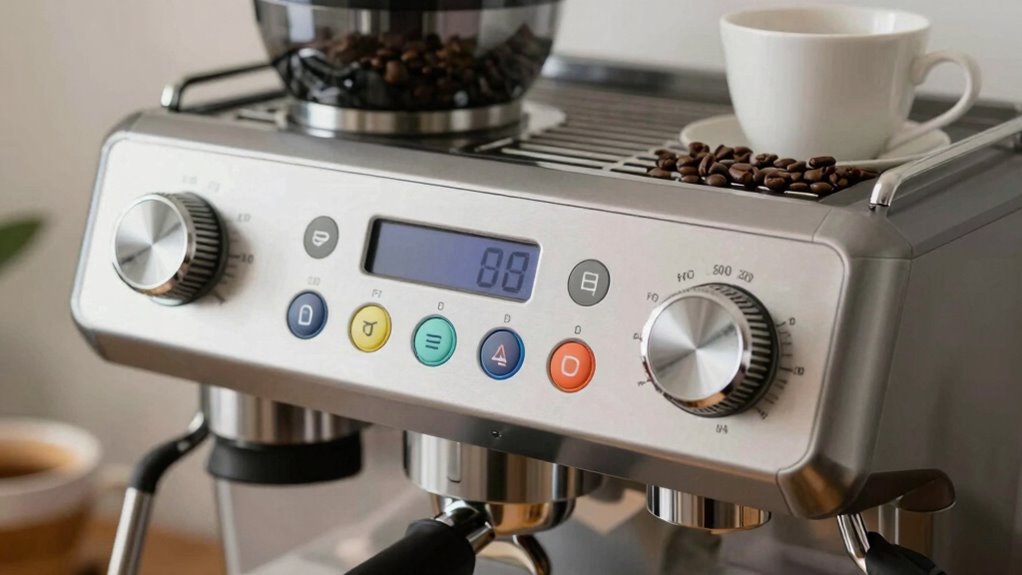

To understand espresso machine specs without getting lost, focus on key areas like boiler size, which affects water capacity and temperature stability, and the pressure system, as stable pressure around nine bars guarantees good extraction. Look at temperature controls like PID for precision, and consider water reservoir size for convenience. Features aligned with your skill level and maintenance needs are important, too. Keep these tips in mind, and you’ll find it easier to pick the right machine—more details await as you explore further.

Get your next haul delivered free — and shop member deals
- Fast, free delivery on millions of items
- Access to Prime Big Deal Days deals on October 6–7
- Prime Video, Amazon Music and more included
Key Takeaways
- Focus on boiler size and temperature control to understand capacity and brewing consistency.
- Check pressure system details for stability and adjustable settings for tailored extraction.
- Review temperature regulation features like PID controllers for precise and stable brewing conditions.
- Consider water reservoir size and energy efficiency to evaluate convenience and environmental impact.
- Match features with your skill level and routine to ensure compatibility and ease of maintenance.
Understanding espresso machine specs can seem overwhelming at first, but knowing what to look for makes choosing the right machine much easier. When you’re browsing different models, it’s essential to focus on key features that impact your brewing techniques and the machine’s upkeep. The boiler size, for example, determines how much hot water and steam the machine can produce at once, affecting how many espresso shots you can pull in quick succession. Larger boilers often mean more consistent temperature control, which is essential for brewing techniques that demand precision, like pulling multiple shots or steaming milk for lattes.
Choosing the right espresso machine depends on boiler size, pressure stability, and ease of maintenance for perfect brewing.
Next, pay attention to the pressure system, typically measured in bars. Most espresso machines operate around nine bars; this is the optimal pressure for extracting rich, flavorful espresso. If the machine offers adjustable pressure, you can experiment with different brewing techniques to customize your shots. But don’t forget: higher pressure isn’t always better if it compromises stability or consistency. Stability in pressure helps you refine your brewing techniques over time, producing consistently good results. Pressure stability is crucial for achieving reliable extractions, especially for those new to espresso brewing. Incorporating sustainable practices into your choice of equipment can also reduce your environmental impact by opting for energy-efficient models. Additionally, considering the availability of replacement parts can extend the lifespan of your machine and ensure ongoing performance. Being aware of energy efficiency can help you lower your long-term operating costs and reduce your ecological footprint.
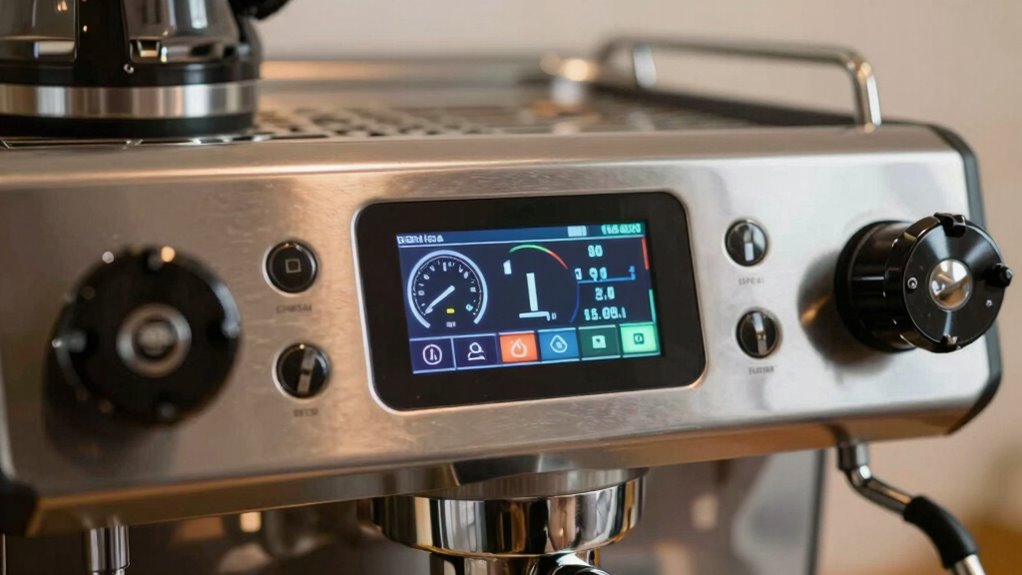
Temperature control is another important spec. Machines with PID controllers allow precise adjustments, giving you better control over brewing temperature—essential for specialty coffee enthusiasts aiming for perfect extraction. A stable temperature directly influences the taste and aroma of your espresso, so look for models that highlight this feature. When considering maintenance tips, machines with accessible parts and easy-to-clean components make your upkeep simpler. Regular cleaning of group heads, steam wands, and filters is key to preserve flavor and machine longevity.
Material quality also influences how often you’ll need to perform maintenance. Stainless steel boilers and durable group heads resist corrosion and buildup, making cleaning less frequent and more effective. Keep an eye on water reservoir size, especially if you brew frequently; a bigger reservoir reduces the need for refills, saving you time. Additionally, understanding how biodiversity and sustainable practices can be integrated into your choice of equipment may help you select models that are environmentally friendly and energy-efficient. When selecting your machine, consider how its features align with your brewing techniques—whether you prefer single shots or larger volumes—and how manageable maintenance will be over time. Knowing the environmental impact of a device can also influence your long-term costs and ecological footprint.
In essence, reading specs isn’t just about numbers; it’s about understanding how each feature impacts your ability to make great espresso and keep your machine running smoothly. Focus on specs that enhance your brewing techniques and make maintenance straightforward, and you’ll find a machine that fits your skills and lifestyle perfectly. With clarity about these details, you’ll confidently select a machine that elevates your coffee experience without the confusion.
espresso machine with PID temperature control
As an affiliate, we earn on qualifying purchases.
As an affiliate, we earn on qualifying purchases.
Frequently Asked Questions
What Is the Ideal Portafilter Size for Home Use?
The ideal portafilter size for home use is typically 54mm or 58mm. A 54mm portafilter offers good brewing efficiency for smaller machines, while a 58mm size provides more room for larger doses and better heat stability. Choosing the right size depends on your espresso machine and your brewing preferences. Generally, 58mm portafilters are preferred for more consistent extraction, making them a popular choice for home baristas seeking quality results.
How Does Boiler Type Affect Espresso Quality?
The boiler type greatly impacts espresso quality by influencing temperature stability and heat consistency. A stainless steel or copper boiler provides better temperature control, guaranteeing stable heat during brewing. This stability helps extract rich, balanced flavors from your coffee. Additionally, dual boilers allow simultaneous brewing and steaming, enhancing efficiency. So, choosing a machine with a high-quality boiler material and solid temperature stability ensures you get consistently excellent espresso shots every time.
What’s the Difference Between Single and Double Boiler Machines?
Single boiler machines heat water and steam in one chamber, so you need to wait to switch between brewing and steaming, which can affect temperature stability. Double boiler machines have separate chambers, allowing consistent temperature and better steam capacity, making your espresso and milk frothing smoother. If you want quick switchovers and stable temperatures for both functions, a double boiler machine is your best bet.
How Important Is Water Reservoir Capacity?
Water reservoir capacity is pretty important because it determines how often you need to refill your machine, especially if you brew frequently. Look for models with good water filtration to improve taste and extend the machine’s lifespan. Also, consider reservoir portability—if you like moving your machine around or have limited space, a smaller, easily removable reservoir makes refilling simple and mess-free.
Do Higher Wattage Machines Always Make Better Espresso?
Higher wattage machines don’t always make better espresso, but they do heat up faster and maintain temperature more consistently, which can improve your coffee grind extraction. For milk frothing, a powerful machine guarantees stable steam pressure for smooth, creamy foam. However, focus on the machine’s features and your needs rather than wattage alone. A well-made espresso depends on proper grind size, temperature, and technique, not just wattage.
home espresso machine with large boiler
As an affiliate, we earn on qualifying purchases.
As an affiliate, we earn on qualifying purchases.
Conclusion
Understanding espresso machine specs can seem intimidating, but once you know what to look for, making an informed choice becomes easier. For example, if you prioritize quick heat-up times, focus on machines with high boiler wattage. Imagine you’re choosing a machine for busy mornings—knowing these details helps you find the perfect fit. With a little research, you’ll confidently select an espresso machine that matches your needs, ensuring each cup is just right.
professional espresso machine with adjustable pressure
As an affiliate, we earn on qualifying purchases.
As an affiliate, we earn on qualifying purchases.
energy-efficient espresso machine
As an affiliate, we earn on qualifying purchases.
As an affiliate, we earn on qualifying purchases.
Halloween Picks
halloween
As an affiliate, we earn on qualifying purchases.