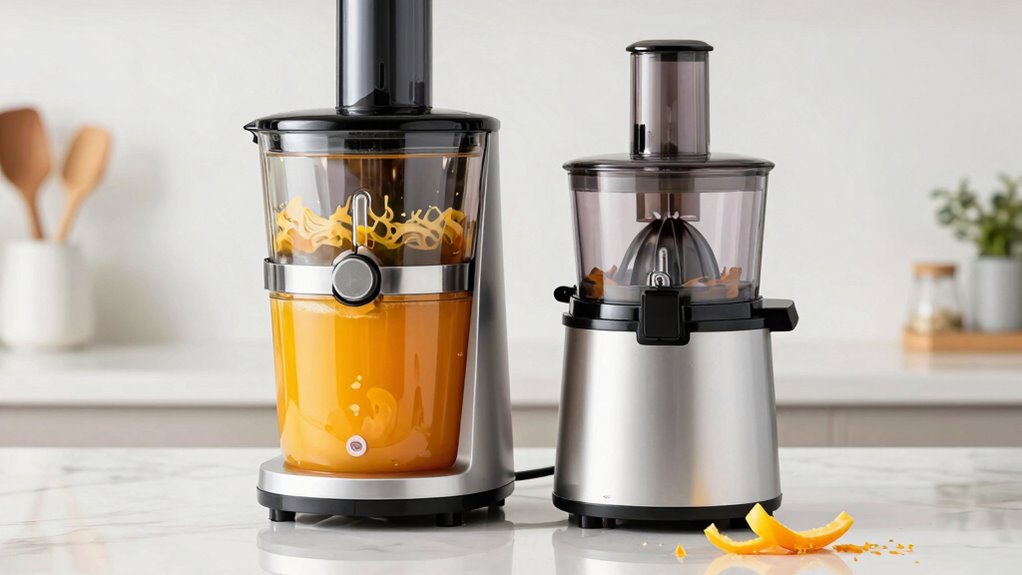

When choosing between slow and fast juicers, start by taking into account cleanup ease and maintenance, not just marketing claims. Slow juicers often have more parts and take longer to clean but preserve more nutrients and operate quietly. Fast juicers clean up quicker and produce juice faster, but they may leave more residue. Your environment and routine matter—if you want nutrients and quiet, slow is better; if convenience wins, go fast. There’s more to consider as you explore your options.

Get your next haul delivered free with Prime
- Fast, free delivery on millions of items
- Prime Video, Amazon Music and more included
- Member-only deals all year
Key Takeaways
- Prioritize ease of cleaning, as slow juicers often require more time due to multiple parts and crevices.
- Fast juicers typically clean quicker with fewer parts, but may leave residue that needs extra attention.
- Regular cleaning prevents buildup, ensuring optimal performance and longer appliance lifespan.
- Consider maintenance effort alongside nutrient retention and noise levels for a balanced choice.
- Marketing claims may emphasize speed or nutrients; focus on practical cleanup needs first.
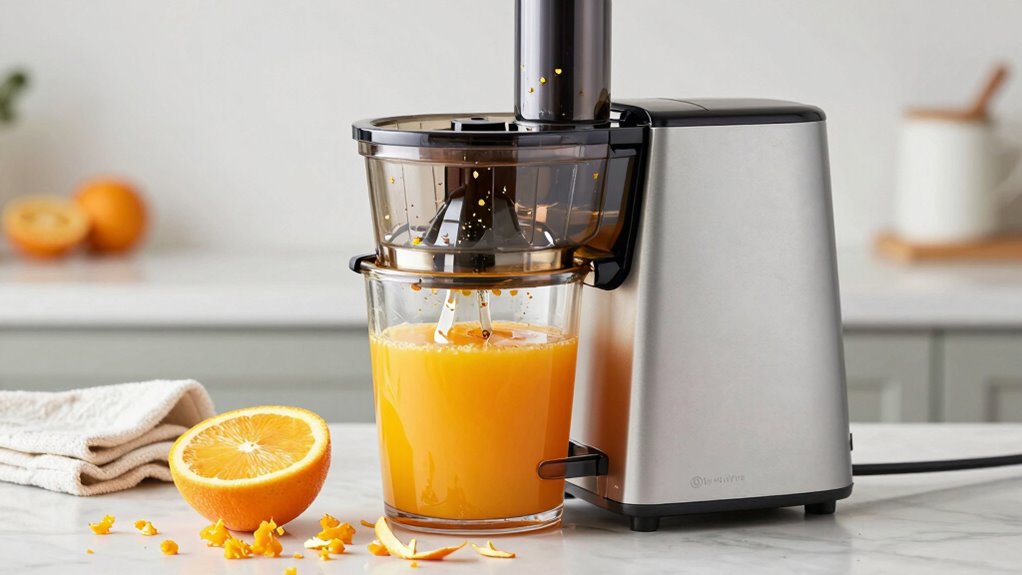
When choosing a juicer, understanding the differences between slow and fast models can help you make an informed decision. One of the key factors to consider is nutrient retention. Slow juicers, often called masticating juicers, operate at lower speeds, which means they grind and press fruits and vegetables gently. This slow process preserves more nutrients, enzymes, and antioxidants, giving you a healthier, more nutritious juice. Slow juicers are often recommended by health experts for their ability to retain nutritional value more effectively. Fast juicers, or centrifugal models, spin at high speeds to extract juice quickly. While they’re efficient and can produce larger quantities in less time, the rapid spinning generates heat and oxidation, which can degrade some nutrients. So, if you’re after maximum nutritional value, a slow juicer might be your best bet.
Slow juicers preserve more nutrients and enzymes for a healthier, more nutritious juice.
Noise levels are another important aspect. Slow juicers tend to operate more quietly because they don’t rely on high-speed spinning. If you prefer early morning juice sessions or live in a shared space where noise matters, a slow model can be less disruptive. Fast juicers, by contrast, are notably louder due to their high-speed motors. The noise can be a nuisance, especially if you’re sensitive to sound or need to juice while others are sleeping or working. Considering your environment and how much noise you’re willing to tolerate can influence your choice substantially. Additionally, efficiency of juice extraction can vary depending on the model, affecting your overall experience. Proper technique and maintenance can also impact the quality of your juice and the longevity of your appliance.
Cleanup is often overlooked but is essential when selecting a juicer. Slow juicers generally have more parts and can take a bit longer to clean because of their internal components and juicing mechanism. However, many users find that the effort is worth it for the higher nutrient retention and quieter operation. Fast juicers typically have fewer parts and are designed for quick assembly and disassembly, which can make cleanup faster. But, they might leave more pulp and juice residue in crevices, requiring extra attention to fully clean. Additionally, cleaning methods can vary significantly between models, affecting how much time you need to dedicate to maintenance. Regular cleaning is crucial to prevent buildup and ensure longevity of the appliance, especially in models with more intricate parts.
Ultimately, your decision between slow and fast juicers depends on your priorities. If you value nutrient retention and peace and quiet, a slow juicer is the way to go. If speed, convenience, and larger juice yields matter more to you, a fast juicer might suit your lifestyle better. But don’t forget to factor in cleanup—no matter how efficient the machine, regular maintenance and cleaning are essential to keep it running smoothly. Starting with these practical considerations, rather than marketing hype, will help you find a juicer that genuinely fits your needs.
Products Worth Considering

Samsung 48-Inch S90H OLED 4K Smart TV (2026)

Dyson Ball Animal Total Clean Upright Vacuum
Philips Hue Festavia Globe Outdoor String Lights, 32 Bulbs, 91 ft
As an affiliate, we earn on qualifying purchases.
Frequently Asked Questions
Which Type of Juicer Retains More Nutrients?
You’ll find that slow juicers generally retain more nutrients because they operate at lower speeds, minimizing heat and oxidation that can degrade nutrients. This results in better nutrient preservation and higher juice concentration. Fast juicers, while quicker, can generate more heat, potentially reducing nutrient quality. So, if you’re prioritizing nutrient preservation, a slow juicer is your best choice for keeping your juice rich and nutritious.
Are Slow Juicers More Durable Than Fast Juicers?
They say, “A chain is only as strong as its weakest link,” and the same applies to juicers. Slow juicers are generally more durable because of their durability factors and high material quality, which withstand regular use better. Fast juicers often use lighter components to boost speed, potentially reducing longevity. So, if durability matters most, slow juicers tend to last longer and handle daily juicing more reliably.
Do Fast Juicers Produce More Juice Than Slow Juicers?
Fast juicers generally produce more juice because they operate quickly, but this can lead to less pulp dryness. You might notice wetter pulp, indicating lower juice extraction efficiency. Conversely, slow juicers often yield less juice but produce drier pulp, meaning higher juice extraction. Your choice depends on whether you prioritize maximum juice yield or drier pulp. Fast juicers are efficient for quick results, while slow juicers maximize juice extraction quality.
How Loud Are Slow Versus Fast Juicers During Operation?
You’ll find that slow juicers whisper softly, making a gentle hum, perfect for early mornings or late-night juice sessions. Fast juicers, on the other hand, roar like a mini thunderstorm, demanding more power and noise. Noise levels vary greatly, with slow models being kinder to your ears and power consumption lower, while fast models sacrifice quietness for speed. So, choose wisely if you value peace—or just want to scare your neighbors.
Which Juicer Type Is Easier to Clean and Maintain?
You’ll find slow juicers easier to clean because their parts are generally simpler and fewer, reducing your cleaning routines. Fast juicers, with multiple components and intricate parts, can be more challenging to maintain. To keep your juicer in top shape, follow maintenance tips like cleaning immediately after use and disassembling parts thoroughly. This approach guarantees your juicer operates smoothly, regardless of whether you choose a slow or fast model.
Conclusion
Choosing between slow and fast juicers isn’t just about speed; it’s about finding the right rhythm for your life. Think of slow juicers as a gentle, deliberate dance, extracting more nutrients with each move. Fast juicers might be the quick step you need in busy mornings. Whichever you pick, prioritize ease of cleanup over marketing hype—after all, a good juicer should be a trusted partner, not a fleeting trend. Your perfect juice adventure awaits.