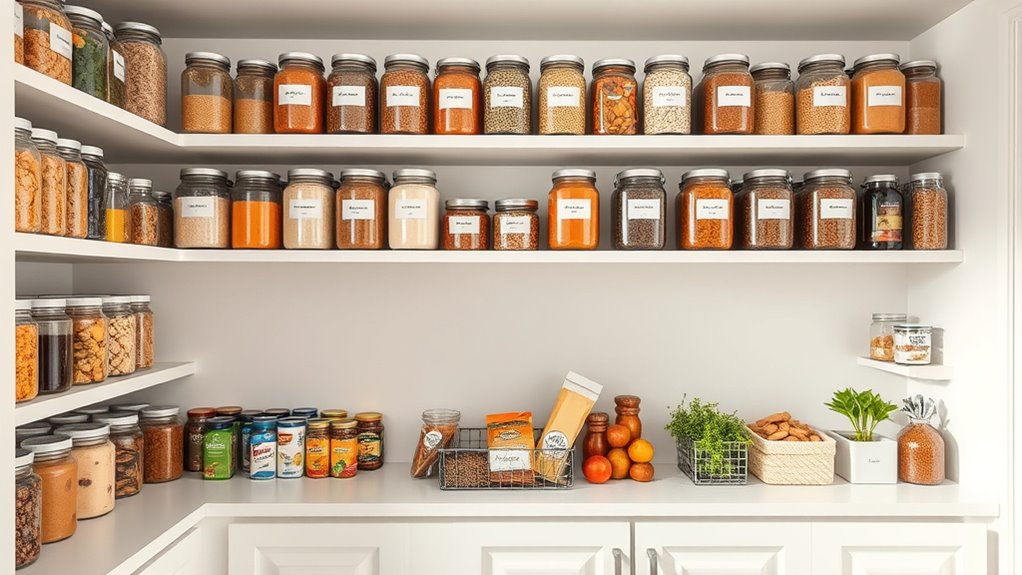

To effectively declutter your pantry, start by creating designated zones for categories like baking supplies, canned goods, snacks, and spices. Keep frequently used items at eye level for easy access, and use clear containers to organize dry goods. Label everything clearly to prevent confusion and keep your space tidy. Regular maintenance guarantees order stays long-term. For detailed tips on establishing efficient zones and labels, continue exploring helpful strategies.

Get your next haul delivered free with Prime
- Fast, free delivery on millions of items
- Prime Video, Amazon Music and more included
- Member-only deals all year
Key Takeaways
- Evaluate current pantry items to identify categories and create designated zones for organized storage.
- Use clear containers and labels to define each zone, making items easily identifiable and accessible.
- Arrange frequently used items at eye level and less-used items higher or in the back to optimize efficiency.
- Incorporate pull-out shelves, baskets, and door racks to maximize space and improve accessibility.
- Regularly maintain and update labels and zones to adapt to changing storage needs and prevent clutter buildup.
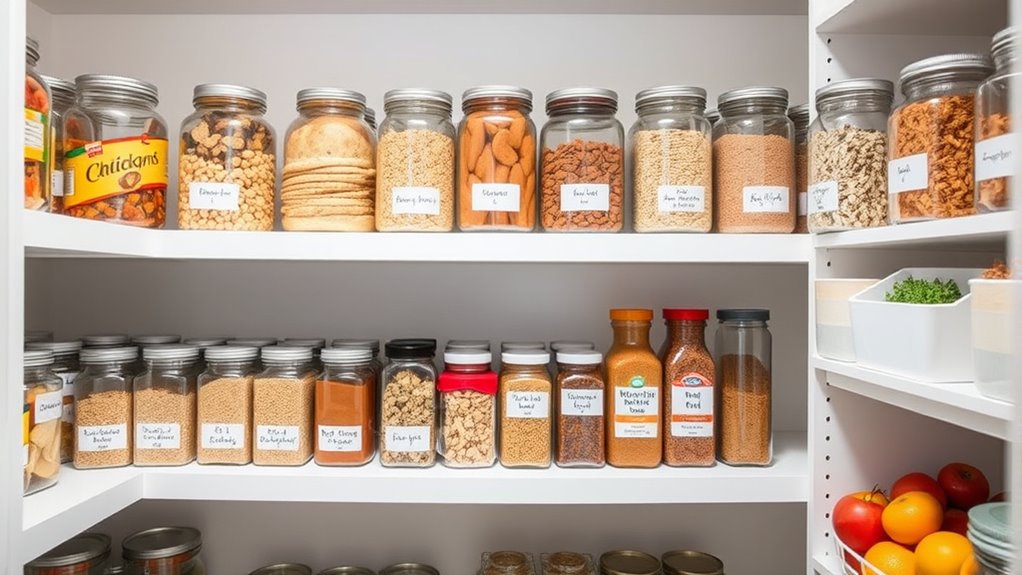
Have you ever stepped into your pantry only to be overwhelmed by clutter and expired items? It’s a common scenario, but the good news is that you can regain control with effective storage solutions and smart organization tips. The secret lies in creating designated zones within your pantry and labeling everything clearly. When each item has a specific spot, it becomes easier to find what you need and keep things tidy. Start by evaluating what you have—group similar items together, like baking supplies, canned goods, snacks, and breakfast items. This initial step helps you understand the space you’re working with and plan your zones accordingly.
Creating designated zones and labeling everything simplifies pantry organization and maintains a tidy space.
Once you’ve categorized your items, it’s time to implement storage solutions that maximize your space and make access simple. Use clear, stackable containers for dry goods such as flour, sugar, and pasta. These not only keep ingredients fresh but also allow you to see exactly what’s inside, reducing waste and preventing duplicates. Consider adding pull-out shelves or baskets for smaller items like snack packs and spice jars. These options make it easier to reach items at the back and keep everything accessible. Adjustable shelving can be a game-changer, especially if your pantry has uneven heights or fluctuating storage needs. Incorporate door-mounted racks or hooks for hanging utensils, measuring cups, or small tools, freeing up shelf space.
Creating zones within your pantry is the next step. Dedicate specific areas for different categories, and keep frequently used items at eye level for quick access. Less-used items can go on higher shelves or in the back. For example, designate one zone for breakfast foods, another for baking ingredients, and a separate one for canned goods. This zoning system not only simplifies your shopping list but also helps prevent overbuying or forgetting what you already have. To guarantee long-term organization, label your containers, bins, and shelves clearly. Use a label maker or simple masking tape with handwritten labels, but make sure they’re legible. When everyone in the household knows exactly where things belong, it reduces the chances of clutter creeping back in. Additionally, sound recording techniques and using proper equipment can help document your organization process or create helpful tutorials for family members.
Regular maintenance is key. Set aside time every few weeks to tidy up, check expiration dates, and reorganize as needed. Incorporate these organization tips into your routine, and your pantry will stay functional and clutter-free. By establishing zones, using smart storage solutions, and labeling everything, you’ll transform your pantry into an efficient, easy-to-maintain space. No more rummaging through chaos—just a well-organized pantry that works for you.
clear pantry storage containers with lids
As an affiliate, we earn on qualifying purchases.
As an affiliate, we earn on qualifying purchases.
Frequently Asked Questions
How Often Should I Reorganize My Pantry Zones?
You should reorganize your pantry zones every 3 to 6 months to maintain ideal pantry organization. Regular zone maintenance helps you keep track of items, prevents clutter, and guarantees everything stays accessible. If you notice containers or labels are outdated, or if your pantry starts to feel chaotic, it’s time for a quick reorganization. Staying consistent with these checks ensures your pantry remains functional and easy to navigate.
What Are the Best Labels for Non-Food Pantry Items?
You’ll love this: the best labels for non-food pantry items are clear, waterproof labels made from durable materials like vinyl or laminated paper. Why settle for boring when you can customize? Explore various customization options—fonts, colors, icons—to match your style. These labels not only organize but also add a touch of personality, making your pantry both functional and fun. After all, who said labels can’t be stylish?
How Do I Handle Expired or Spoiled Pantry Goods?
When you find expired or spoiled pantry goods, discard them immediately to prevent spoilage and contamination. Check expiration dates regularly to catch items before they go bad. To handle spoilage prevention, organize your pantry so older items are used first, and store perishable goods properly. Keeping your pantry clean and conducting routine checks ensure you avoid consuming spoiled food and maintain a safe, organized space.
Can Pantry Zones Be Customized for Specific Diets?
Yes, you can customize pantry zones for specific diets. Incorporate diet-specific storage by creating customizable pantry zones tailored to your needs, like gluten-free, keto, or vegan sections. Use clear labels and designated containers to keep everything organized and easy to find. This approach helps you maintain a clutter-free space that supports your dietary preferences, making meal prep more efficient and enjoyable.
What Tools Are Recommended for Labeling and Organizing?
Oh, because who doesn’t love turning their pantry into a labeling masterpiece? You’ll want to grab labeling tools like chalk pens, printable labels, and markers for a neat look. Organizing supplies such as baskets, clear jars, and shelf risers make everything pop. These tools help you categorize effortlessly, ensuring your snacks and staples stay in perfect order. Say goodbye to chaos—your pantry’s about to get the royal treatment it deserves!
As an affiliate, we earn on qualifying purchases.
Conclusion
A cluttered pantry may seem like no big deal, but it can turn your cooking into chaos. When you organize with zones and labels, your space becomes a haven of efficiency. Instead of searching through piles of stuff, you’ll find what you need instantly. It’s funny how a little order transforms your kitchen from a mess into a sanctuary. Embrace the change—because a tidy pantry isn’t just neat, it’s a game-changer.
As an affiliate, we earn on qualifying purchases.
As an affiliate, we earn on qualifying purchases.
Halloween Picks
halloween
As an affiliate, we earn on qualifying purchases.