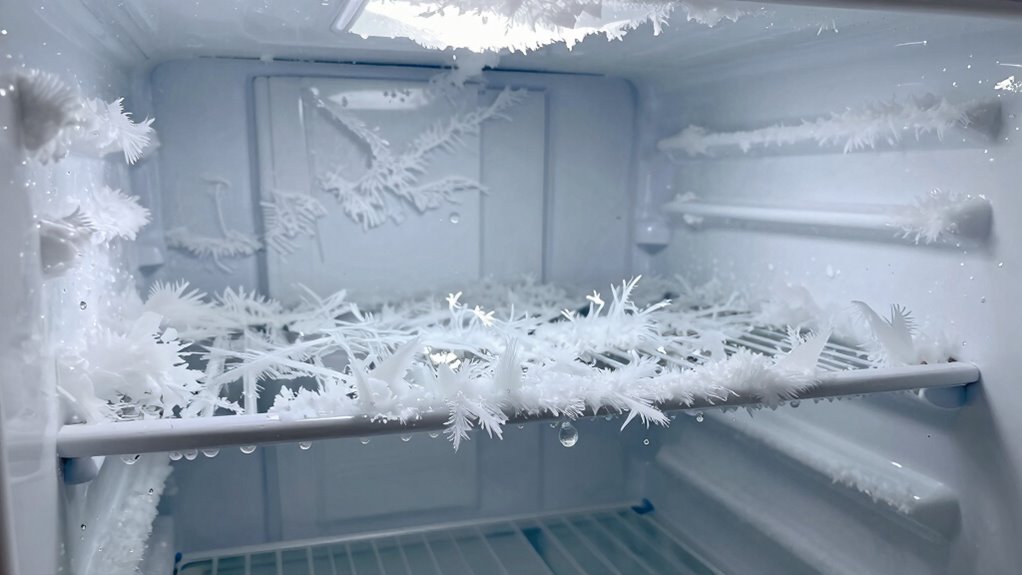

Ice buildup in your freezer happens mainly because moisture enters through frequent door openings or damaged seals, then cools and condenses into frost. Warm, humid air inside the freezer also contributes, especially in older models without automatic defrosting. Over time, this moisture collection leads to thick ice layers that reduce storage space and efficiency. You can prevent or reduce this by maintaining proper door seals and temperature, but there’s more to know about keeping your freezer in top shape.

Get your next haul delivered free with Prime
- Fast, free delivery on millions of items
- Prime Video, Amazon Music and more included
- Member-only deals all year
Key Takeaways
- Moisture enters through door openings or poor seals, leading to condensation and ice formation.
- Warm, humid air cools inside the freezer, causing moisture to condense into ice.
- Lack of automatic defrost features in older models allows ice to build up over time.
- Frequent door openings increase moisture entry, accelerating ice accumulation.
- Inadequate maintenance, such as damaged door seals, allows moisture intrusion and frost buildup.
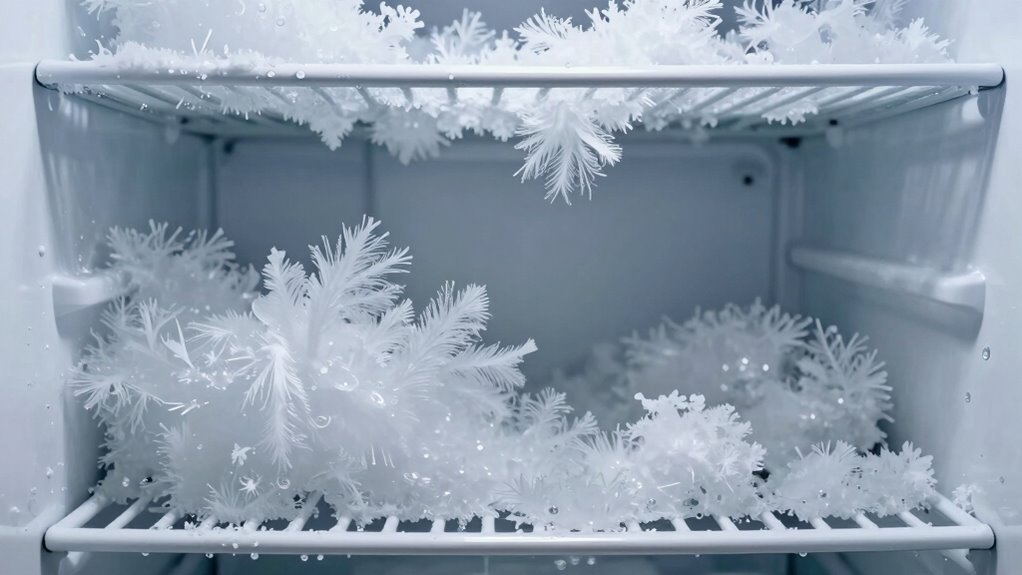
Have you ever opened your freezer only to find a thick layer of ice covering the walls and shelves? It’s frustrating, isn’t it? Ice buildup not only takes up valuable space but can also affect your freezer’s efficiency. The good news is, understanding what causes ice buildup helps you prevent it. Most often, it results from moisture entering your freezer, either through frequent door openings or poor sealing. When warm, humid air gets inside, it cools and condenses into ice. Over time, this ice thickens if not addressed properly.
Ice buildup in freezers is caused by moisture entering through door openings or poor seals.
One common mistake people make is neglecting regular freezer maintenance. Without periodic defrosting, ice can accumulate rapidly, especially in older models without automatic defrost features. To keep your freezer running smoothly and prevent excessive ice buildup, you need to adopt effective defrosting techniques. Manual defrosting involves turning off the freezer, removing all food, and allowing the ice to melt naturally. Using a bowl of hot water or a gentle heat source can speed up the process, but you should be cautious to avoid damaging the appliance. During this process, it’s best to wipe away the melting ice with towels or cloths to prevent water from pooling inside.
Another crucial aspect of preventing ice buildup is proper freezer maintenance. Make sure the door seal is intact and airtight; a compromised seal allows warm, moist air to seep in, accelerating ice formation. Regularly check and clean the gasket with mild soap and water, and replace it if it’s cracked or damaged. Limiting how often you open the door also helps reduce moisture entry. Keep the freezer at the recommended temperature—usually around 0°F or -18°C—to prevent frost from forming on the walls. If you notice frost developing even with correct settings, it could indicate a problem with the door seal or a malfunctioning defrost timer. Additionally, understanding the importance of air circulation inside your freezer can help prevent uneven frost buildup and improve efficiency. Proper airflow ensures that cold air distributes evenly, reducing cold spots where frost tends to form more rapidly. Properly managing moisture levels is essential to prevent excess ice formation, especially during seasonal changes or power outages.
Ultimately, understanding what causes ice buildup empowers you to take proactive steps. Incorporate proper defrosting techniques and consistent freezer maintenance into your routine. Doing so not only extends the life of your appliance but also ensures it operates efficiently, keeping your food fresh and your energy bills lower. If you notice persistent ice formation despite these efforts, it might be time to consult a professional or consider replacing an outdated freezer. Staying attentive to these details saves you time, money, and headaches in the long run.
As an affiliate, we earn on qualifying purchases.
Frequently Asked Questions
How Often Should I Defrost My Freezer to Prevent Ice Buildup?
You should defrost your freezer every 3 to 6 months to prevent ice buildup. Frequent defrosting, especially when ice exceeds a quarter-inch thick, helps maintain efficiency. Proper maintenance includes checking door seals and avoiding overloading. If you notice frost forming quickly, defrost sooner. Regularly defrosting and maintaining your freezer keeps it running smoothly, saves energy, and prevents ice buildup that could damage the appliance.
Does a Faulty Door Seal Lead to More Ice Accumulation?
A faulty door seal definitely leads to more ice accumulation because it allows warm, moist air to enter your freezer. This excess moisture condenses and freezes, creating thick ice buildup. When the door seal isn’t tight, you invite ice accumulation, increase energy use, and strain the freezer’s compressor. Regularly checking and replacing a damaged door seal keeps moisture out, prevents ice buildup, and helps your freezer run efficiently.
Can Using an Extension Cord Cause Ice Buildup in Freezers?
Using an extension cord can cause ice buildup in your freezer because it may compromise extension cord safety and create inconsistent power flow. When your freezer doesn’t receive stable electricity, it can lead to temperature fluctuations, causing excess moisture and ice formation. To maintain freezer energy efficiency and prevent ice buildup, always plug your freezer directly into a grounded outlet instead of using an extension cord.
What Role Does Humidity Play in Freezer Ice Formation?
You might think humidity doesn’t affect your freezer, but it actually plays a big role in ice formation. High humidity levels increase moisture inside the freezer, leading to condensation that freezes into ice. To prevent this, focus on condensation control by sealing the door properly and avoiding frequent opening. Keeping humidity low inside the freezer minimizes ice buildup, ensuring it runs efficiently and saves you from manual defrosting hassles.
Are Certain Types of Freezers More Prone to Ice Buildup?
Yes, certain freezers are more prone to ice buildup. Freezers with poor insulation allow warm, moist air to enter, increasing frost formation. Chest freezers often experience more ice buildup because of less frequent opening and less efficient insulation compared to upright models. If your freezer’s insulation isn’t effective, moisture enters easily, leading to more frost formation and ice accumulation over time. Proper insulation helps minimize ice buildup and keeps your freezer running efficiently.
As an affiliate, we earn on qualifying purchases.
Conclusion
To prevent ice buildup, you need to keep your freezer door sealed tight, avoid frequent openings, and defrost regularly. If you ignore these steps, your freezer could turn into an icy tundra—making it nearly impossible to access your food or keep everything fresh. Stay vigilant and proactive, or you’ll find yourself battling a frosty fortress every time you open the door. Keep your freezer clear and functioning perfectly—don’t let ice take over your kitchen!
automatic freezer defrost system
As an affiliate, we earn on qualifying purchases.
As an affiliate, we earn on qualifying purchases.
As an affiliate, we earn on qualifying purchases.
Fall Picks
fall essentials
As an affiliate, we earn on qualifying purchases.