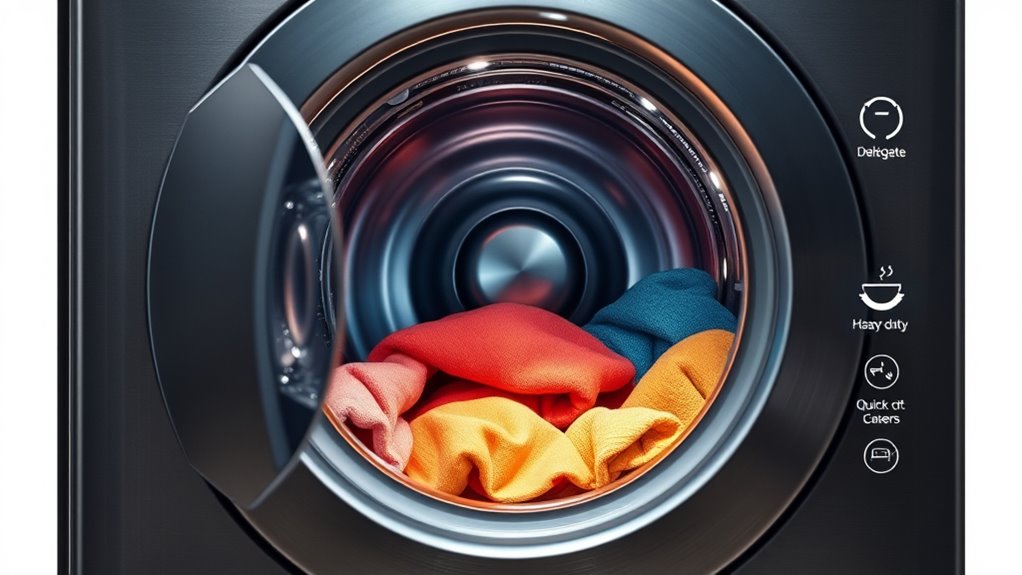

Washer cycles are designed to suit different fabrics, soil levels, and cleaning needs. For example, the normal cycle handles everyday cottons, while heavy-duty works best for heavily soiled items like towels and work clothes. Delicate cycles protect fragile fabrics like silk and lingerie with gentler action. Using the right cycle makes certain your clothes stay in good shape and get cleaned effectively. If you keep exploring, you’ll discover how each cycle helps you care for your laundry better.
Key Takeaways
- Different washer cycles are designed for specific fabric types, soil levels, and laundry needs to optimize cleaning and fabric care.
- Normal cycle is versatile for everyday laundry, while heavy-duty is suited for heavily soiled items, and delicate for fragile fabrics.
- Cycle selection influences detergent choice, with delicate cycles needing gentle detergents and heavy-duty cycles accommodating stronger agents.
- Eco-friendly and cold wash cycles use less water and energy, suitable for lightly soiled clothes and reducing environmental impact.
- Choosing the right cycle helps prevent fabric damage, extends clothing lifespan, and improves overall wash efficiency.

Have you ever wondered how your washing machine chooses the right cycle for your clothes? It’s a good question because understanding the different washer cycles can help you get your laundry done more efficiently and effectively. Each cycle is designed to handle specific types of fabrics, soil levels, and laundry preferences. When selecting a cycle, you’re also indirectly choosing the detergent types suitable for that load, as some detergents work better with certain cycles. For example, delicate cycles often require gentle detergents to prevent damage, while heavy-duty cycles can handle more robust cleaning agents. Additionally, many modern washers are built with energy efficiency in mind, offering cycles that use less water and electricity while still delivering clean clothes. This means you can save money and reduce your environmental impact by choosing the right cycle for each load.
Understanding your washer cycles helps you choose the right detergent and save energy effectively.
The basic cycles—such as normal, heavy-duty, and delicate—serve distinct functions. The normal cycle is versatile and works well for everyday cottons and linens, usually combining moderate agitation and spinning speed. Heavy-duty cycles are designed for heavily soiled items like work clothes or towels, using longer wash times, higher agitation, and more water. Delicate cycles, on the other hand, are gentler, with slower agitation and shorter wash times, ideal for silk, wool, or lingerie. Understanding these differences helps you match the cycle to the fabric type, preventing damage and ensuring proper cleaning. Cycle selection can also influence the longevity of your clothing and the efficiency of your washer.
Energy efficiency is another crucial aspect of choosing a washer cycle. Many newer machines have eco-friendly options that use less water and lower temperatures, which not only save energy but also extend the lifespan of your clothes. For instance, cold wash cycles are often enough to clean lightly soiled garments and are gentler on fabrics, reducing wear and tear. These cycles often rely on specially formulated detergents that work well at lower temperatures, further boosting energy savings. By selecting an energy-efficient cycle when appropriate, you cut down on utility bills and lessen your ecological footprint.

Greenworks Pro Brushless 3000 PSI (CSA Certified) 2.0 GPM Max / 1.1 GPM Electric Pressure Washer (Rugged Steel Frame, 25 FT Hose, 35 FT GFCI Power Cord)
TRUBRUSHLESS MOTOR : Powerful 14 Amp TruBrushless motor generates 3000 PSI and 2.0 GPM for maximum cleaning power.Cleaning...
As an affiliate, we earn on qualifying purchases.
Frequently Asked Questions
Can I Customize Washer Cycle Durations?
Yes, you can customize washer cycle durations on many machines. Check your washer’s settings for customization options, which often allow you to adjust cycle duration to suit your needs. Use the control panel or app if available, and experiment with different settings to find what works best. Keep in mind that not all models offer this feature, so consult your user manual for specific instructions on adjusting cycle duration.
Do Different Cycles Affect Energy Consumption?
Like a wise sage guiding your choices, different washer cycles profoundly impact energy consumption. Opting for eco-friendly or quick cycles can lead to notable energy savings, as they prioritize cycle efficiency. Longer or heavy-duty cycles often use more power, much like pushing a bailer through choppy waters. By selecting the right cycle, you conserve energy, reduce costs, and help the environment—making your laundry routine both smarter and greener.
How Do Cycle Selections Impact Fabric Longevity?
Choosing the right cycle helps safeguard your fabric care and extends your clothes’ longevity. Gentle cycles minimize wear and tear, keeping fabrics looking fresh longer, while heavier cycles may cause more damage over time. By selecting appropriate cycles, you maximize laundry efficiency and prevent unnecessary stress on your clothes. This way, you guarantee your garments stay in good condition, saving you money and maintaining their appearance for a longer period.
Are Special Cycles Suitable for Delicate Items?
Yes, special cycles are suitable for delicate items because they use gentler wash actions and lower spin speeds, protecting fragile fabrics. When you select these cycles, make sure to use the right laundry detergents designed for delicate fabrics to prevent damage. Regularly performing washer maintenance, like cleaning the drum and filters, guarantees peak performance of these special cycles, keeping your delicate clothes safe and extending their lifespan.
Can I Skip or Combine Cycle Features?
You can skip or combine cycle features, but you need to check cycle compatibility and watch out for feature overlap. When skipping, guarantee your chosen cycle still cleans effectively. Combining features might save time but could compromise cleaning or fabric care. Always review your washer’s manual for guidance. If you’re unsure, sticking to preset cycles guarantees ideal performance and avoids potential damage or inefficiency.
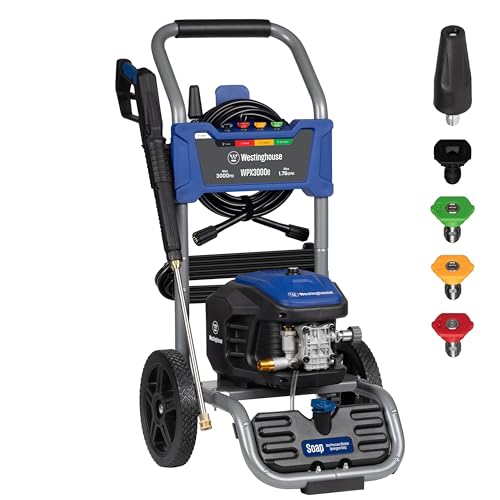
Westinghouse WPX3000e Electric Pressure Washer, 3000 Max PSI and 1.76 Max GPM, Induction Motor, Onboard Soap Tank, Spray Gun and Wand, 5 Nozzle Set, for Cars/Fences/Driveways/Homes/Patios/Furniture
Delivers 3000 max PSI and 1.76 max GPM (at lowest pressure), and 2600 rated PSI and 1.1 rated...
As an affiliate, we earn on qualifying purchases.
Conclusion
Now that you understand each washer cycle, you’ll find yourself effortlessly matching the right setting to your laundry. It’s almost like the washer knows exactly what your clothes need—like a gentle breeze on a warm day or a swift rain to refresh. With this knowledge, your laundry routine becomes smoother, almost as if the machine and you are working in perfect harmony. Soon, every load will feel like a small coincidence of cleanliness and care.
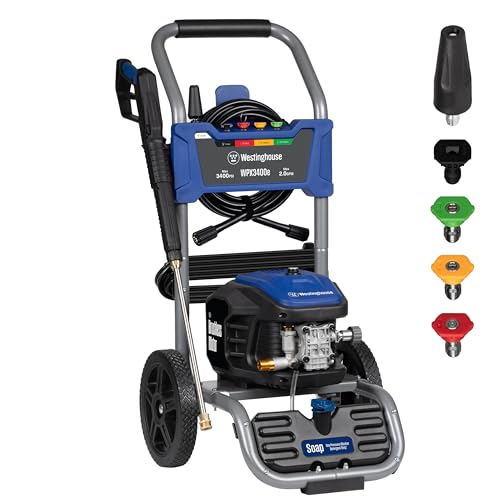
Westinghouse WPX3400e Electric Pressure Washer, 3400 Max PSI and 2.0 Max GPM, Brushless Motor, Onboard Soap Tank, Spray Gun and Wand, 5 Nozzle Set, for Cars/Fences/Driveways/Homes/Patios/Furniture
Delivers 3400 max PSI and 2 max GPM (at lowest pressure), and 3000 rated PSI and 1.1 rated...
As an affiliate, we earn on qualifying purchases.

Greenworks Pro Brushless 3000 PSI (CSA Certified) 2.0 GPM Max / 1.1 GPM Electric Pressure Washer (Foldable Handles, Rugged Steel Frame, 25 FT Hose, 35 FT GFCI Power Cord)
TRUBRUSHLESS MOTOR : Powerful 14 Amp TruBrushless motor generates 3000 PSI and 2.0 GPM for maximum cleaning power.Cleaning...
As an affiliate, we earn on qualifying purchases.