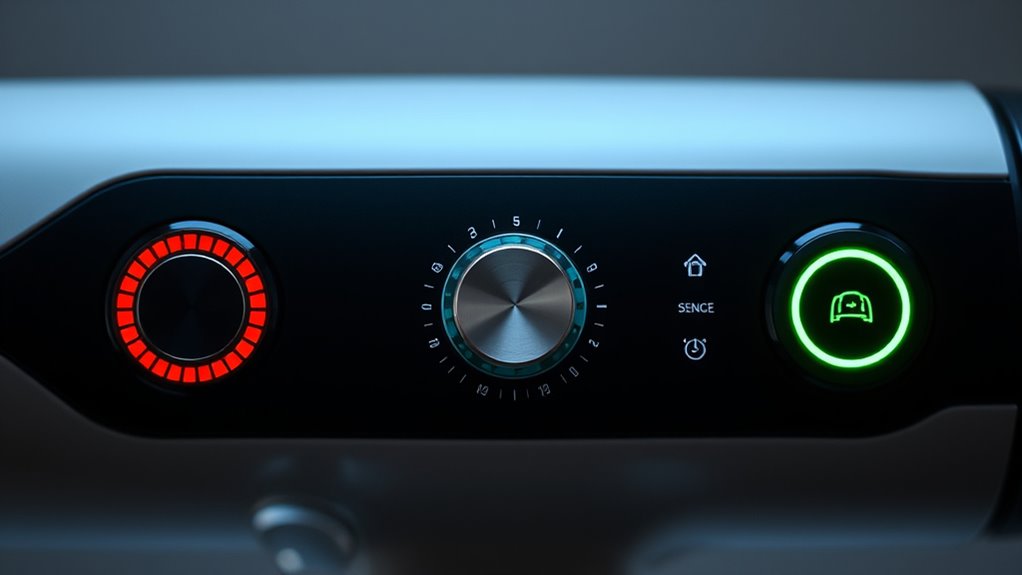

To optimize your dryer’s performance, set the heat level based on your fabric type—low for delicate items and high for towels or jeans. Adjust the drying time to match the moisture content, but rely on sensor technology if available, as it automatically detects when clothes are dry, saving energy and preventing over-drying. Understanding these settings helps protect your fabrics and lowers utility bills. Keep exploring to learn how to fine-tune your dryer for ideal results.

Get your next haul delivered free with Prime
- Fast, free delivery on millions of items
- Prime Video, Amazon Music and more included
- Member-only deals all year
Key Takeaways
- Choose appropriate heat settings (low, medium, high) based on fabric type to prevent damage and optimize drying.
- Use sensor technology to automatically detect moisture levels and adjust drying time accordingly.
- Match drying time with load moisture to avoid over-drying or under-drying, saving energy and preserving fabric quality.
- Select longer or timed cycles for heavily damp or large loads, and shorter cycles for small or lightly damp items.
- Utilize specialized cycles like “air fluff” or “wrinkle release” for minimal heat options that protect delicate fabrics.
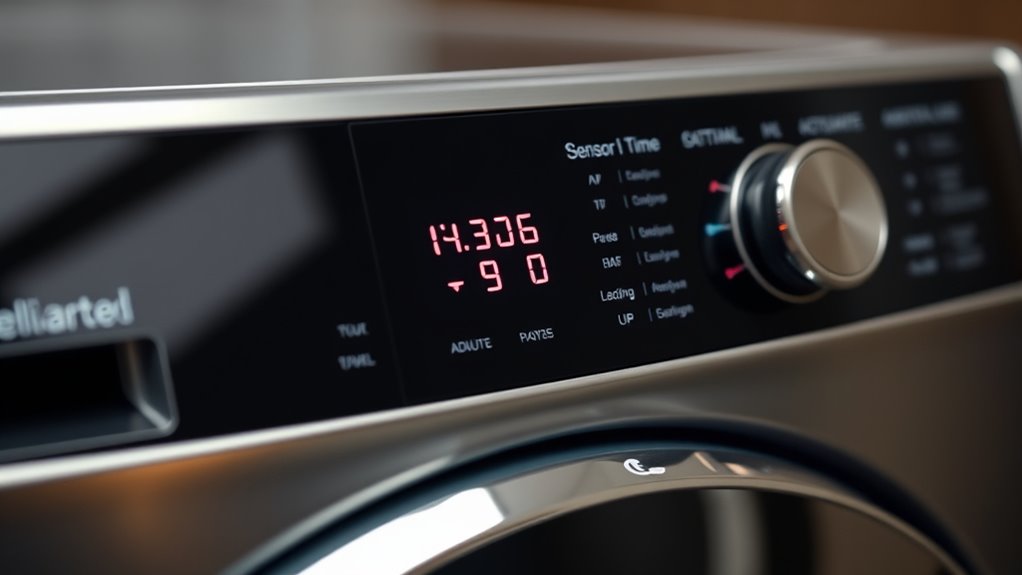
Choosing the right dryer setting can save you time, energy, and prevent damage to your clothes. When you select the appropriate heat and cycle, you guarantee your laundry gets thoroughly dried without wasting electricity or risking fabric deterioration. Energy efficiency is a key benefit of choosing the correct setting, as it helps you reduce utility bills and minimizes environmental impact. Proper fabric care, on the other hand, keeps your clothes looking new longer, maintaining their color, texture, and fit.
Choosing the right dryer setting saves energy, protects fabrics, and keeps your clothes looking new longer.
Start by considering the fabric types you’re drying. For delicate fabrics like silk or lace, use a low heat or delicate cycle. High heat can weaken fibers and cause shrinking or fading. For sturdier materials like towels or jeans, a high heat setting is usually suitable, but even then, it’s important to avoid over-drying. Over-drying not only wastes energy but also harms the fabric, making it brittle over time. Many modern dryers come equipped with sensor technology that detects moisture levels and automatically adjusts drying time. These sensors are excellent for conserving energy and protecting your clothes because they prevent unnecessary drying cycles once your laundry is dry.
Next, pay attention to the drying time. Longer cycles tend to consume more energy, so selecting a cycle that matches your load’s moisture level is more efficient. For smaller loads or clothes that are only slightly damp, a shorter cycle can save both energy and time. Conversely, heavily soaked items may need more time, but using a sensor-based cycle can optimize this process. These sensors analyze moisture and temperature to determine exactly when your clothes are dry, eliminating guesswork and reducing energy waste.
Temperature control is another pivotal factor. High heat settings are great for heavy fabrics but can damage more delicate items and cause unnecessary wear. Use lower heat for delicate fabrics to preserve fabric integrity and prevent shrinkage. Many dryers have multiple heat options, so choose the lowest effective temperature for each load. This careful selection not only protects your clothes but also enhances energy efficiency because you’re avoiding excess heat that isn’t needed. Additionally, some models have energy-saving features that help reduce overall consumption during drying cycles.
Finally, always consider the specific cycle features your dryer offers. Some models have specialized cycles like “wrinkle release” or “air fluff,” which use minimal or no heat. These are perfect for revitalizing clothes without risking damage or using unnecessary energy. By understanding and utilizing these features, you optimize your laundry routine, saving time, energy, and extending the life of your garments. Ultimately, choosing the appropriate dryer setting is about balancing effective fabric care with energy-conscious operation, ensuring your clothes stay in great shape while you remain eco-friendly.
As an affiliate, we earn on qualifying purchases.
Frequently Asked Questions
How Do Sensor Dryers Detect Moisture Levels?
Sensor dryers detect moisture levels using moisture sensors that monitor the humidity inside the drum. These sensors send signals to the control system, which adjusts drying time accordingly. By accurately reading moisture levels, you enjoy improved drying efficiency and prevent over-drying or under-drying your clothes. This smart feature helps you save energy and time, ensuring your laundry is perfectly dry without unnecessary heat or prolonged cycles.
Can I Use High Heat for Delicate Fabrics?
Is using high heat for delicate fabrics a good idea? Probably not. High heat can cause fabric care issues, leading to shrinkage or damage. To avoid heat damage, always select lower heat settings or use delicate cycles. This gentle approach helps protect your clothes and keeps them looking their best. Remember, when in doubt, opt for cooler temperatures to preserve the integrity of your delicate fabrics.
What Settings Save the Most Energy?
You can save the most energy by using eco-friendly programs or low heat settings on your dryer. These options conserve energy by reducing heat and drying time, which also helps extend your clothes’ lifespan. To maximize energy conservation, select cycle options specifically designed for efficiency, like sensor drying or energy-saving modes. This approach minimizes electricity use, lowers your utility bills, and supports environmentally friendly practices.
How Does Dryer Cycle Duration Affect Fabric Wear?
Think of each dryer cycle as a journey through time, where longer durations gently wear down your fabrics like a slow, steady river eroding stone. Extended cycles can weaken fibers, causing more pilling and reduced lifespan. Using fabric softeners can help protect fabrics, and a drying rack can offer a gentler alternative. Keep cycles short and mindful to preserve your clothes’ strength, letting them stay vibrant longer.
Are There Settings for Drying Bulky Items Effectively?
To dry bulky items effectively, you should use specific setting adjustments for bulky item optimization. Select a cycle designed for heavy or bulky fabrics, often labeled as “bulky” or “heavy duty.” Use a lower heat setting to prevent damage and extend the cycle time for thorough drying. This guarantees even moisture removal without risking fabric damage, making your bulky laundry come out perfectly dry and well-maintained.
As an affiliate, we earn on qualifying purchases.
Conclusion
By mastering your dryer’s heat, time, and sensor settings, you guarantee your clothes come out perfect every time. Did you know that using the right settings can save up to 25% on energy bills? That’s not only good for your wallet but also reduces your environmental impact. So, take a moment to adjust your dryer properly—your clothes, your energy bill, and the planet will thank you!
As an affiliate, we earn on qualifying purchases.
As an affiliate, we earn on qualifying purchases.
Halloween Picks
halloween
As an affiliate, we earn on qualifying purchases.