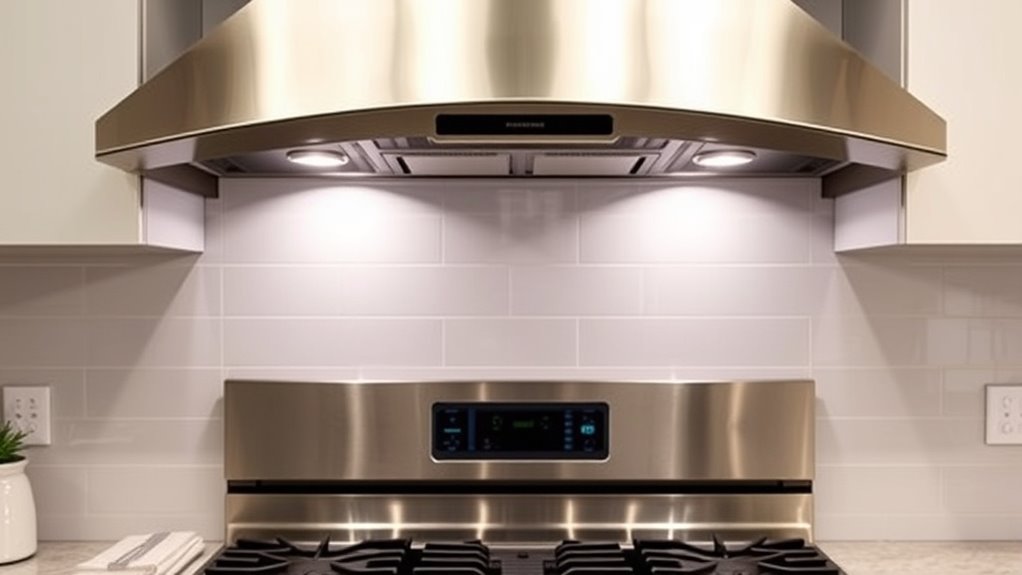

To choose the right range hood size, measure your cooktop’s width and select a hood that extends at least 3 inches beyond each side for better capture of smoke and fumes. Install the hood 24 to 30 inches above your cooktop for ideal ventilation without interfering with cooking. Proper sizing and height improve airflow, safety, and kitchen style. Keep exploring for more tips on creating a perfectly functional and stylish cooking space.
Key Takeaways
- Measure your cooktop’s width accurately, ensuring the hood extends at least 3 inches beyond each side.
- Select a range hood that matches or slightly exceeds your cooktop size for optimal airflow.
- Install the hood with its bottom 24 to 30 inches above the cooktop for effective ventilation.
- Consider kitchen design to choose a size that complements the space and maintains visual harmony.
- Follow manufacturer instructions for height adjustments to balance functionality and safety.
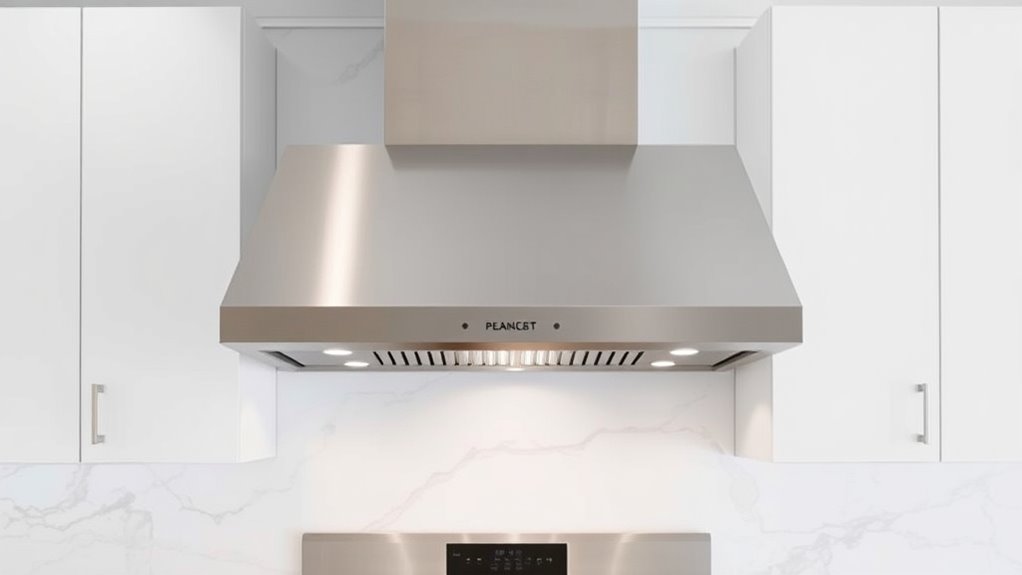
Choosing the right size and installation height for your range hood is essential to guarantee effective ventilation and safety in your kitchen. When you select a hood that’s appropriately sized, it ensures better airflow and removes smoke, steam, and odors efficiently. If the hood is too small, it won’t capture all contaminants, leading to lingering smells and poor air quality. Conversely, a hood that’s too large might overwhelm your space visually and could be more difficult to install properly. To optimize ventilation efficiency, measure your cooktop’s width accurately and choose a range hood that extends at least 3 inches beyond the cooking surface on each side. This extra coverage helps capture smoke and fumes more effectively, preventing them from escaping into the room. Also, consider the power of the venting system; a higher cubic feet per minute (CFM) rating will handle more intense cooking situations, especially if you do a lot of frying or grilling.
Aesthetic considerations play a significant role in selecting the right size and installation height too. Your range hood should complement your kitchen’s design, blending seamlessly with cabinets and countertops. A hood that’s too bulky or mismatched can detract from the overall look, making your space feel cluttered or unbalanced. Modern designs often favor sleek, minimalist hoods that maintain clean lines and don’t overpower the visual flow of your kitchen. When planning the installation height, you want the hood positioned to maximize both function and style. Typically, the bottom of the hood should be about 24 to 30 inches above the cooktop, but this can vary based on the hood’s design and the manufacturer’s recommendations. Installing it too high reduces ventilation efficiency because smoke and fumes have a longer path to travel before being extracted. Too low, and it may interfere with your cooking or feel cramped. You need to strike a balance so that the hood captures contaminants effectively while still fitting comfortably over your workspace.
Proper measurement and planning are also crucial for ensuring safety and efficiency, especially considering security zone info related to home appliances. Ultimately, choosing the right size and installation height involves considering both ventilation efficiency and aesthetic considerations. You want a hood that’s powerful enough to clear the air but also visually appealing and proportionate to your kitchen’s layout. Proper measurement and planning ensure you get the most out of your investment, creating a space that’s both functional and stylish. Remember, taking the time to get these details right makes a noticeable difference in your cooking experience and your kitchen’s overall ambiance.
Frequently Asked Questions
How Do I Measure My Kitchen for the Right Hood Size?
To measure your kitchen for the right hood size, first determine your cooktop’s width, as ventilation standards recommend a hood that’s at least as wide as your stove. Measure the space around your cooktop to guarantee proper clearance. Consider hood material options that match your kitchen decor. Properly sizing your range hood improves airflow and efficiency, ensuring effective ventilation and compliance with safety standards.
What Are the Risks of Installing a Hood Too High or Too Low?
Installing your hood too high is like leaving a candle unguarded—fire hazards increase, and smoke buildup lingers, making your kitchen unsafe. Conversely, placing it too low can create a barrier, blocking airflow and causing grease and smoke to settle. You risk inefficient ventilation and potential fire hazards. Proper height guarantees your hood acts as a vigilant guardian, protecting your space and maintaining safety and air quality.
Can I Install a Range Hood Myself or Should I Hire a Professional?
You can definitely try a DIY installation if you’re comfortable with basic tools and follow the manufacturer’s instructions carefully. However, for safety, proper venting, and making sure it’s securely mounted, you might want to take into account professional assistance. Hiring a professional ensures the job is done correctly, especially for complex venting or electrical work. Weigh your skills and the complexity of your range hood before deciding on a DIY approach or calling in an expert.
How Do I Ensure Proper Ventilation and Airflow Efficiency?
You ensure proper ventilation by optimizing airflow patterns, which means positioning your range hood to capture cooking fumes effectively. Consider your kitchen layout—placing the hood centrally and at the right height helps air circulate smoothly. Avoid obstructions that disrupt airflow, and choose a powerful enough vent. By balancing these factors, you create a safer, fresher environment where air moves effortlessly, transforming your kitchen into a more comfortable space.
Are There Specific Regulations or Codes I Need to Follow?
Yes, you need to follow building codes and safety standards when installing a range hood. Check your local regulations, which often specify venting requirements, clearance heights, and electrical connections. Confirming compliance helps prevent hazards and ensures proper ventilation. Always review the manufacturer’s instructions and consult with a professional if you’re unsure. Following these guidelines guarantees your installation is safe, legal, and effective for airflow and ventilation.
Conclusion
Think of your range hood as the guardian of your kitchen’s air, standing tall and proud. When you choose the right size and install it at the perfect height, you’re forging a shield that keeps your space fresh and inviting. Just like a vigilant sentinel, your hood works tirelessly—so give it the proper size and position. In doing so, you create a harmonious balance, ensuring your kitchen remains a sanctuary of clean air and culinary joy.