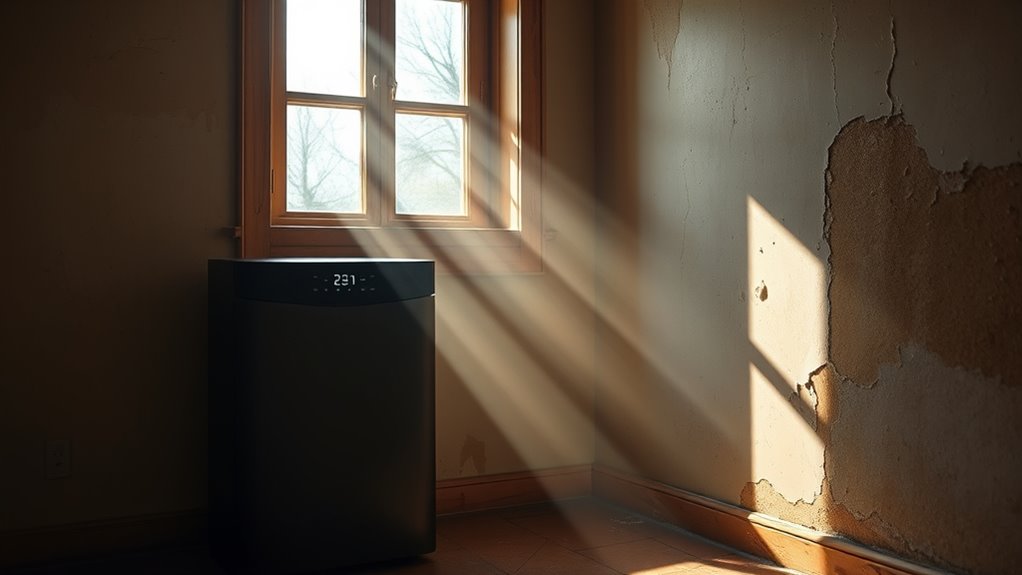

To dry damp rooms quickly, place your dehumidifier in the most moisture-heavy areas like basements, bathrooms, or laundry rooms first. Position it centrally for best airflow and avoid tight corners or behind furniture. Keep it away from heat sources, direct sunlight, and cold spots to maintain efficiency. Use multiple units if needed, and regularly empty the water reservoir and clean filters. Following these tips will help you maximize moisture removal—discover more ways to enhance your drying process as you continue.

Get your next haul delivered free with Prime
- Fast, free delivery on millions of items
- Prime Video, Amazon Music and more included
- Member-only deals all year
Key Takeaways
- Prioritize placing dehumidifiers in the dampest rooms like basements and bathrooms first.
- Position units centrally in each damp room for maximum moisture extraction.
- Keep dehumidifiers away from walls, furniture, and heat sources to ensure proper airflow.
- Use multiple units or move them between damp areas for comprehensive coverage.
- Regularly maintain and monitor units to sustain efficiency in drying damp rooms.
Proper dehumidifier placement is essential for maximizing its effectiveness in controlling moisture levels. When you position your dehumidifier correctly, you ensure it works efficiently, reducing dampness and preventing mold growth. The first step is to identify the dampest rooms in your home, such as basements, bathrooms, or laundry areas. These spaces often have the highest humidity levels, and targeting them first gives you the best results. By focusing on these areas initially, you prevent moisture from spreading to other parts of your home, creating a healthier living environment.
Once you’ve pinpointed the damp zones, place your dehumidifier in a central location within each room. You want it to be accessible to air circulation, so avoid placing it behind furniture, curtains, or in tight corners that restrict airflow. Keep it a few inches away from walls or objects to allow proper air intake and exhaust. Elevating the unit slightly on a small platform or stand can improve airflow and efficiency, especially if your floors are uneven or if the unit’s vents are at the bottom. Remember, the goal is to promote even air circulation throughout the space, so the dehumidifier can extract moisture uniformly.
Another key aspect is to position the dehumidifier away from sources of heat or direct sunlight. Heat can cause the unit to work harder, reducing its efficiency. Conversely, cold spots can result in condensation forming on the device, which might damage it or reduce its lifespan. Keep the dehumidifier on level ground to prevent vibrations or noise that could disturb its operation. If you’re dealing with multiple damp rooms, consider using separate units or moving your dehumidifier from one area to another as needed. This approach allows you to target specific problem spots effectively.
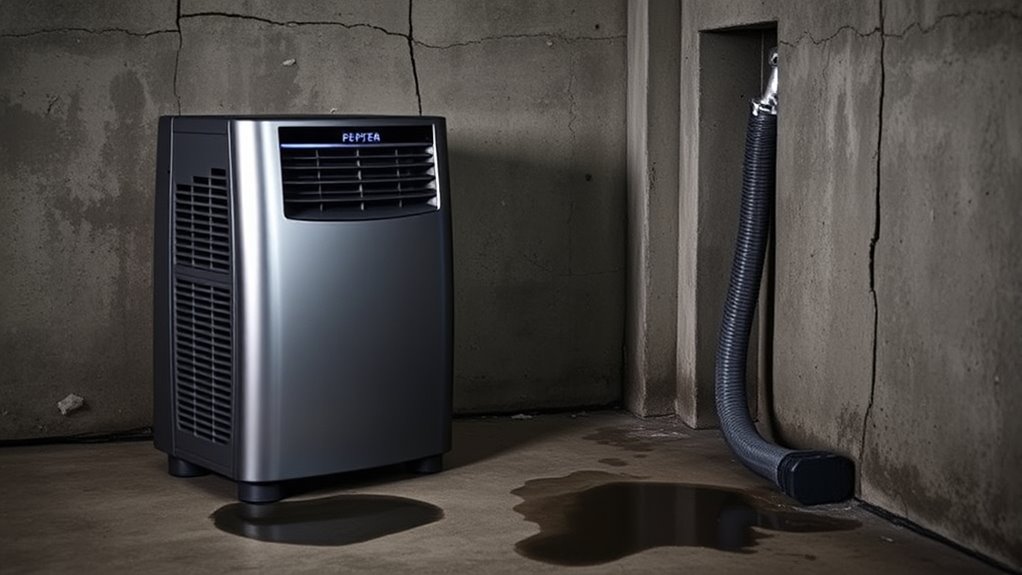
In areas prone to persistent dampness, such as basements, you might want to place the dehumidifier near the center or at the lowest point where moisture tends to collect. Some models come with built-in drainage options, so positioning the unit near a drain or installing a hose for continuous drainage can save you time and effort. Regularly checking and maintaining the unit, including emptying the water reservoir and cleaning filters, ensures it operates at peak efficiency. Additionally, studies show that well-placed dehumidifiers can reduce mold growth and improve indoor air quality significantly. By placing your dehumidifier thoughtfully and focusing on the dampest rooms first, you create a more comfortable, mold-free environment and protect your home’s structural integrity.
Frequently Asked Questions
How Long Should I Run My Dehumidifier in Damp Rooms?
You should run your dehumidifier in damp rooms until the moisture levels reach a comfortable and safe range, usually between 30-50% humidity. This can take anywhere from a few hours to a couple of days, depending on how damp the room is. Keep an eye on the humidity gauge, and run the dehumidifier continuously or intermittently until the desired level is maintained.
Can Dehumidifiers Eliminate Mold Completely?
A dehumidifier can fight mold, but it’s not a magic wand that banishes it forever. It reduces moisture, making your space less inviting for mold to grow, but doesn’t eliminate existing spores entirely. Think of it as a brave knight shielding your home—effective but not invincible. To truly conquer mold, combine dehumidification with cleaning, proper ventilation, and fixing leaks. That way, you’re turning your space into a fortress against mold’s return.
Is It Better to Place a Dehumidifier Near a Wall?
It’s better to place a dehumidifier a few inches away from the wall, not directly against it. This allows for proper airflow and prevents overheating. Keep it centered in the room or near damp areas for ideal moisture removal. Avoid blocking vents or grilles, and make sure there’s enough space around the unit for air circulation. Proper placement maximizes efficiency, helping you dry out damp spaces faster and reduce mold risk effectively.
How Often Should I Clean My Dehumidifier’s Filter?
You should clean your dehumidifier’s filter every 2 to 4 weeks, depending on usage and dust levels. Regular cleaning guarantees efficient operation and prevents mold or bacteria buildup. Check the manufacturer’s instructions for specific guidance. If you notice reduced airflow or increased humidity levels, it’s time to clean the filter sooner. Keeping the filter clean helps your dehumidifier work effectively and extend its lifespan.
Can Dehumidifiers Be Used in Multiple Rooms Simultaneously?
Yes, you can use dehumidifiers in multiple rooms simultaneously. You’ll want to position each unit strategically for maximum efficiency, such as in damp areas or rooms with high humidity. Make sure each dehumidifier has enough space around it for proper airflow. Keep an eye on humidity levels in each room to prevent over-drying, and regularly empty or maintain the units for ideal performance.
Conclusion
By placing your dehumidifier in the dampest room first, you’re targeting the problem at its source. Imagine a basement where mold and moisture thrive — placing the dehumidifier there quickly dries the air, preventing further damage. Just like in a real case where homeowners saw mold fade within days, your strategic placement guarantees your whole home stays dry and comfortable. Start smart, and watch dampness disappear before it spreads.
Columbus Day / Indigenous Peoples' Day Picks
long weekend sales
As an affiliate, we earn on qualifying purchases.