To stay safe when microwaving, use only containers labeled microwave-safe, like glass or ceramic, and avoid plastics that can melt or leach chemicals. Metal and aluminum foil should be avoided or used with caution, as they can cause sparks or fires. Proper shielding with vented covers helps prevent splatters and pressure buildup. Want to learn how to guarantee your containers and shielding maximize safety and efficiency? Keep exploring for helpful tips.
Key Takeaways
- Use only microwave-safe containers like glass and ceramic; avoid plastics not labeled as such.
- Metal containers and utensils should be avoided to prevent sparks, fires, and damage.
- Aluminum foil can be used to shield food but must be crumpled and used carefully to prevent sparks.
- Always check containers for cracks or damage, as compromised containers can cause uneven heating or hazards.
- Cover food with microwave-safe lids or vented covers to prevent splatters while allowing steam escape.
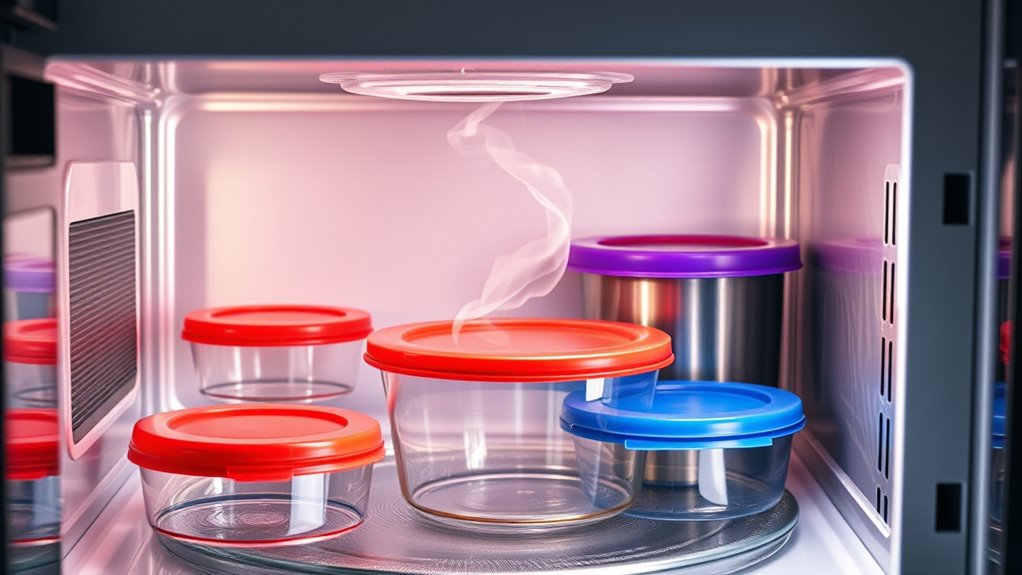
Have you ever wondered if your microwave is safe to use? It’s a common concern, especially when it comes to understanding how microwave radiation interacts with the containers you choose. Microwave radiation is the energy used to heat food quickly inside your appliance, but it’s contained within the microwave’s metal enclosure. When the microwave is functioning properly, the radiation stays inside, preventing any harm. However, the types of container materials you use can influence safety and efficiency. Not all materials are microwave-safe, and using the wrong ones can cause sparks, uneven heating, or even damage to your microwave.
Understanding microwave-safe containers is key to safe, efficient heating.
The key to safe microwave use is understanding which container materials are appropriate. Glass and ceramic containers are generally safe because they don’t absorb microwave energy and won’t spark or melt. Plus, they usually don’t interfere with the microwave radiation, ensuring your food heats evenly. On the other hand, some plastics can be tricky. Many plastics are labeled microwave-safe, but others contain chemicals that could leach into your food when heated. Always check for microwave-safe labels on plastic containers before use. Avoid using plastic containers that aren’t designed for microwave use, as they might warp or release harmful substances when exposed to microwave radiation.
Metal containers and utensils should be avoided altogether. Metal reflects microwave radiation, which can cause sparks, arcs, or even fires. If you accidentally put a metal object in your microwave, you risk damaging the appliance or creating a hazardous situation. Additionally, aluminum foil can be used in specific ways to shield parts of food from overcooking, but it must be used carefully and never crumpled into tight balls or used improperly, as it can cause sparks or fires. Being aware of microwave radiation interactions helps prevent accidents and ensures safe operation.
To maximize safety, always use containers that are explicitly labeled microwave-safe. Check for cracks or damage in the containers—damaged or broken containers can absorb microwave energy differently, leading to uneven heating or potential hazards. Cover your food with microwave-safe lids or vented covers to prevent splatters and retain moisture, but ensure these covers are also microwave-safe and don’t trap steam in a way that could cause pressure buildup.
Frequently Asked Questions
Can I Microwave Plastic Wrap Directly on Food?
You shouldn’t microwave plastic wrap directly on food because it can melt or release harmful chemicals, risking plastic wrap safety. Instead, use microwave-safe containers designed for heating, and cover your food with microwave-safe lids or vented covers. Always check the packaging for microwave compatibility, and avoid using non-microwave-safe plastic wraps to prevent chemical leaching and guarantee safe heating.
Are Ceramic Containers Safe for Microwave Use?
Yes, ceramic containers are safe for microwave use if they have microwave compatibility and are made from durable ceramic materials. You should check for a microwave-safe label or symbol to confirm. Ceramic durability ensures the container withstands heat without cracking or breaking. Always avoid containers with metallic paints or decorations, and never microwave chipped or damaged ceramics. Properly chosen ceramic containers can safely heat your food without issues.
How Do I Know if a Container Is Microwave-Safe?
You can easily find out if a container is microwave-safe by checking its labels. Look for words like “microwave safe” or symbols indicating microwave suitability. Most microwave container labels are reliable and show you’re using the right microwave safe materials. If unsure, test by microwaving the container with water for a short time. If it stays cool and doesn’t warp, you’re good to go!
Do Metal Utensils Affect Microwave Safety?
Metal utensils can affect microwave safety because they reflect microwave radiation, which can cause sparks or fires. Metal containers and utensils interfere with microwave shielding, potentially damaging your appliance or causing uneven heating. Avoid using metal items in the microwave unless they are specifically designed for microwave use, like certain microwave-safe metal shields. Always opt for microwave-safe containers and utensils to keep your cooking safe and efficient.
Can Microwave Radiation Leak From Damaged Ovens?
Sure, if your microwave oven is damaged, radiation leakage could happen—think of it as a tiny, sneaky spy sneaking out. You definitely shouldn’t ignore the signs of microwave oven damage because it increases the risk of radiation leakage. It’s like leaving your front door open; you never know what might wander in. So, always check for damage and get it repaired or replaced to keep radiation safely contained.
Conclusion
So, next time you nuke leftovers, remember that those seemingly harmless containers could be your microwave’s sneaky Achilles’ heel. Ironically, while your microwave promises quick convenience, a simple mistake with containers or shielding could turn it into a miniature hazard. Enjoy your fast meals, but don’t forget—sometimes safety is the last thing on your mind until it’s too late. Keep your shields up, and your microwave will keep serving safely.