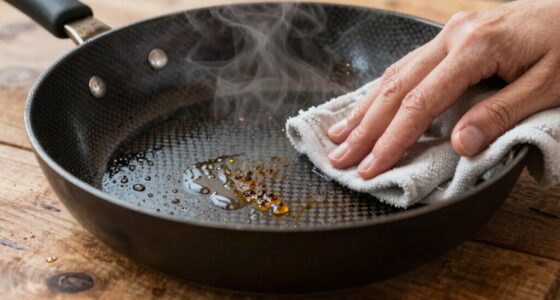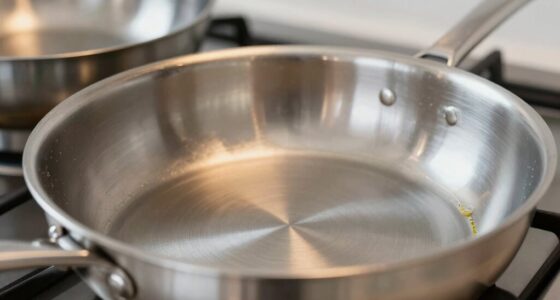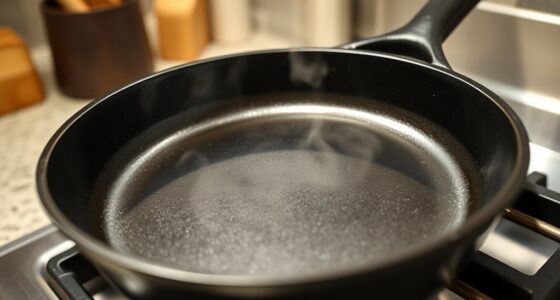

Choosing the right wok material, like carbon steel or cast iron, helps you cook evenly and develops a natural non-stick surface through seasoning. Regularly seasoning your wok by applying oil and heating it creates a better cooking surface, while proper cleaning and maintenance guarantee durability. Mastering heat control is essential for stir-frying, steaming, or frying, so your dishes turn out perfect. Keep exploring to discover how proper techniques can elevate your wok cooking skills even further.

Get your next haul delivered free with Prime
- Fast, free delivery on millions of items
- Prime Video, Amazon Music and more included
- Member-only deals all year
Key Takeaways
- The main wok materials include cast iron, carbon steel, and stainless steel, each affecting heat conduction and durability.
- Seasoning involves applying oil and heating to create a natural non-stick surface, essential for cast iron and carbon steel woks.
- Proper cleaning without soap and thorough drying prevent rust, maintaining the wok’s seasoning and longevity.
- High heat is crucial for stir-frying, with preheating and quick ingredient movement ensuring optimal results.
- Material choice influences heat response, impacting how quickly and evenly a wok heats and how it should be managed during cooking.
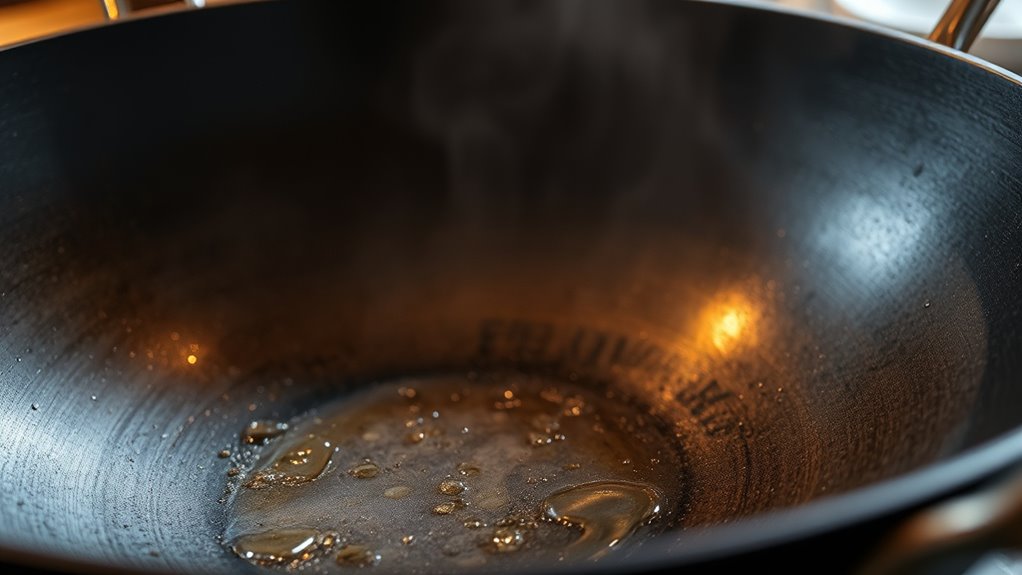
A wok is a versatile and indispensable tool in many kitchens, especially for stir-frying, steaming, and deep-frying. It quickly becomes your go-to because of its ability to handle a variety of cooking techniques with ease. To get the most out of your wok, you need to understand proper wok maintenance and how to master different cooking techniques. Regular care guarantees it stays in top condition and performs well for years to come.
When it comes to wok maintenance, the key is to keep it seasoned and clean without damaging its surface. If you have a cast iron or carbon steel wok, seasoning is essential because it creates a natural non-stick coating. To do this, after washing it with hot water and a brush, dry it thoroughly and apply a thin layer of oil, then heat it until the oil smokes. This process should be repeated periodically to maintain the seasoning and prevent rust. Avoid using soap, which can strip the seasoning, and always dry your wok completely after cleaning to prevent corrosion. For stainless steel woks, maintenance mainly involves regular cleaning and avoiding abrasive scrubbers that could scratch the surface. Proper maintenance not only prolongs the lifespan of your wok but also enhances its performance by developing a better non-stick surface over time.
Keep your wok seasoned and clean for optimal performance and longevity.
Mastering cooking techniques with your wok involves understanding how to control heat and utilize different methods. High heat is fundamental for stir-frying because it allows ingredients to cook quickly and develop flavor without becoming soggy. Preheat your wok until it’s hot before adding oil, then quickly add your ingredients, stirring constantly to prevent sticking and ensure even cooking. Steaming, on the other hand, requires a different approach—placing a steaming rack inside the wok, adding water, and covering it creates a moist environment perfect for delicate foods. Deep-frying demands maintaining a consistent temperature, usually around 350°F (175°C), which means you might need a thermometer to monitor the oil. Always add ingredients carefully to avoid splatters, and don’t overcrowd the wok, as this can lower the temperature and lead to greasy results.
In addition to mastering these techniques, adjusting your heat level is indispensable for different recipes. A quick stir-fry needs high heat, while steaming calls for medium to low heat. Learning how to control the heat allows you to cook ingredients perfectly and avoid burning or undercooking. As you get more comfortable, you’ll find that your wok’s shape and material greatly influence the cooking process. For example, a well-seasoned carbon steel wok heats up quickly and distributes heat evenly, making it ideal for most techniques. Proper wok maintenance combined with the right cooking techniques means you’ll get consistently delicious results and extend the life of your trusty wok. Understanding the history of wok materials can help you choose the right wok for your needs and ensure optimal performance. With practice, you’ll discover how to adapt your methods for different dishes, relying on your wok’s unique properties to bring out rich flavors and textures.
As an affiliate, we earn on qualifying purchases.
Frequently Asked Questions
How Do I Prevent Rust on My Wok?
To prevent rust on your wok, you should keep up with proper wok maintenance by thoroughly drying it after each use. Apply a light coat of oil before storing to create a barrier against moisture. Avoid soaking it in water and never leave it wet for long periods. Regularly check for any signs of rust and scrub it off promptly. These rust prevention tips will help keep your wok in great condition for years.
Can I Use Soap to Clean My Seasoned Wok?
You can use dish soap to clean your seasoned wok, but do so sparingly. Dish soap won’t ruin your seasoning if you rinse it thoroughly afterward. Use gentle cleaning techniques, like a soft sponge or brush, to remove food residue without stripping the seasoning. After washing, dry your wok promptly and apply a light coat of oil. This keeps it well-maintained and prevents rust, ensuring your wok stays non-stick and durable.
What’s the Best Way to Store My Wok Long-Term?
Thinking about long-term wok storage? You should clean it thoroughly, dry it completely, and apply a light coat of oil to prevent rust. Store it in a dry, well-ventilated area, preferably hanging or on a shelf to avoid moisture buildup. Isn’t it worth the effort to keep your wok in top shape? Proper wok maintenance and storage techniques ensure your pan stays seasoned and ready for your next culinary adventure.
Is It Safe to Cook Acidic Foods in a Cast Iron Wok?
Yes, it’s safe to cook acidic foods in a cast iron wok, but be aware of the acidic reaction. Acidic ingredients can strip away the seasoning, causing rust and damaging your wok over time. To minimize this, avoid prolonged cooking of acids and rinse your wok thoroughly afterward. Proper wok maintenance, including regular seasoning and dry storage, helps prevent corrosion and keeps your wok in excellent condition for future use.
How Often Should I Reseason My Wok for Optimal Performance?
You should reseason your wok about every 6 to 12 months to maintain ideal performance. Regular wok maintenance involves reseasoning when you notice food sticking or the surface dulling. If you cook frequently or use your wok often, consider reseasoning more often, perhaps every few months. This keeps the surface non-stick, protects against rust, and guarantees your wok stays in great condition for all your stir-fry adventures.
As an affiliate, we earn on qualifying purchases.
Conclusion
Now that you know the secrets of wok magic—its materials, seasoning, and heat—you’re ready to wield this culinary tool like a seasoned artist. Think of your wok as a trusty brush, transforming simple ingredients into vibrant, flavorful dishes. With proper care and understanding, your wok will be your loyal partner in the kitchen, turning every stir-fry into a masterpiece. So go ahead, ignite your passion and cook with the fiery spirit of a wok master!
As an affiliate, we earn on qualifying purchases.
As an affiliate, we earn on qualifying purchases.
Halloween Picks
halloween
As an affiliate, we earn on qualifying purchases.