An air purifier works in multiple stages to clean your indoor air. First, the pre-filter captures large particles like dust and pet hair, preventing blockages. Next, the HEPA filter traps tiny allergens, pollen, and mold spores to improve air quality. The activated carbon filter then neutralizes odors and harmful gases. Some models include UV light or ionizers for extra purification. Understanding these stages helps you keep your air fresh — keep exploring to learn how to maintain each one effectively.

Get your next haul delivered free with Prime
- Fast, free delivery on millions of items
- Prime Video, Amazon Music and more included
- Member-only deals all year
Key Takeaways
- The pre-filter catches large particles like dust and pet hair to prevent clogging and extend filter life.
- The HEPA filter captures tiny allergens, pollen, and mold spores with 99.97% efficiency.
- The activated carbon filter removes odors, gases, and chemical fumes from indoor air.
- Additional features like UV lights or ionizers may enhance air cleaning but are not always essential.
- Regularly replacing filters ensures the purifier works effectively and maintains good indoor air quality.

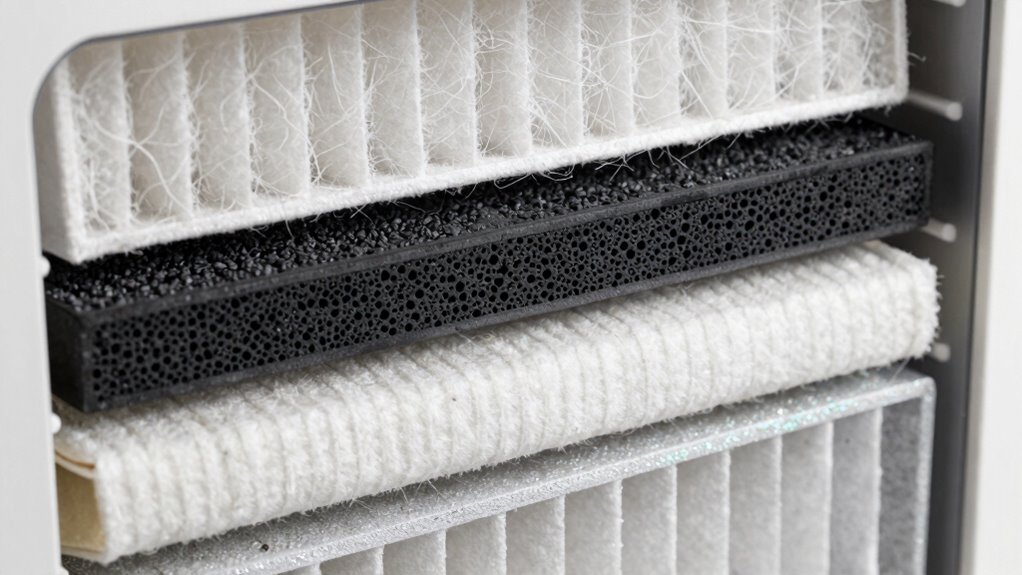
Have you ever wondered how air purifiers effectively remove pollutants from your indoor air? The secret lies in their multiple filter stages, each designed to target specific contaminants and improve air quality. When you turn on your air purifier, the air first passes through a pre-filter. This initial stage catches large particles like dust, pet hair, and lint, preventing them from clogging the more delicate filters downstream. It’s a simple but essential step that helps extend the lifespan of your device’s more sophisticated filters. Proper maintenance of this stage is crucial for optimal performance.
Next, the air moves through the HEPA filtration stage. HEPA, which stands for High-Efficiency Particulate Air, is known for its remarkable ability to trap tiny particles. If you’re concerned about allergens, pollen, mold spores, or even some bacteria, HEPA filters are your best line of defense. They can capture particles as small as 0.3 microns with an efficiency of 99.97%, making your indoor air much cleaner and healthier to breathe. When you have allergies or asthma, this stage becomes particularly valuable, as it markedly reduces the triggers that worsen your symptoms.
Following the HEPA filter, activated carbon plays an essential role in neutralizing odors and harmful gases. Whether it’s cooking smells, pet odors, cigarette smoke, or volatile organic compounds (VOCs) emitted by household products, activated carbon absorbs these pollutants before they can circulate through your space. The process involves tiny pores in the carbon that trap gas molecules, effectively removing unpleasant smells and chemical fumes from the air you breathe. It’s especially helpful in homes where indoor air quality is compromised by smoke or strong chemical odors. Regularly replacing the activated carbon can significantly improve the overall effectiveness of the filtration system. Additionally, understanding the filter lifespan and replacing filters promptly can maximize the efficiency of each stage. To further optimize your air purifier’s performance, keeping the filters clean and monitoring their condition is highly recommended. *In addition, choosing filters with appropriate filtration capacity can greatly influence overall air quality.*
Some air purifiers incorporate additional stages, like UV light or ionizers, but the core filter system relies on these primary stages: pre-filter, HEPA filtration, and activated carbon. Each stage works together, ensuring that large particles are caught early, tiny allergens are filtered out with precision, and odors or gases are eliminated. When you understand this layered approach, you’ll appreciate how your air purifier cleans your environment efficiently and effectively. Maintaining and replacing filters as recommended is crucial to filter performance, ensuring that each stage continues to work at its best so your indoor air stays fresh, healthy, and free of pollutants. Proper care and timely replacement of filters enhance overall air quality.
HEPA air purifier filter replacement
As an affiliate, we earn on qualifying purchases.
As an affiliate, we earn on qualifying purchases.
Frequently Asked Questions
How Often Should I Replace Each Filter Stage?
You should replace each filter stage based on its filter lifespan and replacement indicators. Typically, pre-filters last 3-6 months, HEPA filters around 12-18 months, and carbon filters every 3-6 months. Keep an eye on replacement indicators or check for visible dirt and reduced airflow. Regularly changing filters guarantees your air purifier stays effective, so follow the manufacturer’s recommendations for maximum performance and healthy indoor air quality.
Do Filter Stages Remove Odors Effectively?
Yes, filter stages, especially activated carbon filters, effectively absorb odors. They trap smoke, pet smells, and cooking odors, improving air quality. To maintain odor absorption, you need to replace filters as recommended, since their filter lifespan diminishes over time. Regularly changing the filters ensures continued odor removal and maximum purifier performance, so keep an eye on the filter’s condition and follow the manufacturer’s guidelines for replacements.
Are Higher-Grade Filters Worth the Extra Cost?
Sure, splurging on higher-grade filters might seem like a luxury, but it’s really a savvy move for your air quality. The filter material in premium models often captures more tiny particles and odors, offering a noticeable difference. While the cost benefit isn’t always immediate, investing in better filters can save you from frequent replacements and keep your space fresher longer. Sometimes, paying extra truly pays off in cleaner, healthier air.
How Do Filter Stages Impact Energy Consumption?
Filter stages directly impact energy consumption because more stages often mean the purifier works harder, reducing energy efficiency. As filters trap more particles, they may clog faster, decreasing filter lifespan and requiring more frequent replacements or higher power to maintain airflow. To save energy, choose a purifier with an ideal number of stages for your needs, and regularly maintain filters to keep the device running efficiently without overexerting.
Can Filter Stages Eliminate Viruses and Bacteria?
Yes, filter stages can help eliminate viruses and bacteria, but effectiveness varies. For example, a HEPA filter captures 99.97% of airborne particles, including some viruses and bacteria. This means virus removal and bacteria filtration are possible, especially with multiple stages working together. However, no filter guarantees complete elimination, so combining air purification with other measures is best for maintaining a healthier environment.
activated carbon filter for air purifier
As an affiliate, we earn on qualifying purchases.
As an affiliate, we earn on qualifying purchases.
Conclusion
Think of your air purifier as a skilled gatekeeper, fiercely guarding your air from unwanted guests like dust, pollen, and germs. Each filter stage acts like a different line of defense, working together to keep your indoor air clean and invigorating. By understanding these stages, you’re better equipped to choose and maintain your purifier. Remember, a well-maintained filter is your best ally in breathing easier—like having a gust of fresh mountain air, right in your home.
As an affiliate, we earn on qualifying purchases.
As an affiliate, we earn on qualifying purchases.
Halloween Picks
halloween
As an affiliate, we earn on qualifying purchases.