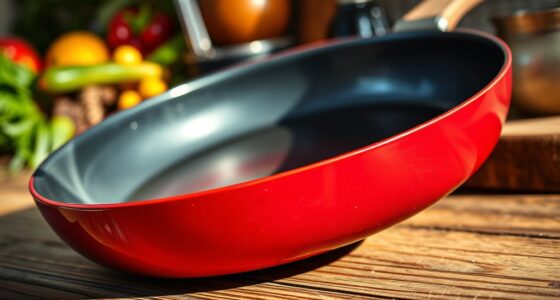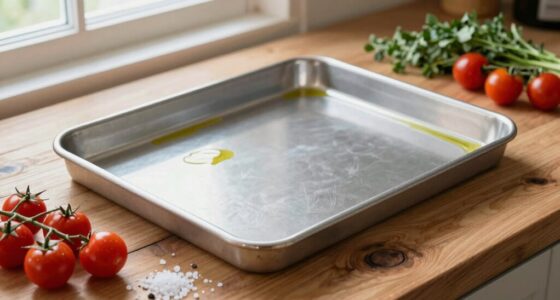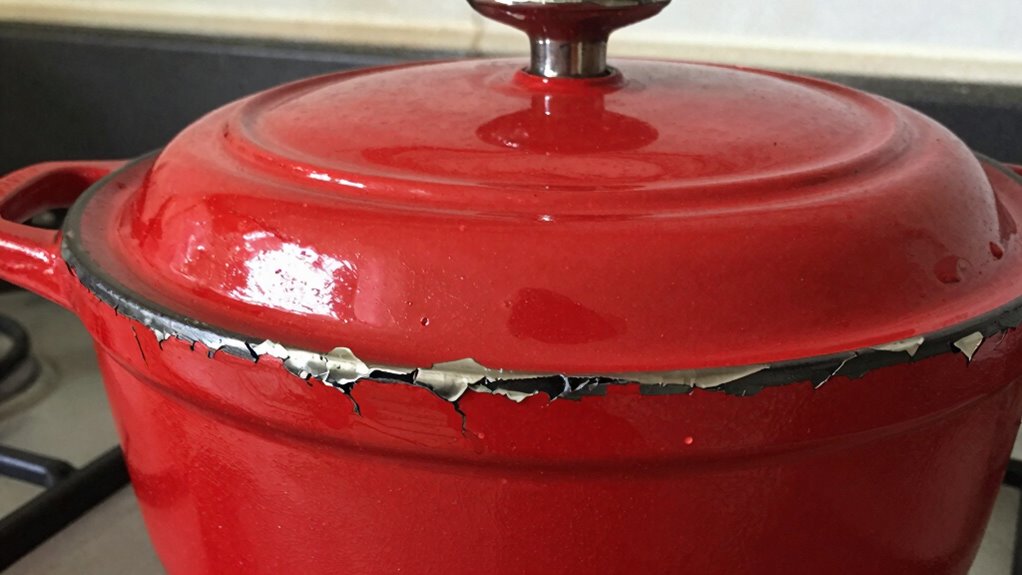

Enameled cookware chips mainly because of impacts from dropping, sudden temperature changes, and improper handling. To prevent damage, handle it carefully and avoid rapid shifts from hot to cold. Use wooden or silicone utensils to reduce scratches, and store your cookware with padding to prevent impacts. Proper care and safe storage can extend its life. Want to discover more tips on keeping your enameled cookware in top shape? Keep going to find out more.

Get your next haul delivered free with Prime
- Fast, free delivery on millions of items
- Prime Video, Amazon Music and more included
- Member-only deals all year
Key Takeaways
- Impact from drops or mishandling causes cracks and chips in the enamel coating.
- Sudden temperature changes create stress, leading to chipping or cracking of the enamel surface.
- Friction from stacking without padding scratches the enamel, increasing damage risk.
- Using metal utensils or applying excessive force can chip the enamel during cooking.
- Proper storage with padding and gentle handling prevents impacts and extends enamel cookware lifespan.
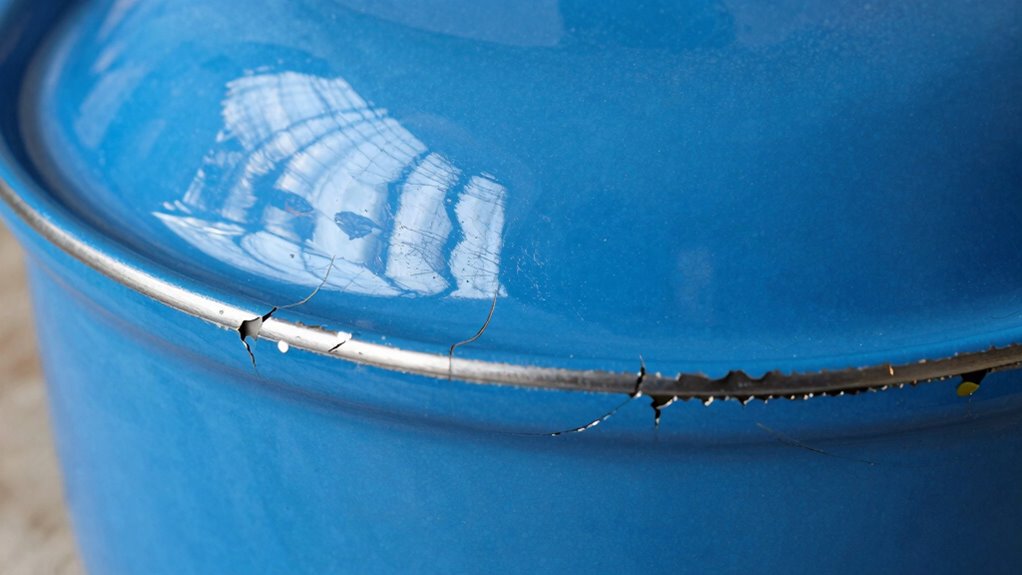
One of the main reasons enameled cookware chips is due to impact or sudden temperature changes. If you drop your pot or pan, the enamel can crack or chip easily. Rapid transitions from hot to cold can also cause stress on the enamel surface, making it more prone to breakage. To minimize these risks, always handle your cookware carefully, especially when moving it from stovetop to sink or oven to countertop. Using wooden or silicone utensils instead of metal ones can also help prevent scratching or chipping the enamel surface during cooking. Additionally, avoid stacking your enameled cookware directly on top of each other without protective padding, as friction can cause damage over time. Proper care and handling of your cookware can significantly extend its lifespan and prevent damage. Durability concerns extend beyond just avoiding chips. Once the enamel is compromised, it’s important to evaluate whether repair options are feasible. For minor chips, some people opt for enamel repair kits, which typically include a ceramic filler that can be applied to cover small cracks or chips. These kits are affordable and easy to use, but their effectiveness depends on the size and location of the chip. Keep in mind, though, that repairs may not restore the cookware to its original strength or appearance and might not be suitable for cookware used frequently or for cooking acidic foods. Proper storage can also help prevent accidental impacts that cause chipping, such as placing cookware in a crowded cabinet or stacking it improperly. Using protective padding or dish racks can further help prevent damage during storage. If the damage is extensive, replacing the cookware might be the safest choice. It can be tempting to try and extend the life of a chipped piece, but compromised enamel can harbor bacteria and cause further deterioration. Implementing proper handling techniques and being mindful of your cookware’s condition can greatly reduce the risk of chipping over time. When considering repair options, weigh the cost and effort against the potential benefits. Sometimes, investing in new cookware provides peace of mind and ensures you’re using safe, durable tools for your cooking needs. Ultimately, taking care of your enameled cookware by avoiding impacts and temperature shocks can help prevent chips and prolong its lifespan, saving you money and frustration down the road.
enameled cookware impact resistant pads
As an affiliate, we earn on qualifying purchases.
As an affiliate, we earn on qualifying purchases.
Frequently Asked Questions
Can Enameled Cookware Be Repaired After Chipping?
Enameled cookware can sometimes be repaired after chipping, but it’s limited. Restoration techniques like using epoxy or specialized repair kits can fill small chips, but they might not restore the original durability or appearance. To prevent further damage, adopt preventative measures such as avoiding metal utensils and sudden impacts. Keep your cookware gentle during cleaning and store it carefully to minimize chipping, ensuring it stays in good condition longer.
Does Dishwasher Cleaning Cause Enameled Cookware Chips?
Dishwasher cleaning can cause enameled cookware chips because dishwasher damage from harsh detergents and high heat weakens the enamel coating. Using aggressive cleaning methods, like abrasive sponges or harsh chemicals, also increases the risk. To prevent chips, avoid placing your enameled cookware in the dishwasher, opt for gentle hand washing, and use mild cleaners. Taking these precautions helps maintain your cookware’s surface and prolongs its lifespan.
Are Certain Foods More Likely to Chip Enameled Surfaces?
Certain foods are more likely to chip enameled surfaces, especially those with high food acidity. Acidic foods like tomatoes, citrus, and vinegar can weaken the enamel over time. Additionally, cooking at high temperatures can cause thermal stress, increasing the risk of chipping. To protect your cookware, avoid prolonged exposure to high heat and acidic ingredients, and use gentle utensils to prevent scratches that may lead to chipping.
How Long Does Enameled Cookware Typically Last Before Chipping?
Enameled cookware usually lasts 5 to 10 years before chipping, depending on usage and care. To maximize enameled durability, you should avoid sudden temperature changes and use gentle cleaning methods. Chip prevention techniques include using wooden or silicone utensils and avoiding metal scrubbers. Proper handling and maintenance can considerably extend the lifespan of your enameled cookware, helping you enjoy it longer without chips or damage.
Is It Safe to Cook With Chipped Enameled Cookware?
Sure, because eating tiny chips of enameled cookware sounds like a gourmet experience, right? In reality, it’s not very safe. Chipped enameled cookware may compromise surface integrity, exposing you to harmful substances and potential food safety issues. Cooking with damaged surfaces can lead to metal leaching or bacteria buildup. So, it’s best to replace or repair chipped pots, ensuring your food stays safe and your cookware’s integrity remains intact.
As an affiliate, we earn on qualifying purchases.
Conclusion
Think of your enameled cookware as a delicate gemstone—beautiful but vulnerable if mishandled. By avoiding sudden impacts, using gentle utensils, and cleaning carefully, you can keep your cookware shining bright for years to come. Remember, each chip is like a tiny crack in the glass of a treasured stained glass window, marring its beauty and strength. Treat your cookware with care, and it’ll serve you well, preserving its vibrant finish like a treasured piece of art.
As an affiliate, we earn on qualifying purchases.
protective padding for cookware storage
As an affiliate, we earn on qualifying purchases.
As an affiliate, we earn on qualifying purchases.
Columbus Day / Indigenous Peoples' Day Picks
long weekend sales
As an affiliate, we earn on qualifying purchases.