
To decide between indoor and outdoor cameras for your entryway, consider the lighting and weather conditions. If your area is well-lit and sheltered, an indoor camera with night vision may suffice. For shaded or harsher weather, go for outdoor cameras that are weather-resistant with infrared or low-light features. Think about installation options too—wired or wireless, battery-powered or plugged in. Want a clearer view of all these factors? Keep exploring to find out more.

Get your next haul delivered free with Prime
- Fast, free delivery on millions of items
- Prime Video, Amazon Music and more included
- Member-only deals all year
Key Takeaways
- Assess lighting conditions: well-lit areas may only need indoor cameras, while poorly lit zones require outdoor cameras with advanced night vision.
- Consider weather resistance: outdoor cameras should be weatherproof for durability, indoor cameras do not need weatherproofing.
- Evaluate power options: indoor cameras often use outlets or rechargeable batteries; outdoor cameras may need wired power or weatherproof batteries.
- Determine installation complexity: wireless outdoor cameras and battery-powered options offer easier setup, while wired cameras may require professional installation.
- Prioritize key features: choose cameras with night vision, weather resistance, and remote access based on your specific entryway security needs.
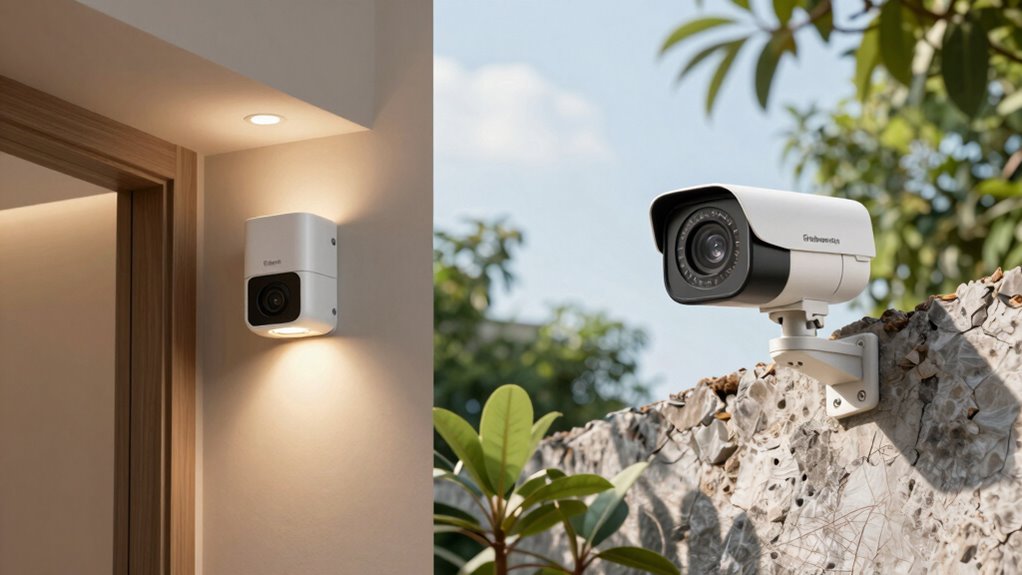
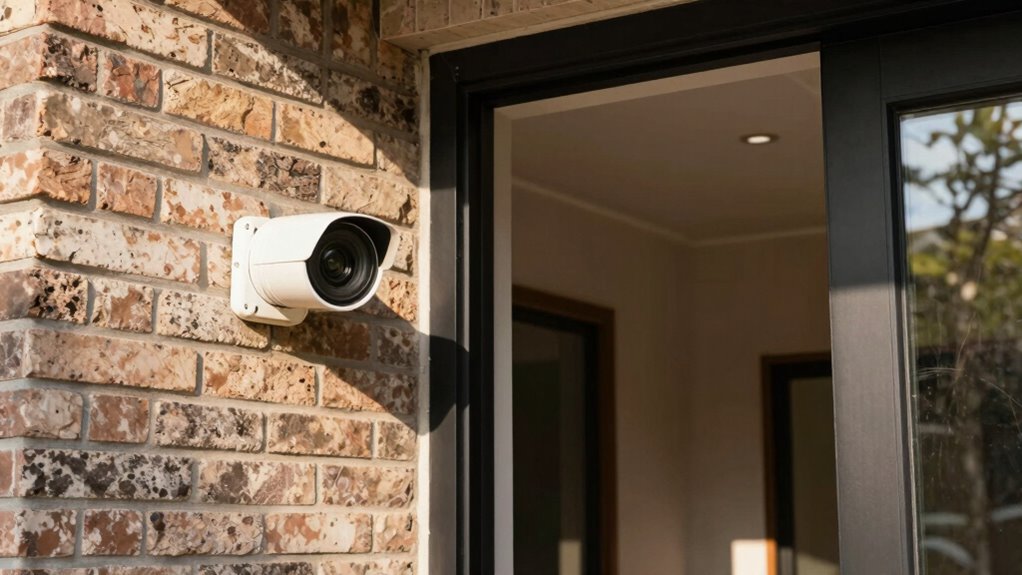
Choosing entryway security cameras is essential for keeping your home safe and monitored. When deciding between indoor and outdoor options, you need to consider several factors, including lighting conditions and power sources. Your entryway is a pivotal point of security, so understanding how these elements influence your camera choice will help you make an informed decision. Lighting conditions play a significant role in determining whether an indoor or outdoor camera is best suited for your entryway. If your front porch or doorway is well-lit during nighttime hours, a standard indoor camera with night vision capabilities might suffice. However, if your entryway is poorly lit or experiences shadows, you’ll want a camera with advanced low-light or infrared features that can capture clear footage in darkness. Outdoor cameras are generally designed to handle varying lighting conditions, including bright sunlight, moonlight, or complete darkness, making them more versatile for exterior use. They often come equipped with weather-resistant lenses and sensors that adapt to changing light levels, ensuring you get a sharp image regardless of the time. Additionally, outdoor cameras are typically built to be weather-resistant, which is crucial for durability in harsh conditions. Power sources are another critical consideration. Indoor cameras typically connect to your home’s electrical outlets or run on rechargeable batteries, which can offer convenience and consistent power. If you choose an indoor camera, ensuring it’s near a power outlet simplifies installation and reduces the risk of power interruptions. Outdoor cameras, on the other hand, often rely on wired connections or weatherproof batteries. Wired outdoor cameras generally need to be connected to your home’s electrical system, providing continuous power but requiring more complex installation. Battery-powered outdoor cameras offer flexibility and easier setup, especially if running wires is a challenge. Wireless connectivity can also be an important feature to consider for outdoor cameras to simplify installation and reduce clutter. It’s also worth noting that some outdoor cameras come with solar panel options, which can help reduce maintenance by providing a renewable power source. Incorporating proper installation techniques can further enhance the effectiveness and longevity of your cameras, regardless of the type you choose. Additionally, selecting cameras with remote access capabilities allows you to monitor your entryway from anywhere, adding an extra layer of security. Just keep in mind that batteries will need regular charging or replacement, so consider your comfort level with maintenance.
outdoor weatherproof security camera
As an affiliate, we earn on qualifying purchases.
As an affiliate, we earn on qualifying purchases.
Frequently Asked Questions
How Do Camera Placement Angles Affect Security Coverage?
Camera placement angles greatly influence your security coverage. By making camera angle adjustments, you guarantee a wider field of view and better monitor entry points. Proper angles help you avoid coverage blind spots, which criminals might exploit. Regularly adjusting and testing your camera angles ensures ideal surveillance, catching every movement at your entryway. This proactive approach enhances your security, giving you peace of mind that no activity goes unnoticed.
What Are the Long-Term Maintenance Differences?
Indoor cameras usually require less maintenance because they’re protected from weather, so you’ll experience less frequent maintenance needs. Outdoor cameras, however, need higher durability due to exposure to elements, meaning you’ll need to check and clean them more often. You should also inspect their camera durability regularly to guarantee they function properly over time. Overall, outdoor cameras demand more frequent maintenance, but both types should be checked periodically for maximum security.
Can Cameras Be Integrated With Existing Home Security Systems?
You can definitely integrate cameras with your existing home security system, but it’s a bit of a double-edged sword. Check if your system supports smart integrations and confirm wiring considerations are addressed—wireless options make setup easier, but wired cameras often offer more reliability. Before you jump in, verify compatibility to avoid any surprises, because it’s better to be safe than sorry when it comes to safeguarding your home.
How Do Weather Conditions Impact Outdoor Camera Performance?
Weather conditions can considerably impact outdoor camera performance, especially due to weatherproofing challenges. Harsh rain, snow, or extreme temperatures can weaken camera durability over time. You need to choose cameras designed for outdoor use, with good sealing and robust materials, to withstand these elements. Regular maintenance and choosing models with high weather resistance ensure your outdoor cameras stay functional, providing reliable security regardless of weather changes.
Are There Privacy Concerns With Outdoor Cameras?
They say “what’s seen can’t be unseen,” and outdoor cameras do raise privacy concerns. You should consider privacy implications, like who can access footage and how it’s stored. Data storage security is essential to prevent unauthorized viewing. Be transparent with visitors and neighbors about your camera use, and make sure your system complies with privacy laws. By doing so, you protect your property while respecting others’ privacy rights.
indoor night vision security camera
As an affiliate, we earn on qualifying purchases.
As an affiliate, we earn on qualifying purchases.
Conclusion
Ultimately, selecting the right camera is like planting a vigilant guardian at your doorstep, ready to stand watch through every season. Whether you choose indoor or outdoor, remember that your decision shapes the first line of defense, much like a lighthouse guiding ships safely home. Trust your instincts, weigh your needs, and you’ll create a secure haven—where peace of mind shines as bright as a beacon in the night, illuminating your home’s safety.
wireless outdoor security camera with solar panel
As an affiliate, we earn on qualifying purchases.
As an affiliate, we earn on qualifying purchases.
battery-powered outdoor security camera
As an affiliate, we earn on qualifying purchases.
As an affiliate, we earn on qualifying purchases.
Halloween Picks
halloween
As an affiliate, we earn on qualifying purchases.