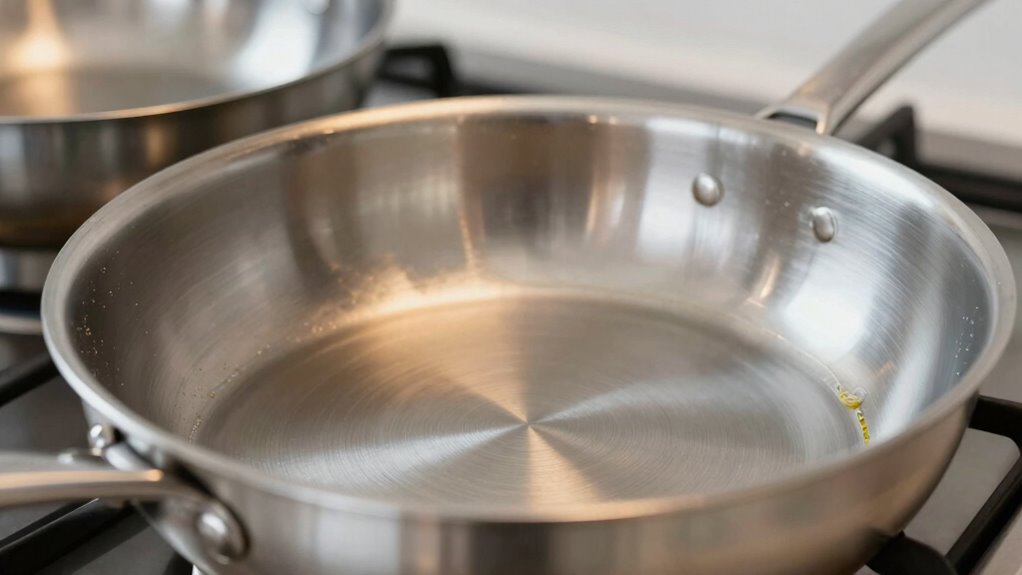
To prevent sticking in your stainless steel pan, start by heating it over medium until it’s hot. Then, add a thin layer of oil with a high smoke point, spreading it evenly. Allow it to heat until the oil begins to smoke, then remove from heat and wipe away excess oil with a paper towel. This simple heat trick creates a natural non-stick surface. If you want to master this technique and cook effortlessly, there’s more to discover.

Get your next haul delivered free with Prime
- Fast, free delivery on millions of items
- Prime Video, Amazon Music and more included
- Member-only deals all year
Key Takeaways
- Preheat the pan over medium heat until hot before adding oil.
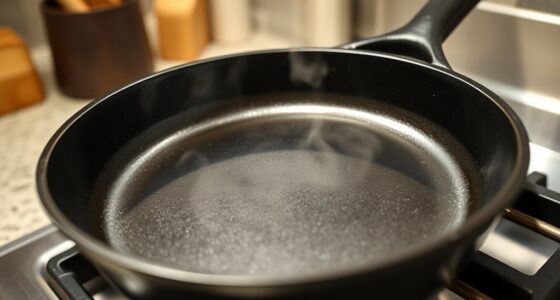
- Add a high smoke point oil and spread evenly, then heat until it begins to smoke.
- Remove the pan from heat and wipe excess oil to create a natural non-stick surface.
- Proper seasoning enhances non-stick qualities and prevents sticking during cooking.
- Regular cleaning and re-seasoning maintain the non-stick layer and optimal heat conduction.
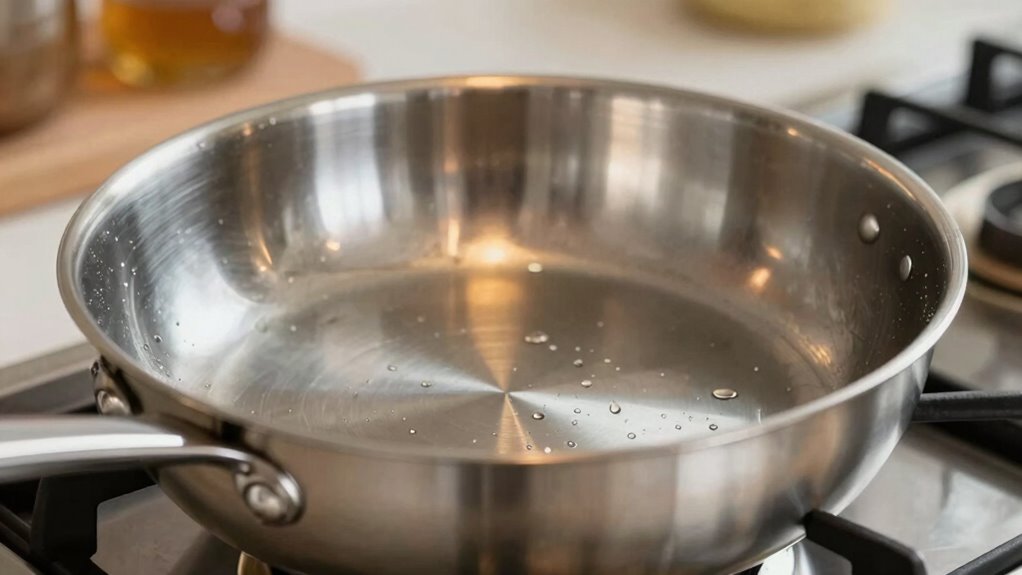
Stainless steel pans are a versatile and durable choice for any kitchen, offering excellent heat conduction and resistance to corrosion. But even with their robust build, sticking can be a common frustration. The key to preventing this lies in mastering the heat trick—using proper seasoning techniques and cleaning tips to keep your pan performing at its best. When you season a stainless steel pan, you’re fundamentally creating a natural non-stick surface. To do this, heat your pan over medium heat until it’s hot, then add a thin layer of oil with a high smoke point, like canola or vegetable oil. Spread it evenly across the surface, let it heat until it just begins to smoke, then remove the pan from heat and let it cool. Wipe out any excess oil with a paper towel. This process helps fill microscopic pores and creates a smoother surface, reducing the likelihood of sticking during cooking. Proper seasoning is an essential step in maintaining non-stick qualities over time.
Once seasoned, maintaining that non-stick quality requires proper cleaning tips. After each use, avoid soaking the pan for too long, as prolonged exposure to water can lead to mineral deposits and grime buildup. Instead, let the pan cool slightly, then rinse it with warm water. Use a soft sponge or non-abrasive scrubber to remove food residues, avoiding steel wool or harsh scrubbers that can scratch the surface. For stubborn stains or burnt-on food, fill the pan with warm water and a few drops of dish soap, and let it soak for 10-15 minutes before gently scrubbing. You can also sprinkle baking soda on the surface and scrub lightly to lift stains without damaging the finish. Regular cleaning not only keeps your pan looking shiny but also preserves its seasoning layer, making each subsequent cooking session smoother.
If you notice your pan losing its non-stick properties over time, it might be time to re-season it. Repeat the seasoning process by heating the pan, adding oil, and letting it smoke briefly before cooling and wiping. This refreshes the surface and restores the pan’s ability to prevent food from sticking. Remember, consistent application of these seasoning techniques and proper cleaning tips will extend the life of your stainless steel pans and ensure you get the most out of their heat conduction capabilities. With a little patience and attention, you’ll find that sticking becomes less of an issue, letting you cook with confidence and ease. Proper care transforms your stainless steel pan into a reliable tool that delivers excellent results every time.
stainless steel pan seasoning kit
As an affiliate, we earn on qualifying purchases.
As an affiliate, we earn on qualifying purchases.
Frequently Asked Questions
Can Stainless Steel Pans Be Used on Induction Cooktops?
Yes, stainless steel pans can be used on induction cooktops if they are induction compatible. Check for magnetic properties by seeing if a magnet sticks to the bottom; if it does, your pan is suitable. Induction cooktops work through magnetic fields, so pans without the right magnetic qualities won’t heat properly. Make sure your pan has a flat, smooth bottom for best contact and even heating.
Are Stainless Steel Pans Dishwasher Safe?
You can generally put stainless steel pans in the dishwasher, but it’s best to verify the manufacturer’s recommendations. Dishwasher safety varies depending on the quality and coating of your pan, as some may tarnish or lose shine over time. For cleaning methods, hand washing with warm soapy water is gentler and preserves your pan longer. If you choose the dishwasher, ensure it’s properly cleaned and dried afterward to prevent water spots.
How Do I Prevent Food From Sticking Without Oil?
You can prevent food from sticking without oil by using non-stick alternatives like ceramic or silicone-coated pans. Preheat your pan thoroughly before adding ingredients, ensuring it’s hot enough to create a natural release. Cooking without oil works best with moist foods like vegetables or seafood, which release moisture during cooking. Also, avoid overcrowding the pan, and use gentle, even heat to keep food from sticking and sticking.
What Is the Best Way to Clean Burnt-On Residue?
To clean burnt-on residue, start by soaking your pan in hot water with a bit of dish soap to loosen the grime. For stubborn spots, use cleaning remedies like baking soda and vinegar, which act as gentle abrasives. Additionally, practicing seasoning techniques—heating the pan and applying a thin layer of oil—helps build a natural non-stick surface over time, making future cleaning easier and preventing residue buildup.
How Do I Know When to Replace My Stainless Steel Pan?
Did you know the average stainless steel pan lasts about 5-10 years with proper care? You should consider replacing your pan when it shows signs of warping, persistent stains, or a loss of non-stick properties. Replacement indicators also include excessive scratching or if food starts to stick despite cleaning. If your pan no longer performs well or has visible damage, it’s time for a new one to guarantee safe, effective cooking.
high smoke point cooking oil for stainless steel
As an affiliate, we earn on qualifying purchases.
As an affiliate, we earn on qualifying purchases.
Conclusion
Just like a master chef whispers secrets to their favorite pan, mastering the heat trick keeps your stainless steel from sticking. With a simple preheat and patience, you’ll unveil flawless sears and effortless releases, turning your kitchen into a stage of culinary harmony. Remember, even the greatest cooks know that patience and the right technique transform ordinary tools into magic wands—making every meal a masterpiece. So, embrace the heat and cook with confidence.
non-abrasive sponge for stainless steel pans
As an affiliate, we earn on qualifying purchases.
As an affiliate, we earn on qualifying purchases.
stainless steel pan cleaning brush
As an affiliate, we earn on qualifying purchases.
As an affiliate, we earn on qualifying purchases.
Halloween Picks
halloween
As an affiliate, we earn on qualifying purchases.