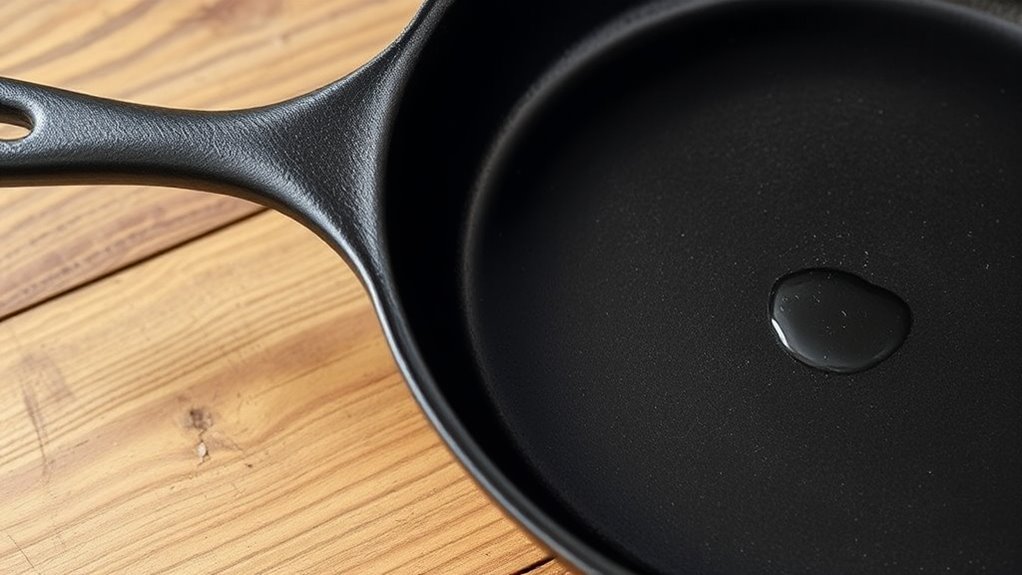

To keep your cast iron skillet in top shape, clean it with warm water and a brush, avoiding harsh soaps. Before using it again, dry thoroughly to prevent rust, and periodically season it by applying a thin layer of high-smoke-point oil and baking it in the oven. Proper care guarantees durability and a natural non-stick surface. If you want to master the details, there’s more to explore about maintaining your cast iron for years of reliable use.

Get your next haul delivered free with Prime
- Fast, free delivery on millions of items
- Prime Video, Amazon Music and more included
- Member-only deals all year
Key Takeaways
- Clean cast iron with warm water and a stiff brush; avoid harsh soaps to preserve seasoning.
- Dry immediately after cleaning to prevent rust formation.
- Regularly apply a thin layer of high-smoke-point oil to maintain the non-stick surface.
- Season the skillet periodically by baking it upside down at 450-500°F for an hour.
- Store in a dry place and avoid soaking to prolong the cookware’s lifespan.
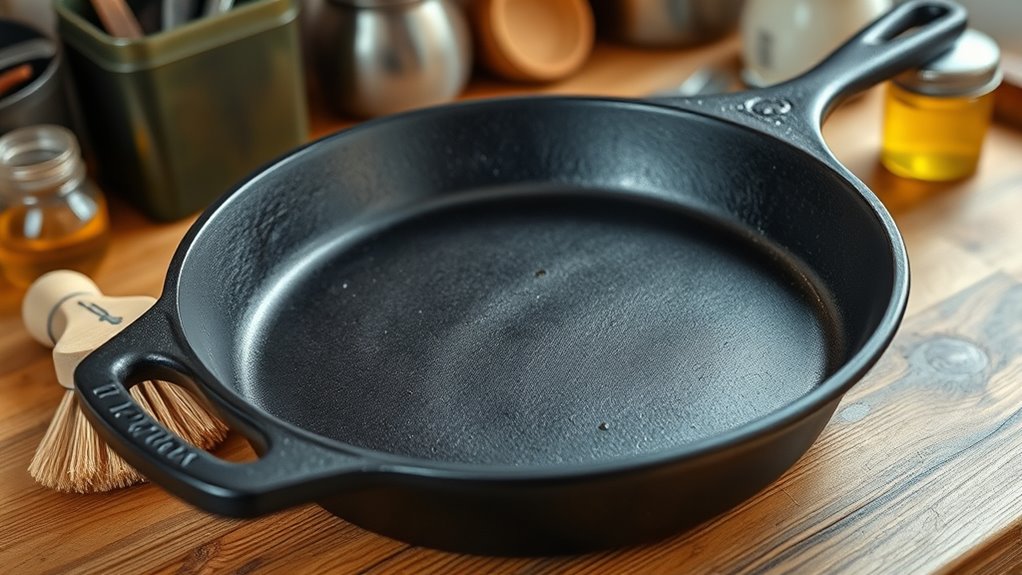
Cast iron cookware is prized for its durability and excellent heat retention, making it a staple in many kitchens. Over time, however, your cast iron may develop rust or lose its natural non-stick surface, which is where restoring cast iron comes into play. Restoring involves removing the rust and old seasoning, then re-establishing a smooth, seasoned surface. To do this, you start by thoroughly cleaning cast iron. Cleaning cast iron properly is essential to maintain its longevity and performance. When you clean your cast iron, avoid using harsh soaps or abrasive scrubbers that can strip away the seasoning. Instead, opt for warm water and a stiff brush or non-abrasive scrub pad, which helps remove food residue without damaging the surface. For stubborn bits of stuck-on food, a paste made of coarse salt and water works well as a gentle abrasive. After cleaning, make certain you dry your skillet immediately and completely to prevent rust. You can do this by wiping it with a dry cloth or placing it on a low heat stove for a few minutes.
Once your cast iron is clean and dry, restoring involves removing any rust and old seasoning layers. To get rid of rust, you may need to scrub the affected areas with steel wool or a wire brush. This process exposes fresh metal, making it ready for new seasoning. After the rust is gone, you’ll want to remove any residual debris and give the entire surface a good wash. Some people prefer to strip the entire skillet by baking it at high heat with an oven cleaner or using oven self-cleaning cycles, which burn away the old seasoning and rust. Once cleaned and stripped, you can begin the seasoning process from scratch. Seasoning is fundamentally building up a protective layer of polymerized oil that creates a natural non-stick surface. To do this, apply a thin coat of high-smoke-point oil, like flaxseed or vegetable oil, all over the skillet, including the handle and outside.
Place the skillet upside down in a preheated oven at around 450-500°F for an hour, with a sheet of foil on the rack below to catch drips. Once cooled, your cast iron will have a fresh, non-stick surface, ready for everyday use. Regular cleaning cast iron after each use helps maintain this seasoning, preventing rust and ensuring your skillet stays in top shape. Remember, the key to a long-lasting cast iron is consistent care—clean well, season when needed, and keep it dry. With proper restoring and cleaning cast iron, you’ll enjoy many years of reliable performance from your trusted cookware.
As an affiliate, we earn on qualifying purchases.
Frequently Asked Questions
How Do I Remove Rust From My Cast Iron Skillet?
To remove rust from your cast iron skillet, start with rust removal techniques like scrubbing with steel wool or a rust eraser. You can also try alternative cleaning methods such as using a vinegar soak or baking soda paste. Afterward, rinse thoroughly, dry completely, and re-season your skillet to restore its protective coating. Regular maintenance helps prevent future rust and keeps your skillet in great shape.
Can I Use Soap on Seasoned Cast Iron?
Yes, you can use dish soap on seasoned cast iron, but do so sparingly. Modern dish soaps are gentle and won’t strip your seasoning if used occasionally. When cleaning, use a small amount of soap with warm water and a brush or sponge. Rinse thoroughly and dry immediately to prevent rust. This cleaning method helps maintain your skillet’s seasoning while keeping it hygienic.
How Often Should I Re-Season My Cast Iron Cookware?
You should re-season your cast iron cookware when it starts losing its non-stick magic, usually every 6 months or after a deep cleaning. Think of seasoning as your cast iron’s superhero shield—every layer keeps it protected and performing at its best! For maintenance tips, keep it dry, avoid soap, and apply a light coat of oil after each use. This keeps your skillet formidable and ready for anything!
Is It Safe to Cook Acidic Foods in Cast Iron?
Cooking acidic foods in cast iron is safe, but it can affect your skillet’s seasoning. Acidic foods like tomatoes may strip some of the seasoning over time, so you might need to make seasoning adjustments afterward. To maintain your cookware’s non-stick surface and prevent damage, consider limiting acidic dishes or cooking them briefly. Regular seasoning helps restore the protective layer and guarantees continued acidic food safety.
What’s the Best Way to Store Cast Iron to Prevent Rust?
Imagine storing your cast iron skillet after cooking, and you notice rust forming. To prevent this, you should dry it thoroughly, then apply a thin layer of oil using proper seasoning techniques. Store your cast iron in a dry storage container or in a place with low humidity. Avoid stacking with other cookware directly, and consider placing a paper towel inside to absorb moisture and keep it rust-free.
As an affiliate, we earn on qualifying purchases.
Conclusion
By mastering the art of seasoning and caring for your cast iron, you create a timeless bond that endures through countless meals. Think of your skillet as a trusted companion, quietly whispering stories of flavor and tradition with every use. With patience and love, you transform simple metal into a culinary treasure, proving that care is the secret ingredient. After all, isn’t the true magic found in the everyday moments we cherish around our kitchens?
As an affiliate, we earn on qualifying purchases.
As an affiliate, we earn on qualifying purchases.
Halloween Picks
halloween
As an affiliate, we earn on qualifying purchases.