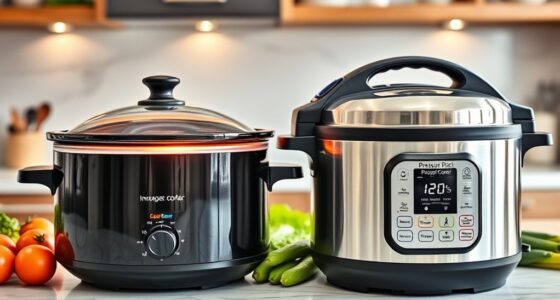
Both air fryers and convection ovens use hot air circulation to cook food efficiently, but their designs impact performance. An air fryer concentrates heat in a smaller space, heating quickly and using less energy, making it ideal for small meals and snacks. A convection oven, with its larger capacity and fan system, is better for batch cooking but takes longer to heat. Keep exploring to discover more about how science influences their differences and best uses.
Key Takeaways
- Both appliances use circulating hot air, but air fryers concentrate heat in a small chamber for rapid cooking, while convection ovens circulate air in a larger space.
- Air fryers heat quickly and have shorter cooking cycles due to their compact design, whereas convection ovens take longer to reach temperature.
- Energy efficiency favors air fryers for small batches, as their smaller size and rapid heating minimize power consumption.
- Convection ovens are more versatile for larger meals, handling bigger capacities with slower heat distribution.
- The scientific difference lies in heat transfer dynamics: air fryers rely on concentrated, rapid heat transfer, while convection ovens use fan-circulated hot air in a larger cavity.
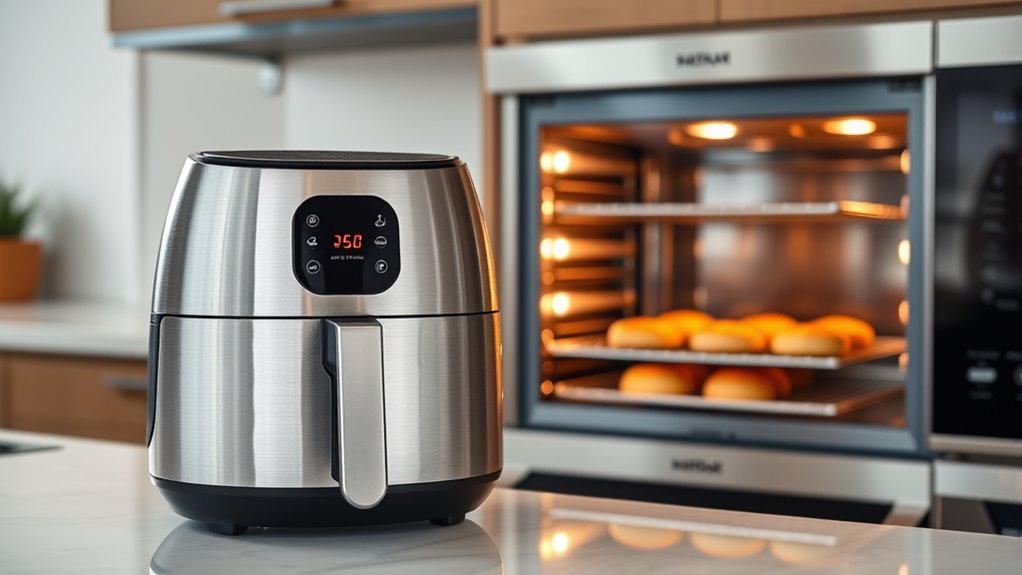
When choosing between an air fryer and a convection oven, understanding their differences can help you make the best decision for your kitchen. Both appliances use circulating hot air to cook food, but their design and operation impact cooking speed and energy efficiency in distinct ways. An air fryer is essentially a compact, countertop device that rapidly circulates hot air around small batches of food, creating a crispy exterior similar to deep frying but with less oil. Its small size means it heats up quickly, delivering faster cooking times compared to larger appliances. This rapid heat transfer results in a shorter cooking cycle, saving you time whether you’re reheating leftovers or preparing snacks. Because of its design, an air fryer often consumes less energy per use, making it a more efficient choice for quick meals or small portions. Its concentrated heating chamber means it reaches the desired temperature swiftly and maintains it efficiently, minimizing energy waste. Additionally, the design and technology of air fryers are optimized for quick heat up and efficient circulation, further enhancing their energy efficiency.
In contrast, a convection oven is a larger appliance, often built into your kitchen or as a countertop model, that uses a fan to circulate hot air around food. While it also heats food evenly, its larger cavity requires more time to reach the desired temperature, and the heat distribution can be slightly slower. This means your cooking speed is generally slower than that of an air fryer, especially for smaller meals or quick snacks. However, because convection ovens are designed to handle larger quantities of food, they tend to be more versatile when cooking multiple dishes at once. Regarding energy efficiency, convection ovens typically consume more power during operation due to their bigger heating elements and larger interior space. They are more suitable for batch cooking or preparing larger meals, but if you’re aiming for quick, energy-efficient cooking for small portions, they may fall short compared to an air fryer.

Ninja Air Fryer Toaster Oven Combo | 8-in-1 Functionality | Flip Up & Away for Storage Space | Air Fry Basket, Sheet Pan, Wire Rack & Removable Crumb Tray |1800 Watt | Stainless Steel | SP151
RECLAIM YOUR COUNTER SPACE: Takes up 50% less space when you flip it up and away to store…
As an affiliate, we earn on qualifying purchases.
As an affiliate, we earn on qualifying purchases.
Frequently Asked Questions
How Does Oil Usage Differ Between Air Fryers and Convection Ovens?
You’ll find that air fryers require less oil compared to convection ovens, often just a light spray or a tablespoon for crispiness. Oil requirements in air fryers are minimal because their rapid air circulation creates a crispy exterior without excess fat. You can use various cooking oil types, like olive or avocado oil, but convection ovens might need more oil depending on the recipe, especially when baking or roasting.
Can Both Appliances Cook the Same Types of Food Effectively?
Think of these appliances as two talented chefs in your kitchen. Both can handle a variety of foods effectively, showcasing impressive cooking versatility. The air fryer excels at crisping and retaining flavor with less oil, while the convection oven offers more space and even heat distribution for baking and roasting. You’ll find both deliver great results, but your choice depends on your cooking style and what flavors you want to keep intact.
What Is the Energy Consumption Comparison Between Air Fryers and Convection Ovens?
You’ll find that air fryers generally use less electricity because they heat up quickly and cook faster, making them more energy-efficient. Convection ovens tend to consume more energy since they’re larger and take longer to reach the desired temperature. For energy savings, opting for an air fryer can be a smart choice, especially for small, quick meals, helping you reduce electricity consumption over time.
How Does Cooking Time Vary for Similar Recipes in Each Appliance?
Think of your appliances as race cars on different tracks. Cooking time in an air fryer is usually faster because it uses higher cooking temperatures and rapid air circulation, making it ideal for quick recipes. With convection ovens, you might need to modify your recipe, increasing cooking time slightly due to lower temperatures or larger space. Adjustments guarantee your dishes turn out perfectly, whether you’re in a rush or taking your time.
Are There Safety Concerns Unique to Air Fryers or Convection Ovens?
You should be aware of safety concerns like fire hazards and electrical safety when using either appliance. Air fryers, with their compact design, can overheat if left unattended or overloaded, increasing fire risk. Convection ovens also pose fire hazards if food spills or if the appliance isn’t properly maintained. Always follow manufacturer guidelines, avoid overloading, and keep appliances clean to minimize fire hazards and guarantee electrical safety.

The Complete Convection Oven Cookbook: 75 Essential Recipes and Easy Cooking Techniques for Any Convection Oven
As an affiliate, we earn on qualifying purchases.
As an affiliate, we earn on qualifying purchases.
Conclusion
In the end, choosing between an air fryer and a convection oven comes down to your cooking style and needs. Both appliances cook efficiently, but each has its own strengths—think of it as apples and oranges. While the air fryer excels for quick, crispy bites, the convection oven offers more versatility. So, don’t put all your eggs in one basket; weigh your options carefully and pick what truly suits your kitchen routine.

Cosori 9-in-1 TurboBlaze Air Fryer 6 Qt, PFAS-Free Ceramic Coating, 90°–450°F, Precise Heating for Even Results, Air Fry, Roast, Bake, Broil, Dry, Frozen, Proof, Reheat, Keep Warm, 120V, Dark Gray
𝘼𝙞𝙧 𝙁𝙧𝙮𝙚𝙧 𝙐𝙥𝙜𝙧𝙖𝙙𝙚: Innovative TurboBlaze Technology delivers a powerful 3600 rpm fan speed and temperatures up to 450℉,…
As an affiliate, we earn on qualifying purchases.
As an affiliate, we earn on qualifying purchases.

Elite Gourmet ETO4510MX French Door 47.5Qt, 18-Slice Convection Oven 4-Control Knobs, Bake Broil Toast Rotisserie Keep Warm, Includes 2 x 14" Pizza Racks, Stainless Steel
45L capacity – Fits 9 slices of toast on 2 racks for a total of 18 slices and…
As an affiliate, we earn on qualifying purchases.
As an affiliate, we earn on qualifying purchases.