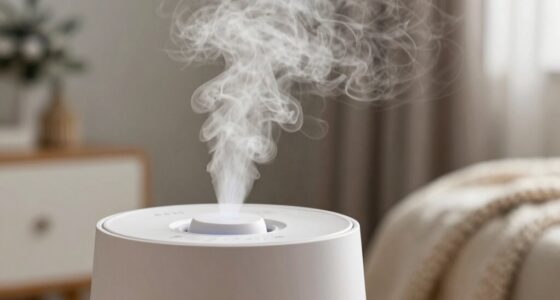
To properly size a dehumidifier, consider your room’s humidity level, size, and how often activities like laundry or cooking increase moisture. For small rooms with moderate humidity, a lower pint capacity works well, while larger or damp spaces need higher capacities. An oversized unit wastes energy, and too small a one won’t keep humidity in check. Learning about these factors helps you pick the perfect size—you’ll find out more if you continue exploring.
Key Takeaways
- Match dehumidifier pint capacity to room size and moisture level for optimal performance.
- Larger or more humid spaces require higher pint capacity units to effectively remove moisture.
- Measure room dimensions accurately to select a dehumidifier that covers the area efficiently.
- Consider environmental factors like weather, laundry, and cooking, which increase humidity.
- Proper sizing prevents energy waste and prolongs dehumidifier lifespan by avoiding over- or under-sized units.
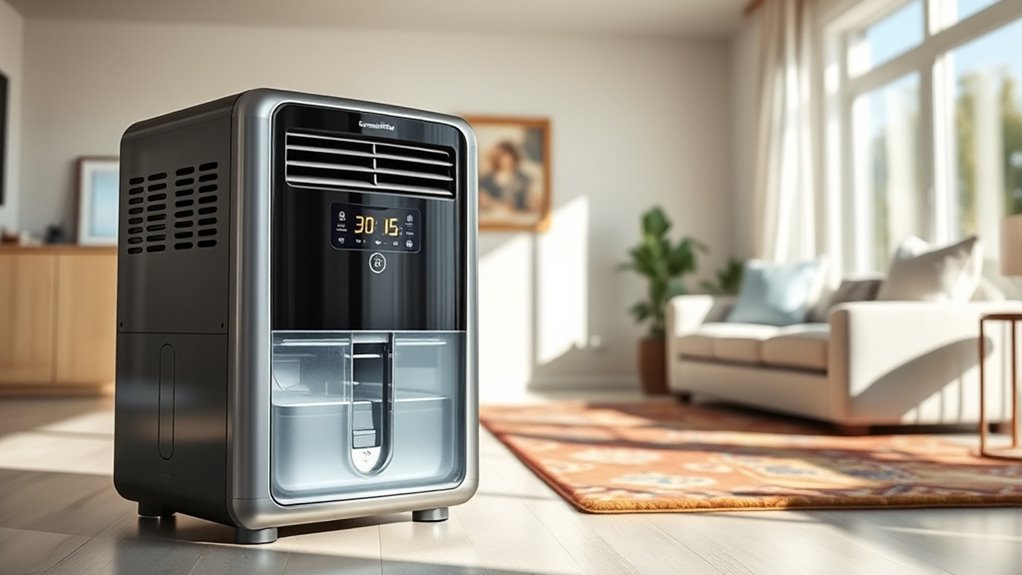
Choosing the right dehumidifier size is essential to effectively control moisture levels in your space. When you pick a dehumidifier that’s too small, it won’t remove enough humidity, leaving your environment damp and uncomfortable. Conversely, selecting a unit that’s too large can lead to unnecessary energy consumption and increased costs. To get it right, you need to consider both the humidity levels in your space and the size of the area you’re trying to dehumidify. Proper sizing ensures you maintain ideal humidity without wasting energy, making your dehumidifier more efficient and cost-effective over time.
Start by evaluating the humidity levels in your space. If your home or basement feels consistently damp or mold is a concern, you’ll need a more powerful unit. High humidity levels often require a dehumidifier with a higher pint capacity, which refers to how much moisture it can remove in 24 hours. For moderate moisture issues, a smaller capacity may suffice. Measuring your space accurately is also critical. For larger rooms or open areas, a higher pint capacity is necessary to cover the entire space effectively. Using the correct size helps improve energy efficiency because a unit that’s too small will run continuously trying to keep up, while one that’s too large will cycle on and off frequently, wasting energy. Additionally, understanding the environmental factors that contribute to humidity can help you choose the most suitable capacity.
Dehumidifier sizing isn’t just about the room size; it also involves understanding the environment. If your space is humid due to weather or activities like laundry or cooking, you’ll need a unit with a higher capacity. If your environment is relatively dry, a smaller dehumidifier will do. Don’t forget to consider insulation and ventilation, as these factors influence humidity levels. Properly selecting your dehumidifier means it can operate at ideal energy efficiency, reducing your electricity bill and extending the lifespan of the unit.
dehumidifier for basement 50-pint
As an affiliate, we earn on qualifying purchases.
As an affiliate, we earn on qualifying purchases.
Frequently Asked Questions
How Do I Calculate the Ideal Dehumidifier Size for My Basement?
To find the right dehumidifier capacity for your basement, first measure the basement humidity level and square footage. If the humidity is above 60%, you’ll need a dehumidifier with a higher capacity. For larger or damp basements, opt for one that can eliminate at least 50 pints of moisture per day. This ensures you effectively control moisture, preventing mold and structural damage.
Can a Dehumidifier Be Too Large for a Room?
Yes, a dehumidifier can be too large for a room, leading to increased noise and reduced energy efficiency. When it’s too powerful, it cycles on and off frequently, causing more noise and wasting energy. This not only creates unnecessary noise but also shortens the lifespan of the unit. To avoid these issues, choose a dehumidifier that fits your room size for ideal performance and quieter operation.
How Does Room Insulation Affect Dehumidifier Performance?
Did you know that poorly insulated rooms can retain up to 30% more moisture? Your thermal insulation substantially impacts dehumidifier performance because it influences moisture retention. When insulation is lacking, moisture seeps in and stays longer, making your dehumidifier work harder. Proper insulation helps maintain a stable environment, allowing your dehumidifier to operate efficiently and keep humidity levels balanced without overexerting.
What Maintenance Is Required for Different Dehumidifier Sizes?
You should regularly maintain your dehumidifier by replacing filters every few months and cleaning coils to guarantee peak performance. Smaller units may need less frequent upkeep, but it’s still essential to check filters and coils monthly. Larger models might require more thorough cleaning and filter changes less often. Consistent maintenance prevents mold, keeps air quality high, and extends your dehumidifier’s lifespan. Always follow the manufacturer’s recommendations for best results.
Are Portable Dehumidifiers as Effective as Whole-House Units?
You might think portable dehumidifiers are just as effective as whole-house units, but they often aren’t. Portable units are great for small spaces and are more energy-efficient for targeted use, yet they can’t match the capacity of whole-house systems for larger areas. Whole-house units provide consistent humidity control across your entire home, making them more effective overall, especially for extensive or persistent moisture problems.
small room dehumidifier 30-pint
As an affiliate, we earn on qualifying purchases.
As an affiliate, we earn on qualifying purchases.
Conclusion
Choosing the right dehumidifier size guarantees a comfortable, mold-free space. Remember, a tool is only as good as its fit—”measure twice, cut once.” By picking the correct pint capacity for your room size and humidity level, you’ll save energy and money while keeping your home fresh. Don’t rush the process; taking the time to size your dehumidifier properly means you’ll enjoy a healthier, more comfortable environment for years to come.
energy efficient dehumidifier
As an affiliate, we earn on qualifying purchases.
As an affiliate, we earn on qualifying purchases.
large capacity dehumidifier for damp spaces
As an affiliate, we earn on qualifying purchases.
As an affiliate, we earn on qualifying purchases.