To layer your bedding for better sleep temperature control, start with breathable sheets like cotton or linen to wick moisture and stay cool. Add a lightweight duvet or comforter that you can adjust or remove as needed. Incorporate an extra blanket or throw for added insulation if you’re cold. Use natural fibers and ventilate your sleeping environment to prevent overheating. For more tips on creating the perfect sleep setup, keep exploring this helpful guide.

Get your next haul delivered free with Prime
- Fast, free delivery on millions of items
- Prime Video, Amazon Music and more included
- Member-only deals all year
Key Takeaways
- Start with breathable, moisture-wicking sheets like cotton or linen as the base layer.
- Add a lightweight duvet or comforter for adjustable warmth during the night.
- Incorporate a cozy, breathable blanket or throw for flexibility in temperature regulation.
- Remove or add layers based on temperature fluctuations throughout the night.
- Use natural fibers and ventilation solutions to enhance airflow and maintain consistent body temperature.
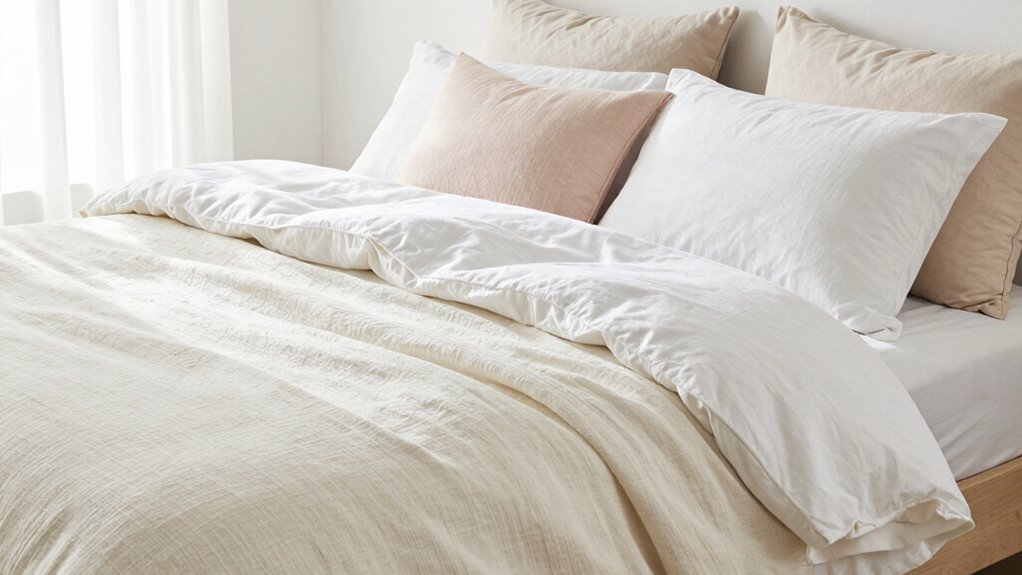
Ever wonder how to stay comfortable throughout the night without waking up too hot or too cold? The secret lies in understanding your sleep cycle and choosing the right bedding materials. Your sleep cycle is a delicate balance of different stages, and temperature fluctuations can easily disturb it, leading to restless nights. To keep that cycle steady, you need to create an environment that adapts to your body’s changing needs. Layering your bedding is one of the most effective ways to do this, giving you control over your comfort level as the night progresses.
Start with a breathable sheet, like cotton or linen, which helps wick away moisture and allows air to circulate around your body. This initial layer should be lightweight and natural, setting the stage for better temperature regulation. If you tend to get warm during sleep, avoid heavy or insulating materials here, as they can trap heat and disturb your sleep cycle. Conversely, if you often feel cold, consider adding a slightly thicker sheet or a blanket made of wool or fleece as a base layer. The idea is to find a balance that feels comfortable without overheating or chilling.
Choose lightweight, natural sheets like cotton or linen for optimal moisture-wicking and temperature regulation.
Next, add a middle layer that can be easily adjusted throughout the night. This could be a lightweight duvet or comforter made from materials like down or synthetic fibers designed for temperature regulation. These materials trap heat effectively but also tend to be breathable, making them suitable for year-round use. If you notice you’re waking up sweaty or feeling chilled, you can remove or add this layer accordingly. Bedding materials that promote airflow can significantly improve your sleep quality by preventing heat buildup and ensuring proper ventilation. Choosing breathable fabrics is essential, as they help maintain a stable body temperature and prevent overheating. Incorporating ventilation solutions in your sleeping environment can further enhance airflow and temperature control. On top, keep a cozy yet breathable blanket or throw that can be used as needed. If you start feeling too warm, you can toss it aside, or pull it up when the room cools down. The goal is to create a multi-layered system that adapts seamlessly to your body’s changing needs throughout the night. Always remember that bedding materials play a vital role; natural fibers like cotton, linen, and wool tend to breathe better and help maintain consistent body temperature, preventing sudden wake-ups.
As an affiliate, we earn on qualifying purchases.
Frequently Asked Questions
What Materials Are Best for Temperature Regulation in Bedding?
You should choose bedding with fabric blends like cotton and linen, which promote breathability and wick away moisture. Look for cooling technologies integrated into sheets or pillowcases, such as gel-infused fibers or moisture-wicking fabrics, to help regulate your temperature. These materials work together to keep you cool and comfortable throughout the night, preventing overheating and ensuring restful sleep.
How Often Should I Change My Bedding Layers?
You should change your bedding layers weekly, even if it seems excessive. Ironically, swapping out your duvet covers and pillowcases more often keeps your bed feeling fresh and helps regulate temperature better. Dust and sweat accumulate, making your layers less effective. So, don’t wait too long—fresh duvet covers and pillowcases make a noticeable difference in comfort and temperature control, ensuring you sleep cooler and healthier.
Can Layering Bedding Help With Night Sweats?
Layering bedding with cooling fabrics and breathable layers can definitely help with night sweats. You can use lightweight, moisture-wicking sheets and blankets made from materials like cotton or bamboo, which promote airflow and wick away sweat. Adding a breathable duvet or comforter allows you to adjust your bedding easily throughout the night. This combination helps regulate your body temperature, keeping you cooler and more comfortable during those hot, sweaty nights.
What Is the Ideal Number of Layers for Different Seasons?
In summer, you might only need one or two lightweight layers to support your sleep cycle and prevent overheating, while winter calls for three or more warm, insulating layers. Layering isn’t just about comfort; it also means easier bedding maintenance and adjusting to temperature changes. Think of your bedding as a dynamic system—add or remove layers to keep your body temperature balanced, ensuring deep, uninterrupted sleep regardless of the season.
How Do I Prevent Overheating With Layered Bedding?
To prevent overheating with layered bedding, adjust your pillow placement to keep your head cool and promote airflow. Use a lighter duvet or one with a thinner duvet thickness for warmer nights, and consider adding or removing layers as needed. Opt for breathable fabrics like cotton or linen, and avoid heavy blankets. This way, you stay comfortable without getting too hot, ensuring a restful night’s sleep.
As an affiliate, we earn on qualifying purchases.
Conclusion
Layering your bedding isn’t just about comfort—it’s about mastering temperature control for a better night’s sleep. Some say that using multiple lightweight layers can actually adapt more easily to your body’s needs than one heavy blanket. While there’s limited scientific proof, many sleepers swear by it. So, experiment with different layers and fabrics to find what keeps you coolest or warmest, proving that a well-layered bed might just be your secret weapon for restful nights.
natural fiber blankets for sleep
As an affiliate, we earn on qualifying purchases.
As an affiliate, we earn on qualifying purchases.
As an affiliate, we earn on qualifying purchases.
Halloween Picks
halloween
As an affiliate, we earn on qualifying purchases.