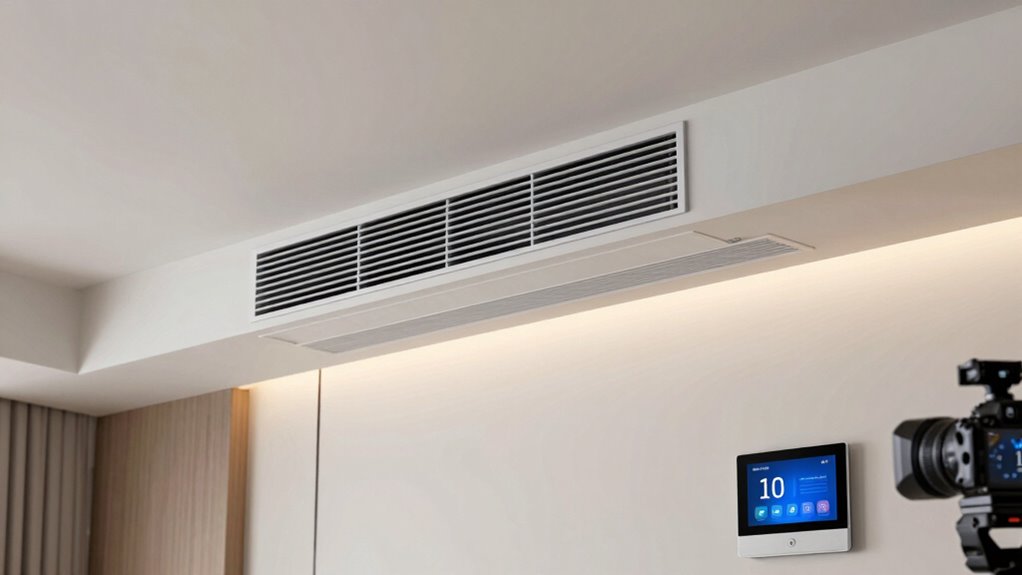

A smart vent system for home HVAC can fix uneven room temperatures without a costly zoning retrofit, but the category splits into two very different approaches: demand-controlled smart vents like the Flair line, which actively open and close to redirect airflow, and register booster fans, which pull extra air out of weak vents. The Flair Smart Vent 4×10 earns my best overall pick because it integrates with room sensors and smart thermostats to balance airflow automatically, not just push more air around. If your problem is a single cold room on a long duct run, the Register Booster Fan with Thermostat and Remote is the better value, and the Smart AC Vent Booster Fan with App Control splits the difference with remote scheduling on a budget. The main tradeoff is cost and complexity versus simplicity — Flair vents cost more and work best as a multi-room system, while booster fans solve one room for under a hundred dollars. Keep reading for the full breakdown, including sizing pitfalls that make or break an install.

Get your next haul delivered free — and shop member deals
- Fast, free delivery on millions of items
- Access to Prime Big Deal Days deals on October 6–7
- Prime Video, Amazon Music and more included
Key Takeaways
- The Flair Smart Vents dominated this comparison for whole-home zoning because they actively redirect airflow using room-level sensing, while every booster fan in the lineup only moves air that already reaches the register.
- Sizing is the single biggest failure point: the lineup spans 4×10, 4×12, and 6×10 openings, and ordering the wrong size makes even the best product useless — measure the duct opening, not the vent plate, before buying anything.
- The app-controlled Smart AC Vent Booster Fan delivered roughly 80% of the premium booster experience at nearly half the price of comparable models, making it the clear value pick among the fans.
- BIOWIND‘s two booster fan sizes were the quietest in the fan group, but their simpler controls make them better for set-and-forget single rooms than for scheduled, room-by-room comfort management.
- Booster fans can actually solve problems smart vents can’t — if a room is starved because of a long duct run, closing vents elsewhere with a system like Flair may make it worse, while a booster fan adds airflow instead of redistributing it.
| Flair Smart Vent 4×10 White – AC Vent Cover for Floors, Walls, and Ceilings |  | Best Overall Smart Vent System for Flexibility and Integration | Size: 4×10 inches | Color: White | Compatibility: Works with Flair Bridge, smart thermostats, and room sensors | VIEW ON AMAZON | See Our Full Breakdown |
| Register Booster Fan for 4″ x 10″ Registers, Smart Heating/Cooling AC Vent Fan with Thermostat, Remote Control & 10-Speed Quiet Motor |  | Best for Quiet, Powerful Airflow Boosting in Single Rooms | Brand: MOTCTQVD | Register Size: 4″ x 10″ | Airflow: 130 CFM | VIEW ON AMAZON | See Our Full Breakdown |
| Smart AC Vent Booster Fan 4″ x 10″ Register with App Control |  | Best for Remote Control and Adjustable Airflow via Smartphone | Size: 4″ x 10″ | Airflow: 120 CFM | Noise Level: As low as 18 dB | VIEW ON AMAZON | See Our Full Breakdown |
| BIOWIND Quiet Smart Register Booster Fan Fits 4″ x 10″ Vent Opening, White |  | Best for Quiet, Energy-Efficient Airflow Boosting | Size: 4″ x 10″ | Rated Power: 6W | Airflow: 140 CFM | VIEW ON AMAZON | See Our Full Breakdown |
| Flair Smart Vent 6×10 (White) – AC Vent Cover for Floors, Walls and Ceilings |  | Best for Larger Rooms and Whole-House Control | Size: 6×10 inches | Compatibility: Works with smart and traditional thermostats | Control: 7-day scheduling, app and voice control | VIEW ON AMAZON | See Our Full Breakdown |
| BIOWIND Quiet Smart Register Booster Fan for 4″ x 12″ Vent Opening, White |  | Best for Quiet, Automated Airflow Enhancement | Fits Duct Opening: 4″ x 12″ | Face Size: 13.77″ x 5.51″ | Neck Size: 9.72″ x 3.93″ | VIEW ON AMAZON | See Our Full Breakdown |
| Flair Smart Vent 4×12 (White) – AC Vent Cover for Floors, Walls and Ceilings |  | Best for Whole-Room Smart Control and Customization | Size: 4×12 inches | Color: White | Installation Locations: Floors, walls, ceilings | VIEW ON AMAZON | See Our Full Breakdown |
| smart vent system for home hvac | Size | Airflow |
|---|---|---|
| Flair Smart Vent 4×10 White | 4×10 inches | — |
| Register Booster Fan for 4" x | — | 130 CFM |
| Smart AC Vent Booster Fan 4" x | 4" x 10" | 120 CFM |
| BIOWIND Quiet Smart Register B | 4" x 10" | 140 CFM |
| Flair Smart Vent 6×10 | 6×10 inches | — |
| BIOWIND Quiet Smart Register B | — | 140 CFM |
| Flair Smart Vent 4×12 | 4×12 inches | — |
More Details on Our Top Picks
Flair Smart Vent 4×10 White – AC Vent Cover for Floors, Walls, and Ceilings
This vent stands out for its seamless integration with smart home ecosystems and its ability to replace traditional vents without any wiring or drilling. Compared to the Flair Smart Vent 6×10, it offers more flexible placement options for smaller spaces. However, its reliance on the Flair Bridge and additional sensors means it can become costly and slightly complex to set up. The ease of installation and compatibility with voice assistants make it ideal for homeowners seeking a smart, customizable solution, but those looking for an all-in-one package might prefer bundled options. Its precise room control enhances comfort and energy savings, especially when paired with Flair’s ecosystem.
Pros:- Seamless integration with smart home systems and voice assistants
- Easy drop-in replacement without wiring or drilling
- Provides precise, room-by-room temperature control
Cons:- Requires Flair Bridge and sensors for full functionality
- Additional components are sold separately, increasing overall cost
Best for: Homeowners who want a versatile, easy-to-install smart vent that integrates with existing smart home systems.
Not ideal for: Renters or those seeking a simple plug-and-play vent without additional components or app dependence.
- Size:4×10 inches
- Color:White
- Compatibility:Works with Flair Bridge, smart thermostats, and room sensors
- Installation:No drilling or wiring, easy drop-in replacement
Our verdict“This product is ideal for those who value flexible installation and ecosystem compatibility but are prepared for a multi-component setup.”
Register Booster Fan for 4″ x 10″ Registers, Smart Heating/Cooling AC Vent Fan with Thermostat, Remote Control & 10-Speed Quiet Motor
This booster fan excels at increasing airflow for 4″ x 10″ vents, especially compared to simpler fans, due to its 10-speed operation and integrated thermostat. Its sturdy aluminum frame and support for up to 300 lbs make it suitable for floor mounting in high-traffic areas. While its size exceeds the duct opening, making installation more involved, it delivers up to 130 CFM of airflow quietly at below 18 dB, which is a significant advantage for bedrooms or offices. Unlike the Smart AC Vent Booster Fan, it lacks app control but compensates with a robust physical control panel. It’s best suited for users who prioritize power and durability over remote access or smart features.
Pros:- Powerful 130 CFM airflow with 10 adjustable speeds
- Very quiet operation below 18 dB
- Supports heavy loads with sturdy aluminum frame
Cons:- Limited to 4″ x 10″ register openings, reducing flexibility
- Larger frame may not fit all spaces or decor styles
Best for: Homeowners needing a durable, high-capacity booster for larger or high-traffic rooms with minimal smart features.
Not ideal for: Those who want app control or a compact design for small, discreet installations.
- Brand:MOTCTQVD
- Register Size:4″ x 10″
- Airflow:130 CFM
- Noise Level:Below 18 dB
Our verdict“This booster fan is best for users who need reliable, high-capacity airflow enhancement in larger rooms and value durability over smart control.”
Smart AC Vent Booster Fan 4″ x 10″ Register with App Control
This app-controlled booster fan provides up to 120 CFM airflow and offers 10 adjustable speeds, making it a flexible choice for eliminating hot or cold spots. Its durability is enhanced by a metal grille, and the inclusion of child and pet locks ensures safety. Compared with the Flair Smart Vent, it offers more direct control over airflow via smartphone, but it lacks the ecosystem integrations that make Flair more versatile. Its requirement for a nearby power outlet means cable management could be a concern, especially in less accessible locations. It’s an excellent pick for tech-savvy users who want detailed control over individual vents.
Pros:- Remote app control for airflow, speed, and timers
- Quiet operation at as low as 18 dB
- Durable metal grille with child and pet lock
Cons:- Requires careful measurement of register openings
- Needs a nearby power outlet, which can limit placement options
Best for: Tech-oriented homeowners who want app-based control for individual vent airflow adjustments.
Not ideal for: Users seeking a system that integrates with smart home ecosystems or prefers wired, plug-and-play solutions.
- Size:4″ x 10″
- Airflow:120 CFM
- Noise Level:As low as 18 dB
- Speed Settings:10
Our verdict“Ideal for users seeking precise remote control over airflow with a focus on safety and quiet operation, but less suited for those wanting ecosystem integration.”
BIOWIND Quiet Smart Register Booster Fan Fits 4″ x 10″ Vent Opening, White
The BIOWIND booster fan emphasizes whisper-quiet operation with only 16 dBA noise level, making it ideal for bedrooms or quiet spaces. Its 140 CFM airflow is slightly higher than comparable models, and its low power consumption supports energy efficiency. While installation is straightforward, it only fits specific vent sizes, so measuring beforehand is essential. Compared to the Smart AC Vent Booster Fan, it offers less remote control flexibility but compensates with simpler operation and lower noise. This pick suits users focused on maintaining a tranquil environment while improving airflow in small to medium spaces.
Pros:- Very low noise level at 16 dBA
- Energy-efficient with 6W power consumption
- Supports remote adjustment and easy installation
Cons:- Limited to 4″ x 10″ vent sizes, requiring careful measurement
- Limited airflow capacity for large or multiple rooms
Best for: Homeowners prioritizing quiet operation and energy efficiency in smaller rooms or sensitive environments.
Not ideal for: Larger spaces or users wanting extensive remote control or app integration.
- Size:4″ x 10″
- Rated Power:6W
- Airflow:140 CFM
- Noise:16 dBA
Our verdict“Best suited for those needing a quiet, energy-efficient airflow booster for smaller spaces or bedrooms.”
Flair Smart Vent 6×10 (White) – AC Vent Cover for Floors, Walls and Ceilings
This larger vent offers room-by-room control for spaces up to 6×10 inches, making it suitable for bigger rooms or multiple smaller spaces. Its automatic opening and closing based on smart thermostat data mimic the functionality of the 4×10 Flair vent but on a larger scale. Compared to the Flair Smart Vent 4×10, it provides broader coverage and can better manage larger areas, but it requires the Flair Bridge and room sensors, adding complexity and cost. Its no-wiring, no-drilling installation is a plus for DIY enthusiasts. This vent is best for homeowners seeking a comprehensive, multi-room solution with smart scheduling and voice control.
Pros:- Supports room-by-room temperature control
- Easy installation without wiring or drilling
- Works with existing smart or traditional thermostats
Cons:- Requires Flair Bridge and room sensors, increasing overall cost
- Support limited to weekday hours (9am-5pm ET)
Best for: Homeowners aiming to automate airflow across larger or multiple rooms with minimal installation effort.
Not ideal for: Those with very small or single-room spaces, where the larger size might be unnecessary or visually intrusive.
- Size:6×10 inches
- Compatibility:Works with smart and traditional thermostats
- Control:7-day scheduling, app and voice control
Our verdict“This vent is ideal for larger spaces or whole-house control, provided users are comfortable with additional components and setup complexity.”
BIOWIND Quiet Smart Register Booster Fan for 4″ x 12″ Vent Opening, White
The BIOWIND Smart Register Booster Fan stands out for its ultra-quiet operation, making it ideal for bedrooms or living rooms where noise is a concern. Compared with the Flair Smart Vent, which offers broader room-by-room control, this booster focuses on boosting airflow in specific vents, especially when existing HVAC airflow feels insufficient. Its automatic temperature sensor and remote control with 10 speeds provide precise, customizable airflow without manual adjustments. However, its 140 CFM airflow may fall short for larger or open-concept rooms, and its compatibility is limited to 4″ x 12″ vents, requiring careful measurement beforehand. This makes it a strong choice for homeowners with smaller ducts seeking quiet, targeted airflow improvement. It’s less suitable for those needing larger airflow capacity or broader room control.Pros:- Exceptional noise level at just 16 dBA, ideal for quiet environments
- Automatic on/off based on room temperature for consistent comfort
- Remote control with 10 adjustable speed levels for customization
- Energy-efficient design pulls residual air after HVAC shuts down
Cons:- Limited to 4″ x 12″ vents, requiring precise measurement before purchase
- 140 CFM airflow may be inadequate for large or high-ceiling rooms
Best for: Homeowners with small to medium-sized rooms seeking quiet, automated airflow enhancement at individual vents.
Not ideal for: Larger spaces or open-concept areas where higher airflow capacity is necessary, or those with different vent sizes than 4″ x 12″.
- Fits Duct Opening:4″ x 12″
- Face Size:13.77″ x 5.51″
- Neck Size:9.72″ x 3.93″
- Neck Insertion Depth:1.96″
- Rated Power:6W
- Airflow:140 CFM
Our verdict“This booster is perfect for those prioritizing quiet, automatic airflow control in smaller spaces.”
Flair Smart Vent 4×12 (White) – AC Vent Cover for Floors, Walls and Ceilings
The Flair Smart Vent provides a smart, integrated solution for controlling airflow and temperature on a room-by-room basis, making it a versatile choice for those who want to fine-tune their entire home’s climate. Unlike the BIOWIND booster, which targets individual vents with a fan, Flair replaces standard vents with smart covers that automatically open or close based on data from its sensors and your smart thermostat, creating a more seamless, integrated experience. While it requires an additional Flair Bridge and separate room sensors, this setup allows for comprehensive scheduling and voice control, ideal for homeowners who want detailed control over multiple rooms. The need for extra accessories, however, adds to the cost and complexity. It’s less suited for users with very simple HVAC setups or those unwilling to invest in multiple sensors and controllers.Pros:- Enables automatic, room-specific temperature control for comfort and efficiency
- Easy drop-in installation without drilling or wiring, simplifying setup
- Supports integration with existing smart thermostats and voice assistants
- 7-day scheduling per room helps reduce energy costs
Cons:- Requires a separate Flair Bridge and individual room sensors, increasing total setup cost
- Multiple components needed for full functionality may be complex for some users
- Dependent on internet connectivity and Flair’s software platform
Best for: Homeowners seeking a comprehensive, room-by-room smart ventilation system with scheduling and voice control capabilities.
Not ideal for: Users who prefer simple, standalone solutions or have budget constraints that make additional accessories impractical.
- Size:4×12 inches
- Color:White
- Installation Locations:Floors, walls, ceilings
- Installation Type:Drop-in replacement
- Required Accessories:Flair Bridge, temperature sensors
- Software:Flair hvacOS with 7-day scheduling
Our verdict“This system is ideal for those who want to manage multiple rooms with automated, scheduled control, despite the added complexity and cost.”
How We Picked
I ranked these products around one question: how well does each one actually fix uneven heating and cooling in a real home? That meant evaluating three things in order of weight. First, the control intelligence — whether the product senses room conditions, responds automatically, integrates with thermostats like Nest or Ecobee, or just runs on a manual dial. Second, airflow impact — smart vents that redirect air versus fans that amplify it are solving related but different problems, so I judged each against the job it’s designed for rather than against each other head-to-head. Third, practical installation reality — sizing availability, ceiling versus floor mounting, noise levels, and whether the product needs a hub, wiring, or batteries.
The ranking order also reflects a deliberate philosophy: systems before gadgets. Flair’s vents lead the list because they scale into a whole-home solution, while the booster fans fill roles based on their control features and quietness. I also penalized products that lock you into proprietary ecosystems without clear payoff, and favored those with flexible sizing, since a smart vent you can’t fit is a paperweight. Value was judged at the per-room level — a $200 vent that balances a room automatically can beat an $80 fan you have to babysit.
Factors to Consider When Choosing Smart Vent System For Home Hvac
Before clicking buy on any smart vent or booster fan, it helps to understand how these devices interact with your HVAC system as a whole. The wrong choice can waste money or, in rare cases, cause problems. These are the factors I’d weigh first.
Measure Your Duct Opening, Not the Vent Plate
The single most common mistake in this category is ordering the wrong size. Vent plates are almost always larger than the duct opening they cover — a vent labeled 4×12 often sits over a roughly 3.5×11 opening. Every product in this roundup is built for a specific opening size, and none of them tolerate much slop: a smart vent that’s too small leaves gaps around the frame, while one that’s too large won’t sit flush. Measure the inside dimensions of the duct opening in the floor, wall, or ceiling, and check whether the boot is actually rectangular and square. Older homes frequently have oddball or slightly warped openings, so if your measurement falls between standard sizes, contact the manufacturer before ordering rather than guessing.
Smart Vents vs. Booster Fans: Know Which Problem You Have
These two product types get lumped together, but they solve opposite problems. A smart vent system like Flair closes vents in comfortable rooms to push more air toward uncomfortable ones — it redistributes airflow your system already produces. A booster fan pulls additional air through an underperforming register, which helps when a room sits at the end of a long or narrow duct run and simply doesn’t receive enough airflow to redistribute. If your problem room gets weak airflow no matter what, a smart vent may disappoint you; if airflow is fine but timing is off, a booster fan is overkill. Diagnosing this first — hold a tissue near the register and compare rooms — will save you a returned product and a lot of frustration.
Thermostat and Ecosystem Compatibility
Control integration is where the price differences in this category actually come from. Flair’s vents are designed to communicate with room sensors and popular smart thermostats, which is what allows automatic, room-by-room temperature management instead of manual vent fiddling. Booster fans range from simple thermostat-triggered models to app-controlled units with schedules and remote operation. Before buying into any ecosystem, check whether it works with the thermostat you already own — replacing a thermostat to make vents work changes the value math considerably. Also confirm whether a hub or bridge is required, since that adds both cost and a point of failure. The most expensive product isn’t always the best integrated one.
Noise: The Dealbreaker Nobody Researches
A vent sits right in the room you’re trying to make comfortable, so fan noise matters more here than in almost any other home device. Booster fans vary widely — some run genuinely quiet at low speeds, while others produce a hum you’ll notice during TV watching or sleep. Check the noise rating if one is published, but also look at how many speed settings exist, because a 10-speed fan lets you find the quietest setting that still moves enough air. Smart vents with motorized louvers make only brief mechanical noise when opening and closing, which most people find far less intrusive than continuous fan operation. If the room in question is a bedroom or nursery, this factor alone may push you toward smart vents over booster fans.
Static Pressure: Why You Shouldn’t Close Too Many Vents
Your HVAC blower expects a certain amount of open ductwork, and closing too many registers at once increases static pressure, which can reduce efficiency and strain the blower motor over time. Reputable smart vent systems account for this by limiting how many vents close simultaneously and monitoring system pressure. If you’re building a DIY setup, a general rule is to never close more than roughly a third of your registers at one time, and never close vents in the room containing the thermostat. This is also why buying a full smart vent system for every room is usually unnecessary — most homes only have two or three genuine problem rooms. Start small, measure results, and expand only if needed.
Power Source and Placement Limits
Where the vent sits determines what’s practical to install. Floor-mounted smart vents typically run on long-life batteries, which keeps installation trivial but adds a maintenance item. Booster fans usually need an outlet near the register, which is easy at floor level along a wall but awkward for ceiling registers or the middle of a room — check cord length and think about how a cord will look crossing your floor. Wall and ceiling mounting also raises questions about whether the product’s weight and depth fit the boot depth behind the opening. Products in this lineup vary in depth, and a deep booster fan housing can protrude visibly or block a damper arm inside the boot. Read the dimensions carefully, not just the cut size.
Frequently Asked Questions
Can a smart vent system damage my HVAC system?
Used sensibly, no — but the risk isn’t zero, and it depends on how many vents you close at once. Your blower motor is designed to push air against a certain amount of resistance, and closing a large share of your registers raises static pressure, which can reduce efficiency and, over years, stress the motor. Quality systems like Flair mitigate this by limiting simultaneous closures and never fully sealing the system, which is one reason they cost more than generic motorized vents. If you’re piecing together a setup, follow the rule of closing no more than about a third of your registers at any time, and leave the room with your thermostat wide open. Also avoid closing vents in rooms with return air grilles, since that restricts circulation rather than redirecting it.
How many smart vents do I actually need to buy?
Fewer than most people assume. The goal isn’t to automate every register in the house — it’s to control the rooms that misbehave. In a typical home, that means two or three problem rooms: a stuffy upstairs bedroom, a cold basement office, a sunroom that overheats. Pair smart vents in those rooms with a room sensor each, and leave the rest of the registers manual and open. Buying vents for every room multiplies cost quickly and increases the static pressure concerns covered above. If you’re unsure, start with one room, run it for a month through a season change, and expand only if the results justify it — this staged approach is also the cheapest way to learn whether your problem is airflow distribution or something a vent can’t fix, like undersized ductwork.
Is a register booster fan a cheaper alternative to a smart vent?
Sometimes, but only when your problem is weak airflow to a specific room rather than poor distribution. A booster fan pulls extra air through a register that’s already receiving some airflow, so it works well for rooms at the end of long duct runs or behind restrictive bends. If your problem room already gets decent airflow but other rooms are hogging it, a booster fan just runs constantly without fixing the imbalance — a smart vent system that closes vents elsewhere addresses the root cause. The good news is that diagnosis is easy: compare airflow between registers with a tissue or your hand on a strong heating or cooling cycle. Weak flow everywhere means a ductwork or blower issue that neither product will solve, and you’d be better off calling an HVAC technician before buying anything.
Do smart vents work with floor registers, or only walls and ceilings?
Most quality models, including all the Flair vents in this roundup, are rated for floors, walls, and ceilings — but floor installation comes with the most caveats. You’ll step on floor vents daily, so build quality and a flush fit matter more there than anywhere else, and battery-powered vents need occasional replacement, which is easier to forget when the vent lives under a bed. Wall and ceiling mounts are gentler on the hardware but demand precise sizing, since gravity works against a loose fit overhead. Booster fans add their own wrinkle: floor placement near an outlet is easy, but wall and ceiling registers often have no power nearby, leaving a dangling cord. Before ordering, confirm the product explicitly lists your mounting orientation and check the boot depth behind the opening.
Will a smart vent system lower my energy bills?
It can, but the savings come from stopping waste rather than from the vents themselves doing anything magical. The mechanism is real: when you stop over-conditioning rooms you don’t use, the system satisfies the thermostat faster and shortens run cycles, which trims both heating and cooling costs. Users typically see the biggest benefit in homes with a single thermostat and rooms that drift far from the setpoint — a finished basement, a west-facing bedroom — because that’s where over-conditioning is worst. However, if your home is already reasonably balanced, the savings may be modest and could take years to repay the hardware cost. Treat energy savings as a likely side benefit and comfort improvement as the primary reason to buy; anyone promising dramatic bill cuts from vents alone is overselling.
Conclusion
The right pick here depends less on budget and more on which problem your home actually has. For the best overall choice, the Flair Smart Vent 4×10 stands out because it turns a couple of problem rooms into an automatically balanced system, and it scales with Flair’s larger 4×12 and 6×10 sizes if your openings differ. For best value, the Smart AC Vent Booster Fan with App Control delivers remote scheduling and real airflow improvement at roughly half the cost of premium competitors, while the thermostat-controlled Register Booster Fan is the best pick for beginners who want a plug-in fix with zero setup complexity. On the premium end, a multi-room Flair setup across the 4×10, 4×12, and 6×10 sizes is the closest thing to true zoning without ductwork, and worth it for homes with persistent hot and cold spots. For specific needs — a quiet bedroom or a 4×12 opening — the BIOWIND quiet booster fans fill those niches well. My advice: diagnose your airflow first, buy for one room, and expand only after you’ve felt the difference.
Fall Picks
fall essentials
As an affiliate, we earn on qualifying purchases.