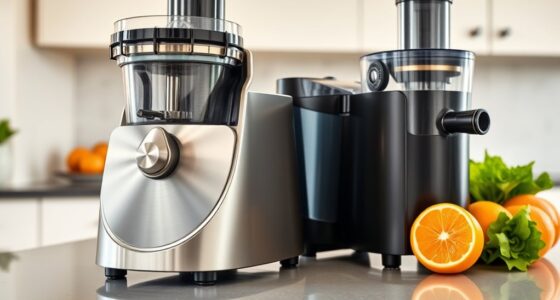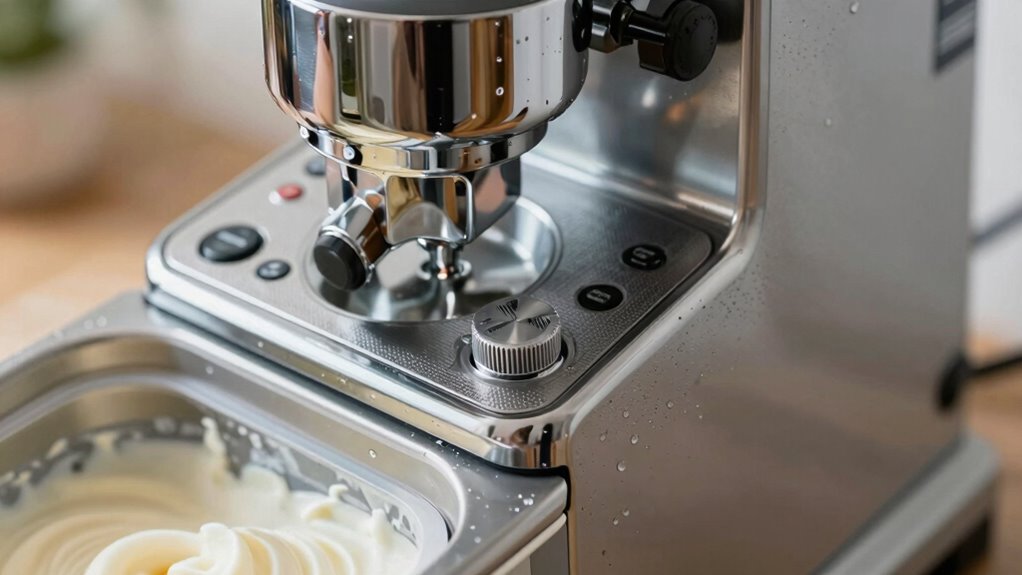

When you use a compressor ice cream maker, you’ll notice it feels different because it has an internal refrigeration system that starts working immediately, so there’s no need to pre-freeze bowls. You’ll control the process actively, stopping or restarting as needed, and may need to monitor for the perfect consistency. Plus, it produces more noise and heat, requiring proper placement and ventilation. Want to discover more about why it’s such a unique experience?

Get your next haul delivered free with Prime
- Fast, free delivery on millions of items
- Prime Video, Amazon Music and more included
- Member-only deals all year
Key Takeaways
- The internal compressor requires active monitoring and manual adjustments during operation, unlike pre-freezing models.
- Noise from the internal compressor creates a louder, more disruptive environment compared to traditional ice cream makers.
- Placement and ventilation are critical due to heat generated by the compressor, influencing how and where you use the machine.
- The active process and need for oversight make the experience more hands-on and involved.
- The machine’s size, weight, and continuous operation contribute to a different handling and overall user experience.
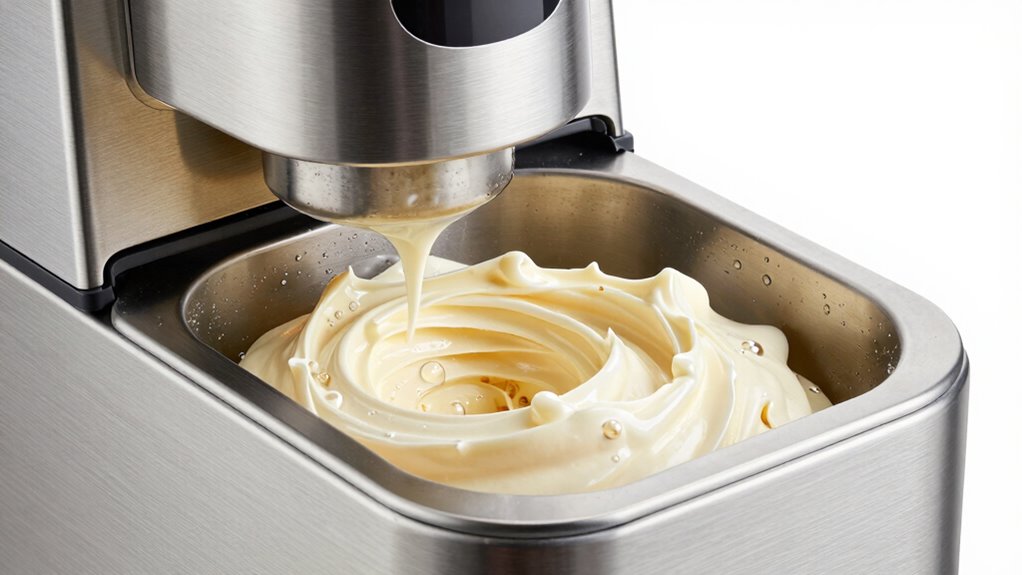
If you’ve ever used a traditional ice cream maker that requires pre-freezing bowls, you might be surprised at how different a compressor ice cream maker feels in operation. Unlike the old-fashioned models, a compressor ice cream maker is a self-contained unit that doesn’t depend on frozen bowls. Instead, it has an internal compressor that chills the mixture directly inside the machine. This design change makes the process more straightforward and less fiddly, but it also introduces some notable differences in how it feels to operate.
A compressor ice cream maker is more convenient but louder and more hands-on than traditional models.
One of the first things you’ll notice is the manual operation. With a compressor machine, you typically pour your ingredients into the bowl and press a button to start the churning process. There’s no need to pre-freeze parts or plan hours in advance. The machine takes care of the cooling internally, which simplifies your workflow significantly. However, depending on the model, you might find that some compressor ice cream makers require occasional adjustments or monitoring, especially during longer runs. You may need to manually stop or restart the process based on the consistency of your ice cream, giving you a greater sense of control, but also requiring a bit more active oversight.
Noise levels are another key difference you’ll feel when using a compressor ice cream maker. These machines tend to be louder than their traditional counterparts because of the internal compressor working constantly during operation. You’ll hear a humming or buzzing sound, which might be startling if you’re used to silent pre-frozen bowls. While the noise is generally tolerable, it can be disruptive if you’re trying to work quietly or if you’re running the machine in a shared space. Some models are quieter than others, but overall, expect a noticeable background hum that persists throughout the churning process. The internal compressor also generates heat that needs proper ventilation, so placement in well-ventilated areas is recommended to prevent overheating. Additionally, the noise levels may vary depending on the quality and design of the compressor, influencing your overall experience.
The combination of manual operation and noise levels shapes your overall experience with a compressor ice cream maker. You gain convenience and speed, but at the cost of increased noise and a slightly more active role in managing the process. You don’t have to wait hours for the bowl to freeze, which is a big plus, yet the internal compressor’s operation can be quite loud, especially during longer runs. This means you might want to consider placement carefully—away from quiet spaces or bedrooms. Ultimately, the feel of using a compressor ice cream maker is a balance between ease and awareness; it’s more immediate and hands-on, but also louder and more involved than traditional models. Additionally, the internal compressor requires regular maintenance and can add to the overall weight and size of the machine, impacting portability.
As an affiliate, we earn on qualifying purchases.
Frequently Asked Questions
Do Compressor Ice Cream Makers Require Pre-Freezing of Bowls?
No, compressor ice cream makers don’t require pre-freezing of bowls. You can simply pour your mixture into the machine, and it cools and churns automatically, saving you prep time. Pre-freezing bowls is unnecessary because the compressor system maintains consistent temperatures, helping you achieve smooth, creamy ice cream textures. This convenience is a key reason many prefer compressor models—they’re quicker and easier to use without extra freezing steps.
How Noisy Are Compressor Ice Cream Makers During Operation?
You might find that compressor ice cream makers hum softly during operation, creating a cozy background noise. This gentle sound allows you to focus on flavor customization without distraction. While they aren’t whisper-quiet, their energy efficiency helps keep noise levels manageable. The consistent operation guarantees your ice cream turns out perfect every time, making the slight hum a small price for delicious results and a fun, hands-on experience.
Can Compressor Models Make Gelato or Sorbet?
Yes, compressor models can make gelato and sorbet. Their versatility allows you to craft various frozen treats, thanks to adjustable settings and powerful compressors. You’ll notice the gelato’s rich, creamy texture and the sorbet’s smooth, airy consistency. With a compressor ice cream maker, you have the flexibility to experiment with different recipes, making it easier to achieve perfect gelato and sorbet textures every time.
What’s the Typical Lifespan of a Compressor Ice Cream Maker?
Think of your compressor ice cream maker as a trusty companion, lasting typically 8 to 10 years with proper care. Its lifespan hinges on factors like usage and maintenance, but it often outlives many appliances. You’ll enjoy endless flavor customization, and its energy efficiency means fewer worries about costs. Regular cleaning and timely repairs keep it humming, turning your frozen treats into reliable delights for years to come.
Are There Specific Maintenance Routines for Compressor Machines?
Yes, there are specific maintenance routines for compressor machines. You should regularly follow cleaning routines by wiping down the exterior and cleaning the compressor parts as instructed. Additionally, proper storage tips include keeping the machine in a cool, dry place and making sure it’s fully dry before storing to prevent mold and corrosion. Regular maintenance helps guarantee maximum performance and extends the lifespan of your compressor ice cream maker.
automatic ice cream maker with internal refrigeration
As an affiliate, we earn on qualifying purchases.
As an affiliate, we earn on qualifying purchases.
Conclusion
Once you get used to the unique feel of a compressor ice cream maker, you’ll appreciate its convenience. Imagine pouring your favorite mixture into the machine, hearing it hum softly as it churns, and knowing you’ll have creamy ice cream in no time—no pre-freezing needed. A friend once described it as “like having a mini ice cream shop at home,” and that’s exactly how it feels. Once you experience it, you’ll never want to go back to traditional methods.
loud ice cream maker with ventilation
As an affiliate, we earn on qualifying purchases.
As an affiliate, we earn on qualifying purchases.
self-contained ice cream machine
As an affiliate, we earn on qualifying purchases.
As an affiliate, we earn on qualifying purchases.
Halloween Picks
halloween
As an affiliate, we earn on qualifying purchases.