
For a premium hiking boot that balances support, comfort, and versatility, I’d start with the Danner Mountain 600; the SCARPA Kinesis Pro GTX stands out for demanding terrain, while the Merrell Moab 3 Mid Waterproof offers an approachable option for everyday trails. The main tradeoff is between lighter boots that feel easier on moderate hikes and sturdier models built for heavy loads and rough ground. Waterproof membranes can help in wet conditions, but they may feel warmer and take longer to dry than non-waterproof designs. Fit and intended terrain matter as much as a boot’s premium materials. Read on for how all 13 options compare and which one suits your hiking style.
Key Takeaways
- The Danner Mountain 600 is the most balanced pick: it sits between lightweight trail comfort and the heavier support of specialist boots.
- Serious loads and rugged routes call for a different class of boot: the SCARPA Kinesis Pro GTX, Asolo TPS 520 GV Evo Wide, and Kenetrek Mountain Extreme emphasize structure over easygoing flexibility.
- The two Merrell Moab 3 Mid options serve different conditions: the waterproof model suits wet-weather use, while the non-waterproof boot avoids a membrane for warmer or drier hikes.
- Wide-foot needs are more explicit in this lineup: the Asolo TPS 520 GV Evo Wide is the clearest option to investigate, though fit should still be checked in person or against the seller’s sizing guidance.
- Not every boot here is premium in the same way: the Columbia Transverse, Timberland White Ledge, and NORTIV 8 emphasize accessible trail use, while the Kenetrek and SCARPA models target demanding support needs.
| Danner Men’s Mountain 600 Hiking Boots |  | Best Overall | Shaft height: Ankle | Upper material: Leather | Waterproofing: Danner Dry barrier | VIEW ON AMAZON | See Our Full Breakdown |
| Kenetrek Men’s Corrie II Mid Hiker Hiking Boots |  | Best for Supportive Mid-Height Coverage | Shaft height: 7 inches | Upper: Leather and nylon lace-to-toe construction | Waterproofing: Windtex waterproof breathable membrane | VIEW ON AMAZON | See Our Full Breakdown |
| Merrell Men’s Moab 3 Mid Waterproof Hiking Boots |  | Best for Cushioned Day Hikes | Shaft height: Mid | Upper: Pigskin leather and mesh | Waterproofing: Waterproof membrane | VIEW ON AMAZON | See Our Full Breakdown |
| SCARPA Men’s Kinesis Pro GTX Hiking Boots |  | Best for Technical Backpacking | Origin: Italy | Weight: 1 lb 14 oz | Upper: 2.4 mm smoothout leather, PFAS-free | VIEW ON AMAZON | See Our Full Breakdown |
| Columbia Men’s Transverse Hike Waterproof |  | Best for Lightweight All-Weather Hiking | Shaft height: Ankle | Shaft circumference: 1 inch | Upper materials: Leather and mesh | VIEW ON AMAZON | See Our Full Breakdown |
| Merrell Men’s Moab 3 Mid Hiking Boot |  | Best for Dry-Trail Comfort | Upper: Pigskin leather and mesh | Lining: Recycled mesh | Water resistance: Not water resistant | VIEW ON AMAZON | See Our Full Breakdown |
| Timberland Men’s White Ledge Mid Waterproof Hiking Boots |  | Best for Straightforward Waterproofing | Upper: Waterproof premium leather | Construction: Seam-sealed | Lining: ReBOTL fabric | VIEW ON AMAZON | See Our Full Breakdown |
| Danner Skyridge Hiking Boots for Men – Waterproof, Suede & Cotton Ripstop Upper, Breathable Lining, Comfort Footbed & Traction Outsole |  | Best for Mixed Trail and Everyday Wear | Upper materials: Suede and cotton ripstop; 100% leather and textile listed | Shaft height: Ankle | Waterproofing: Danner Dry barrier | VIEW ON AMAZON | See Our Full Breakdown |
| Asolo Men’s TPS 520 GV Evo Wide Boots |  | Best for Demanding Backpacking | Upper: Water-resistant full-grain leather | Lining: GORE-TEX waterproof lining | Insole: Lite 2 anatomical footbed | VIEW ON AMAZON | See Our Full Breakdown |
| Danner Men’s Mountain 600 ID Gore-Tex Hiking Boots |  | Best for Lightweight Waterproof Agility | Outer material: Nylon | Lining: Gore-Tex | Water resistance: Waterproof | VIEW ON AMAZON | See Our Full Breakdown |
| NORTIV 8 Men’s Ankle High Waterproof Hiking Boots |  | Best for Lightweight Everyday Use | Sole material: Rubber | Shaft height: Ankle | Shaft circumference: Approximately 10 inches | VIEW ON AMAZON | See Our Full Breakdown |
| Kenetrek Men’s Mountain Extreme Non-Insulated Hiking Boots |  | Best for Heavy Loads and Rugged Terrain | Fabric: 100% leather | Origin: Imported | Sole material: Rubber | VIEW ON AMAZON | See Our Full Breakdown |
| KEEN Men’s Targhee 4 Mid Height Waterproof Hiking Boots | 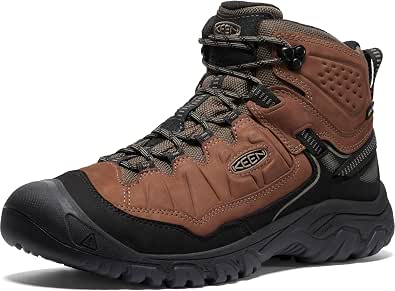 | Best for Wide-Fit Trail Comfort | Sole material: Rubber (KEEN.ALL-TERRAIN) | Shaft height: Ankle | Shaft circumference: 8.66 inches | VIEW ON AMAZON | See Our Full Breakdown |
| premium hiking boot | Midsole | Outsole | Shaft height |
|---|---|---|---|
| Danner Men’s Mountain 600 Hiki | Rubberized EVA (SPE) | Vibram Fuga Megagrip | Ankle |
| Kenetrek Men’s Corrie II Mid H | 5mm nylon | Grapon rubber | 7 inches |
| Merrell Men’s Moab 3 Mid Water | Lightweight EVA foam | Vibram TC5+ rubber | Mid |
| SCARPA Men’s Kinesis Pro GTX H | 2D PU | Vibram Biometric, XS Trek | — |
| Columbia Men’s Transverse Hike | — | — | Ankle |
| Merrell Men’s Moab 3 Mid Hikin | Lightweight EVA foam | Vibram TC5+ rubber | — |
| Timberland Men’s White Ledge M | EVA | Rubber with multi-directional lugs | — |
| Danner Skyridge Hiking Boots f | EVA | Mountain Tread slip-resistant rubber | Ankle |
| Asolo Men’s TPS 520 GV Evo Wid | Dual-density polyurethane | Vibram with Triple Power Structure | — |
| Danner Men’s Mountain 600 ID G | Vibram SPE | Danner Plyolite / Vibram Fuga | — |
| NORTIV 8 Men’s Ankle High Wate | EVA | — | Ankle |
| Kenetrek Men’s Mountain Extrem | 7mm nylon | — | 10 inches |
| KEEN Men’s Targhee 4 Mid Heigh | — | — | Ankle |
More Details on Our Top Picks
Danner Men’s Mountain 600 Hiking Boots
The Mountain 600 balances wet-weather protection, underfoot comfort, and dependable grip, making it my most versatile premium pick in this group. Its Danner Dry barrier blocks moisture while allowing breathability, and the Vibram Fuga Megagrip outsole is designed to hold on both wet and dry surfaces. Compared with the more supportive, 7-inch Kenetrek Corrie II Mid, this ankle-height boot favors easier movement over extra shaft coverage. The OrthoLite triple-density footbed and rubberized EVA SPE midsole add cushioning for day hikes and mixed terrain. The tradeoff is leather care: the upper may need breaking in and regular maintenance, unlike a more mesh-forward design. It is imported, which may also disappoint buyers specifically seeking a domestically made Danner boot.
Pros:- Danner Dry barrier provides waterproof protection with breathable construction
- Vibram Fuga Megagrip outsole is built for wet and dry traction
- OrthoLite triple-density footbed adds cushioning and heat dissipation
- Full-grain leather or suede upper offers a durable build
Cons:- Leather may need a break-in period and ongoing care
- Ankle-height shaft offers less coverage than the 7-inch Kenetrek Corrie II Mid
- Imported construction may not suit buyers seeking USA-made footwear
Best for: Hikers wanting one waterproof leather boot for varied day hikes and changeable trail conditions, with traction and cushioning both high on the list.
Not ideal for: Buyers who need extended ankle coverage for heavily loaded backpacking, want a low-maintenance mesh upper, or require a boot made in the USA.
- Shaft height:Ankle
- Upper material:Leather
- Waterproofing:Danner Dry barrier
- Footbed:OrthoLite triple-density polyurethane
- Midsole:Rubberized EVA (SPE)
- Outsole:Vibram Fuga Megagrip
- Laces:Two lace options included
- Origin:Imported
Our verdict“Choose the Mountain 600 for a well-rounded waterproof leather boot; pick the taller Kenetrek Corrie II Mid instead if added shaft support matters more.”
Kenetrek Men’s Corrie II Mid Hiker Hiking Boots
The Corrie II Mid is the support-minded choice here: its 7-inch shaft, lace-to-toe upper, and 5mm nylon midsole suit hikers who want a more substantial feel than the ankle-height Danner Mountain 600. A Windtex waterproof breathable membrane helps keep feet dry, while reinforced toe and heel guards address the wear points that matter on rough trails. Double and triple stitching add to its durability-focused construction, and the Grapon rubber outsole is intended for traction across hiking, backpacking, and hunting terrain. That sturdier approach comes with a cost: the leather upper may require a break-in period, and its taller profile will feel less agile than a lighter, lower-cut option such as the Columbia Transverse Hike. It is imported as well.
Pros:- 7-inch shaft provides more coverage than ankle-height options
- Windtex membrane combines waterproof protection with breathability
- Reinforced toe and heel guards help protect high-wear areas
- 5mm nylon midsole and supportive footbed are suited to longer outings
Cons:- Leather construction may need breaking in
- Taller, supportive build may feel less agile than the Columbia Transverse Hike
- Imported construction may not meet a preference for domestic production
Best for: Backpackers and hunters who prefer a taller, supportive boot with reinforced protection for rugged, varied terrain.
Not ideal for: Day hikers prioritizing a light, flexible feel, or buyers who want a short break-in period or domestically made footwear.
- Shaft height:7 inches
- Upper:Leather and nylon lace-to-toe construction
- Waterproofing:Windtex waterproof breathable membrane
- Midsole:5mm nylon
- Outsole:Grapon rubber
- Reinforcement:Toe and heel guards
- Stitching:Double and triple stitching
- Origin:Imported
Our verdict“Pick the Corrie II Mid if shaft coverage and rugged support outrank a lightweight, easy-moving feel.”
Merrell Men’s Moab 3 Mid Waterproof Hiking Boots
The Moab 3 Mid puts comfort and approachable trail support ahead of the more rugged, backpacking-oriented character of the SCARPA Kinesis Pro GTX. Its pigskin leather and mesh upper pairs with a waterproof membrane, while a Vibram TC5+ outsole supplies traction and the lightweight EVA midsole helps limit the feel of a heavier boot. A removable contoured insole, molded nylon arch shank, and Merrell Air Cushion in the heel give buyers several layers of underfoot support for everyday hikes. Recycled laces, webbing, and mesh lining add material-conscious details. The tradeoff is that this is still a mid-height boot, so it may feel restrictive to hikers who prefer low footwear, and its cushioning-oriented build may be heavier than a lightweight hiking shoe.
Pros:- Waterproof membrane works with a pigskin leather and mesh upper
- Vibram TC5+ rubber outsole provides trail traction
- Removable contoured insole, arch shank, and heel cushioning support underfoot comfort
- Recycled laces, webbing, and mesh lining use recycled materials
Cons:- May feel heavier than lightweight hiking shoes
- Mid-height shaft may restrict hikers who prefer a lower cut
- Comfort-focused build is less specialized for technical backpacking than the SCARPA Kinesis Pro GTX
Best for: Day hikers who want waterproof mid-height coverage, cushioned support, and a removable contoured insole for regular trail use.
Not ideal for: Hikers who favor low, lightweight footwear, dislike a mid-height shaft, or need a boot specifically geared toward demanding technical backpacking.
- Shaft height:Mid
- Upper:Pigskin leather and mesh
- Waterproofing:Waterproof membrane
- Insole:Removable contoured insole with reinforced heel cushioning
- Midsole:Lightweight EVA foam
- Outsole:Vibram TC5+ rubber
- Arch support:Molded nylon arch shank
- Special feature:Merrell Air Cushion in heel
Our verdict“Choose the Moab 3 Mid for cushioned, waterproof day hikes; look to the SCARPA Kinesis Pro GTX for a more technical backpacking focus.”
SCARPA Men’s Kinesis Pro GTX Hiking Boots
For long treks over technical ground, the Kinesis Pro GTX is the most specialized option in this set. Its 2.4 mm smoothout leather upper, GORE-TEX lining, and 2D PU midsole point toward a substantial backpacking boot, rather than the more comfort-forward day-hiking design of the Merrell Moab 3 Mid. The micro-pulley lacing allows quick fit adjustment, a useful advantage when dialing in the boot across different trail conditions. A Vibram XS Trek outsole is designed to provide grip, while the PFAS-free upper and lining add a stated material distinction. This performance-first build is not the natural pick for casual, low-effort walks: the listed weight is 1 lb 14 oz, and the durable leather construction favors a more substantial feel over lightweight agility.
Pros:- GORE-TEX lining provides waterproof, breathable coverage
- 2.4 mm smoothout leather upper is suited to rugged use
- Micro-pulley lacing allows quick, customizable fit adjustment
- Vibram XS Trek outsole is built for grip on varied terrain
Cons:- Listed weight of 1 lb 14 oz may be substantial for lightweight-minded hikers
- Backpacking-focused construction is more boot than many casual day hikes require
- The supplied product details do not specify a break-in period or additional fit guidance
Best for: Experienced backpackers seeking a substantial leather boot, waterproof lining, and adjustable lacing for extended travel on technical terrain.
Not ideal for: Casual day hikers or buyers who put low weight and a flexible, lightweight feel ahead of rugged construction.
- Origin:Italy
- Weight:1 lb 14 oz
- Upper:2.4 mm smoothout leather, PFAS-free
- Lining:GORE-TEX, PFAS-free
- Insole:Activ Plus
- Midsole:2D PU
- Outsole:Vibram Biometric, XS Trek
- Last:BD
Our verdict“Choose the Kinesis Pro GTX for technical backpacking and a substantial waterproof build, not for hikers seeking a light day-hiking boot.”
Columbia Men’s Transverse Hike Waterproof
The Transverse Hike is the straightforward pick for hikers who want waterproof protection and cushioning without the more substantial build of the SCARPA Kinesis Pro GTX. Columbia’s OMNI-TECH waterproof technology is paired with TECHLITE impact absorption, aiming to keep the boot comfortable in changeable weather and on everyday trails. OMNI-GRIP traction adds versatility across different surfaces, while the leather-and-mesh construction combines durability with a less all-leather design than the Danner Mountain 600. This makes the Columbia a practical choice for general outdoor use rather than a specialized technical backpacking boot. Its tradeoffs are limited fit information and a listed shaft circumference of just 1 inch, which may be a concern for some buyers; the supplied details also do not identify the outsole pattern or upper material breakdown beyond leather and mesh.
Pros:- OMNI-TECH provides waterproof, breathable construction
- TECHLITE cushioning offers impact absorption and energy return
- OMNI-GRIP traction is designed for multiple terrain types
- Leather and mesh combine durable materials with a mixed upper construction
Cons:- Listed 1-inch shaft circumference may feel narrow for some users
- Product details provide less construction specificity than the Danner Mountain 600
- No specific technical backpacking support features are listed
Best for: Hikers seeking waterproof protection, cushioning, and multi-terrain traction for everyday outdoor activities without a technical backpacking focus.
Not ideal for: Buyers who need detailed fit guidance, want a roomier shaft, or prioritize a specified premium leather and outsole construction.
- Shaft height:Ankle
- Shaft circumference:1 inch
- Upper materials:Leather and mesh
- Waterproof technology:OMNI-TECH
- Impact absorption:TECHLITE
- Traction:OMNI-GRIP
- Sole material:Rubber
Our verdict“Choose the Transverse Hike for general wet-weather outings and cushioning, but favor the Danner Mountain 600 for more detailed leather and outsole specifications.”
Merrell Men’s Moab 3 Mid Hiking Boot
The Moab 3 Mid is the comfort-led choice here: its contoured removable insole, EVA midsole, and Air Cushion help soften repeated steps without the more substantial build of the Asolo TPS 520 GV Evo. A Vibram TC5+ outsole and molded nylon arch shank add grip and support for established trails, while the pigskin leather and mesh upper balances durability with ventilation. Recycled mesh lining and recycled laces add a materials-conscious touch, but this is not the boot I would pick for prolonged rain or muddy, waterlogged routes: it is not water resistant. Compared with the waterproof Timberland White Ledge, the Moab gives up weather protection for a more breathable, cushioned hiking feel. Its reported narrow fit may also leave some hikers wanting more room.
Pros:- Removable contoured insole and cushioned EVA midsole support all-day trail comfort.
- Vibram TC5+ rubber outsole provides dependable grip.
- Pigskin leather and mesh combine abrasion resistance with ventilation.
- Recycled mesh lining and laces incorporate recycled materials.
Cons:- No water-resistant protection for wet trails or rainy hikes.
- May feel heavier than minimalist hiking footwear.
- Reportedly narrow fit may not suit wider feet.
Best for: Day hikers and weekend walkers on dry, established trails who want cushioned support and a grippy outsole.
Not ideal for: Hikers regularly crossing wet ground or hiking in persistent rain, since the boot is not water resistant; also a poor match for people who need a roomy fit.
- Upper:Pigskin leather and mesh
- Lining:Recycled mesh
- Water resistance:Not water resistant
- Outsole:Vibram TC5+ rubber
- Insole:Removable contoured insole with reinforced heel cushioning
- Midsole:Lightweight EVA foam
- Support:Molded nylon arch shank
- Additional features:Bellows tongue, protective toe cap, and Merrell Air Cushion
Our verdict“Choose the Moab 3 Mid for cushioned support and traction on dry trails, but pick a waterproof boot for routinely wet conditions.”
Timberland Men’s White Ledge Mid Waterproof Hiking Boots
The White Ledge Mid earns its place as a straightforward leather boot for hikers who want weather protection without moving up to a technical backpacking build. Its waterproof premium-leather upper and seam-sealed construction help shield feet from wet conditions, while the multi-directional rubber lugs offer traction across everyday trail surfaces. The EVA footbed and midsole favor cushioning over the more supportive, technical underfoot platform of the Asolo TPS 520 GV Evo, making the Timberland a simpler fit for casual day hikes than heavy loads or demanding terrain. ReBOTL lining brings recycled material into the construction. The tradeoff is less information about weight and a shaft shape that may not suit every ankle; hikers wanting a lighter, more agile waterproof option could compare it with the Danner Mountain 600 ID.
Pros:- Waterproof premium-leather upper with seam-sealed construction helps keep feet dry.
- EVA footbed and midsole provide cushioned support for routine hikes.
- Rubber outsole uses multi-directional lugs for trail traction.
- ReBOTL lining incorporates recycled material.
Cons:- Weight is not specified, making it harder to judge for long-distance or fast hiking.
- Shaft height and circumference may not fit all ankles comfortably.
- Less specialized support than the Asolo TPS 520 GV Evo for technical terrain and heavy backpacking.
Best for: Casual day hikers seeking a leather mid boot with waterproof construction and familiar, cushioned underfoot support.
Not ideal for: Technical backpackers carrying heavy loads or buyers who need published weight details and a precisely tailored shaft fit.
- Upper:Waterproof premium leather
- Construction:Seam-sealed
- Lining:ReBOTL fabric
- Shaft:Mid height; 9.75-inch circumference
- Closure:Speed lace hardware with lace hooks
- Insole:EVA footbed
- Midsole:EVA
- Outsole:Rubber with multi-directional lugs
Our verdict“Pick the White Ledge for waterproof leather and cushioned support on casual hikes, rather than technical backpacking.”
Danner Skyridge Hiking Boots for Men – Waterproof, Suede & Cotton Ripstop Upper, Breathable Lining, Comfort Footbed & Traction Outsole
The Danner Skyridge bridges hiking and casual wear with an ankle-height suede-and-ripstop upper, waterproof Danner Dry barrier, and breathable lining. Its Mountain Tread slip-resistant outsole suits varied everyday surfaces, while the triple-density OrthoLite footbed and EVA midsole add cushioning for long days on foot. Compared with the Timberland White Ledge, the Skyridge uses a textile-and-suede combination rather than an all-leather upper, which gives it a different balance of flexibility and abrasion protection. It does not match the more technical support package of the Asolo TPS 520 GV Evo for demanding backpacking. The ankle shaft may also feel less protective to hikers who prefer a taller boot, and the supplied details do not specify weight, so buyers prioritizing a light setup have less to go on.
Pros:- Danner Dry barrier provides waterproof protection with a breathable lining.
- Suede and cotton ripstop upper pairs leather with textile construction.
- Triple-density OrthoLite footbed and EVA midsole provide cushioning.
- Mountain Tread outsole is designed for slip-resistant traction.
Cons:- Ankle-height shaft offers less coverage than a mid-height boot.
- May feel heavier than lightweight hiking shoes.
- The supplied specs do not list weight, limiting comparisons for weight-conscious hikers.
Best for: Hikers who want waterproof protection and cushioned traction in a boot that also suits casual outdoor use.
Not ideal for: Backpackers on technical routes who want a taller, highly supportive boot, or buyers who need verified weight details before choosing.
- Upper materials:Suede and cotton ripstop; 100% leather and textile listed
- Shaft height:Ankle
- Waterproofing:Danner Dry barrier
- Footbed:OrthoLite triple-density polyurethane
- Midsole:EVA
- Outsole:Mountain Tread slip-resistant rubber
Our verdict“Choose the Skyridge for waterproof comfort across casual outings and varied trails, not for maximum support on technical backpacking routes.”
Asolo Men’s TPS 520 GV Evo Wide Boots
For heavy-duty routes, the Asolo TPS 520 GV Evo is the most supportive, technical option in this group. Full-grain leather, a waterproof GORE-TEX lining, dual-density PU midsole, and Vibram outsole with Triple Power Structure target long hikes where stability and underfoot protection matter more than a lightweight feel. Its anatomical Lite 2 footbed and rubber toe cap add comfort and protection for rough terrain. Compared with the Danner Mountain 600 ID, this Asolo favors a more substantial leather build and backpacking support over agility. That brings clear costs: it may feel heavy, and the lace-up fit can need adjustment on long outings. Buyers walking mostly easy day trails may find the lighter-feeling Merrell Moab 3 Mid a less demanding choice.
Pros:- Full-grain leather upper is built for durable protection.
- GORE-TEX lining supplies waterproof protection.
- Vibram outsole with Triple Power Structure supports traction and shock absorption.
- Dual-density PU midsole and anatomical footbed provide structured underfoot support.
Cons:- Heavier build may tire hikers who prefer an agile boot.
- Laces may need adjustment during long hikes.
- More boot than many casual day hikers need.
Best for: Backpackers and experienced hikers who need a supportive, waterproof leather boot for long distances and technical terrain.
Not ideal for: Day hikers who prioritize a light, flexible boot or mostly walk easy trails where this level of structure and weight is unnecessary.
- Upper:Water-resistant full-grain leather
- Lining:GORE-TEX waterproof lining
- Insole:Lite 2 anatomical footbed
- Midsole:Dual-density polyurethane
- Outsole:Vibram with Triple Power Structure
- Toe protection:Rubber toe cap
- Construction:Men’s wide boot
Our verdict“Choose the Asolo for supportive waterproof protection on demanding backpacking routes, not for lightweight day hiking.”
Danner Men’s Mountain 600 ID Gore-Tex Hiking Boots
The Danner Mountain 600 ID is the agile waterproof pick: a Gore-Tex lining, Vibram SPE midsole, OrthoLite footbed, and Danner Plyolite/Vibram Fuga outsole target comfort and grip without the full-grain leather heft of the Asolo TPS 520 GV Evo. That lighter construction can suit hikers who cover varied ground at a steady pace and want less bulk underfoot. The outsole is specified for wet and dry surfaces, while the waterproof lining adds protection in changeable weather. The tradeoff is an outer material listed as nylon, which may not offer the abrasion resistance of Asolo’s leather upper on rough, rocky routes. Compared with the Merrell Moab 3 Mid, this Danner adds waterproof protection and a more technical midsole package, but its premium-oriented build may be more boot than easy, dry day hikes require.
Pros:- Gore-Tex lining provides waterproof protection.
- Lightweight construction supports a more agile feel than substantial leather boots.
- Vibram SPE midsole and OrthoLite footbed add cushioning.
- Danner Plyolite/Vibram Fuga outsole is specified for wet and dry grip.
Cons:- Nylon outer material may be less abrasion-resistant than full-grain leather.
- Its waterproof build may be unnecessary for hikers who stick to dry trails.
- The premium-oriented construction may not suit buyers seeking a simpler hiking boot.
Best for: Hikers who want a lighter-feeling waterproof boot with cushioning and traction for varied day hikes.
Not ideal for: Rough-terrain backpackers who favor the abrasion resistance of a full-grain leather upper, or hikers who do not need waterproof protection.
- Outer material:Nylon
- Lining:Gore-Tex
- Water resistance:Waterproof
- Midsole:Vibram SPE
- Footbed:OrthoLite
- Outsole:Danner Plyolite / Vibram Fuga
- Color:Almond Butter
Our verdict“Choose the Mountain 600 ID for waterproof agility and cushioned traction, but favor the Asolo if rugged leather support matters more than weight.”
NORTIV 8 Men’s Ankle High Waterproof Hiking Boots
The NORTIV 8 is the more approachable choice here for buyers who want waterproof coverage and a cushioned feel across hikes, camping trips, and outdoor work. Its ankle-high profile and EVA midsole favor easier movement and lower foot fatigue over the tall, load-focused support of the Kenetrek Mountain Extreme. A removable cushioned insole also gives you the option to adjust the footbed. The rubber outsole is designed for traction on uneven ground, though the product details offer less evidence of rugged, heavy-load capability than Kenetrek’s full-grain leather build. The main compromises are the nylon and faux-leather upper rather than full-grain leather and less coverage than taller boots. I’d choose it for mixed everyday outdoor use, not demanding routes with a heavy pack.
Pros:- Removable cushioned insole allows footbed adjustments.
- Lightweight EVA midsole is intended to reduce fatigue on longer days.
- Waterproof construction suits wet trails and outdoor work.
- Rubber outsole provides slip-resistant traction on uneven ground.
Cons:- Nylon and faux leather do not offer the full-grain leather construction of the Kenetrek Mountain Extreme.
- Ankle-height shaft provides less coverage and support than taller boots.
- The provided details do not establish the same heavy-load focus as more rugged models.
Best for: Hikers and outdoor workers seeking a lightweight, waterproof ankle boot for day hikes, camping, travel, and routine outdoor tasks.
Not ideal for: Backpackers carrying heavy loads or hikers who want tall-shaft support and a full-grain leather upper for demanding terrain.
- Sole material:Rubber
- Shaft height:Ankle
- Shaft circumference:Approximately 10 inches
- Outer material:Nylon and faux leather
- Waterproof:Yes
- Midsole:EVA
- Insole:Removable, shock-absorbent cushioned
Our verdict“Choose the NORTIV 8 for cushioned, waterproof versatility across everyday outdoor activities, but pick the Kenetrek Mountain Extreme for heavier loads and taller support.”
Kenetrek Men’s Mountain Extreme Non-Insulated Hiking Boots
For demanding routes and substantial packs, the Kenetrek Mountain Extreme puts support and durability ahead of lightness. Its 10-inch shaft, 7mm nylon midsole, and full-grain leather construction are aimed at a more structured feel than the ankle-height NORTIV 8 or KEEN Targhee 4 Mid. The Windtex waterproof membrane and high-traction rubber outsole suit wet, rocky, or muddy ground, while the leather upper is built for hard outdoor use. That capability brings a clear cost in comfort: these boots may feel heavy over long stretches of ordinary walking, and their non-insulated design is a poor match for very cold conditions without suitable socks. I’d rank them for users who need serious support and weather protection, not for casual day hikes where a lighter mid-height boot makes more sense.
Pros:- Full-grain leather construction is suited to demanding outdoor use.
- Windtex membrane provides waterproof and weather-resistant protection.
- 10-inch shaft and 7mm nylon midsole support a more structured boot build.
- High-traction rubber outsole is designed for rocky and muddy terrain.
Cons:- Potentially heavy for extended walking and casual day hikes.
- Non-insulated construction may leave feet cold in very low temperatures.
- Taller, more supportive construction is less suited to buyers seeking an easy-moving ankle boot like the NORTIV 8.
Best for: Backpackers and hunters carrying heavy loads who need a tall, supportive leather boot for rugged, wet terrain in non-extreme cold.
Not ideal for: Day hikers prioritizing low weight, or winter hikers who need built-in insulation for very cold conditions.
- Fabric:100% leather
- Origin:Imported
- Sole material:Rubber
- Shaft height:10 inches
- Midsole:7mm nylon
- Waterproof membrane:Windtex
- Insulation:Non-insulated
Our verdict“Pick the Kenetrek Mountain Extreme when heavy loads, rugged terrain, and tall support matter more than low weight or insulation.”
KEEN Men’s Targhee 4 Mid Height Waterproof Hiking Boots
The KEEN Targhee 4 Mid is a strong fit for hikers who want waterproof protection and generous toe room without moving up to the tall, heavy-duty build of the Kenetrek Mountain Extreme. KEEN’s Original Fit gives the forefoot more space, while the removable Luftcell footbed adds arch support; buyers with narrow feet may find that same room too loose. The KEEN.DRY membrane is breathable as well as waterproof, and the direct-attach fused construction is intended to resist sole separation over time. A bruise plate and toe guard add protection on rocky trails, where the all-terrain rubber outsole is designed for mud and rock. Compared with the NORTIV 8, this model offers more specified trail-protection features, but it is still a mid-height boot rather than a tall option for heavy-load support.
Pros:- Wide Original Fit provides added toe room for broader feet.
- KEEN.DRY membrane combines waterproofing with breathability.
- Direct-attach fused construction is designed to resist sole separation.
- Bruise plate, toe guard, and all-terrain outsole suit rocky and muddy trails.
Cons:- The wider fit may feel loose on narrow feet.
- Mid-height shaft offers less coverage than the 10-inch Kenetrek Mountain Extreme.
- The product details identify imported origin, not domestic manufacture.
Best for: Hikers with wider feet who want a waterproof mid-height boot with trail protection for mixed routes over mud and rock.
Not ideal for: Narrow-footed hikers who need a close forefoot fit, or backpackers seeking the tall, heavy-load support of the Kenetrek Mountain Extreme.
- Sole material:Rubber (KEEN.ALL-TERRAIN)
- Shaft height:Ankle
- Shaft circumference:8.66 inches
- Waterproofing:KEEN.DRY waterproof breathable membrane
- Footbed:Removable Luftcell insole
- Laces:100% recycled PET
- Origin:Imported
Our verdict“Choose the KEEN Targhee 4 Mid if you want a roomy, protective waterproof boot for varied trails, but skip it if your feet are narrow or you need a tall heavy-load boot.”
How We Picked
I compared these boots around the decisions that shape trail performance: the balance of support and flexibility, waterproofing, upper and sole construction, expected comfort over long days, and suitability for different terrain and pack loads. I also looked at practical ownership factors, including how a membrane can affect heat and drying, how a stiffer boot may need more break-in, and whether the design suits everyday hikes or specialized use. Product names and specifications provide the basis for these comparisons; I do not present them as personal test results.
The order favors boots that make sense for the widest range of hikers before models built for narrower needs. The Danner Mountain 600 leads for its balanced role, while the SCARPA Kinesis Pro GTX and other supportive specialist options rank higher for demanding terrain than casual trail use. More accessible models remain useful choices, but they rank below the leading picks when buyers are specifically seeking premium construction or greater support. Fit is personal, so no ranking can replace trying boots with the socks and footbeds you plan to hike in.
Factors to Consider When Choosing Premium Hiking Boots
Before choosing among premium hiking boots, match the boot to your routes, pack, and feet—not just the length of your hike. These broader tradeoffs can help prevent paying for stiffness or waterproofing you will rarely use.
Match Support to Your Pack and Terrain
A boot that feels reassuring in a shop may be more rigid than you need on maintained trails. Stiffer construction can help when carrying a heavy pack over uneven ground, but it can feel restrictive on short, smooth hikes. Think about the roughest terrain you regularly encounter, not an occasional ambitious trip. If your routes vary, a midweight boot can offer a useful middle ground between flexible everyday models and mountaineering-style support. A common mistake is buying the stiffest boot available for protection and then avoiding it because it feels cumbersome. Choose the least rigid option that still supports your actual load and terrain.
Choose Waterproofing for Your Climate
A waterproof membrane is useful in rain, wet grass, and shallow splash, but it can hold warmth and slow drying after water gets inside over the collar. For humid summers, dry climates, or hikes with repeated stream crossings, a non-waterproof boot may breathe or dry faster, depending on its materials. Waterproof boots are not a substitute for gaiters or careful footing in deep water. Consider how often you hike in persistent wet weather, rather than treating a membrane as an automatic upgrade. Pairing waterproof boots with thick socks can make an already warm setup uncomfortable. The right choice depends on your conditions and how readily you can dry footwear between outings.
Treat Fit as a Performance Feature
Length alone does not determine whether a boot fits: heel hold, forefoot width, instep volume, and toe room all affect comfort on descents. Try boots late in the day, when feet may be slightly swollen, and wear the socks you expect to use on trail. Leave enough space for toes to move downhill without allowing the heel to lift excessively. A wide designation can help, but it does not guarantee a good match across every part of the foot. Avoid sizing up automatically to fix a narrow forefoot, since excess length can create slipping elsewhere. If you use custom orthotics, check that the footbed can be removed and the boot has enough volume.
Budget for Break-In and Maintenance
Leather-rich, supportive boots may need more gradual wear before a long hike than flexible, lighter designs. Start with short walks and increase distance only if you are not developing hot spots; break-in cannot fix a boot that is fundamentally the wrong shape. Keep footwear clean and dry it away from direct heat, which can damage materials and adhesives. Waterproof treatments and care needs vary by upper material, so follow the manufacturer’s instructions rather than applying products indiscriminately. A premium build can repay care over time, but it is not maintenance-free. If you need a boot ready for a trip immediately, favor a comfortable fit from the outset over a model you hope will stretch into shape.
Weigh Boot Weight Against Durability
Extra structure and protective materials can add confidence on rocky routes, yet every added ounce is carried through every step. Lighter boots often make sense for day hikes and moderate paths, while heavier builds can be worthwhile for rough terrain, heavy packs, or frequent use. Do not judge durability from appearance alone; construction, materials, and how the boot fits your use all matter. A highly protective boot can be a poor choice if its weight and stiffness exceed your needs. Conversely, choosing the lightest model for demanding, loaded hikes may leave you wanting more support. Focus on the job the boot will do most often, then pay for added protection only where it serves that job.
Frequently Asked Questions
Which boot should I choose for long hikes with a heavy pack?
Start by prioritizing a secure heel, stable platform, and enough structure for your pack and terrain rather than choosing solely by waterproofing. The SCARPA Kinesis Pro GTX, Asolo TPS 520 GV Evo Wide, and Kenetrek Mountain Extreme are the lineup’s more support-oriented options. Their added structure may feel excessive on easy trails, and a stiffer boot can take time to adapt to. Check the fit under load with the socks you hike in, since movement inside the boot can cause discomfort on long descents. If your routes are mostly moderate, the Danner Mountain 600 may be a more versatile balance.
Is a waterproof hiking boot a better choice for every trip?
No. Waterproofing can help in steady rain and damp vegetation, but it may feel warmer and can slow drying when water enters from above. For hot, dry trails or hikes with frequent deep crossings, breathability and drying time may matter more than a membrane. This roundup includes waterproof and non-waterproof Merrell Moab 3 Mid versions, making the difference easy to weigh. Match the boot to your usual weather and route rather than assuming waterproof means universally more capable. Socks and gaiters also affect how comfortable your setup feels in wet conditions.
Can a lightweight boot handle rocky trails and a loaded pack?
It may handle some rocky routes, but comfort and stability depend on the boot’s structure, your pack weight, and how uneven the trail is. Flexible designs can feel nimble for day hikes but may offer less support than stiffer options when carrying substantial weight. The Danner Mountain 600 is positioned as a balanced choice, while the SCARPA Kinesis Pro GTX and Kenetrek models suit more demanding support needs. Try a loaded pack on an incline if possible, and pay attention to foot movement and pressure points. If the boot feels unstable before the hike, adding distance is unlikely to solve the fit or support mismatch.
How should I choose between the two Merrell Moab 3 Mid boots?
Choose the waterproof version if wet grass, rain, and damp trails are common on your outings. The non-waterproof version makes more sense if you hike mainly in warm, dry conditions or value faster drying and ventilation. Neither option is automatically superior; the membrane changes how the boot manages moisture and heat. Compare fit and sock compatibility as carefully as the weather features, since the wrong shape can undermine either model. If your hiking conditions vary widely, consider whether you would rather accept some extra warmth or carry a separate pair for different seasons.
Do I need a wide hiking boot if my forefoot feels cramped?
A wide option can help, but first check whether the problem comes from toe-box shape, overall volume, or sizing. The Asolo TPS 520 GV Evo Wide is the most explicitly wide-specific choice in this lineup, but width labels do not predict every foot’s fit. Try the boot with your hiking socks and test toe movement on a downhill angle. Do not simply buy a longer size to gain width, since that can increase heel slip and affect control. If pressure remains in the same spot across multiple models, seek a fit assessment rather than expecting the boot to stretch enough to solve it.
Conclusion
For most hikers seeking one versatile premium pair, I’d choose the Danner Mountain 600 as the best overall balance. The Merrell Moab 3 Mid is my best value-oriented choice for familiar, everyday trail use, with the waterproof version suited to wetter routes and the non-waterproof model better matched to drier conditions. For demanding terrain and heavier loads, the SCARPA Kinesis Pro GTX is the best premium specialist pick; the Kenetrek Mountain Extreme and Asolo TPS 520 GV Evo Wide deserve attention when their specific support or width needs fit your plans. Beginners should start with the Merrell Moab 3 Mid Waterproof or the Columbia Transverse if they want an approachable option for ordinary hikes, while wide-footed buyers should investigate the Asolo’s fit. Choose by terrain, pack weight, and foot shape first: the best boot is the one that supports your hikes without adding stiffness or features you do not need.