
Zigbee, Z-Wave, and Thread are popular smart home protocols with key differences. Zigbee uses the crowded 2.4 GHz band and supports many devices, but can face interference issues. Z-Wave operates at a lower frequency, offering more reliable connections and a vast device ecosystem. Thread creates a self-healing mesh network using IPv6 security, making it scalable and secure. Keep exploring to discover how each can best fit your smart home needs.
Key Takeaways
- Zigbee operates on 2.4 GHz with broad device support, while Z-Wave uses a less crowded 908 MHz band for more stable connections.
- Thread employs IPv6-based security and creates a mesh network, enhancing future-proofing and reliability without a central hub.
- Zigbee supports many devices from different manufacturers, whereas Z-Wave emphasizes seamless interoperability within its certified ecosystem.
- Z-Wave offers low-latency, reliable communication specifically designed for home automation, unlike Zigbee’s interference-prone environment.
- Thread’s mesh architecture and modern security protocols provide scalable, secure, and resilient smart home networks.
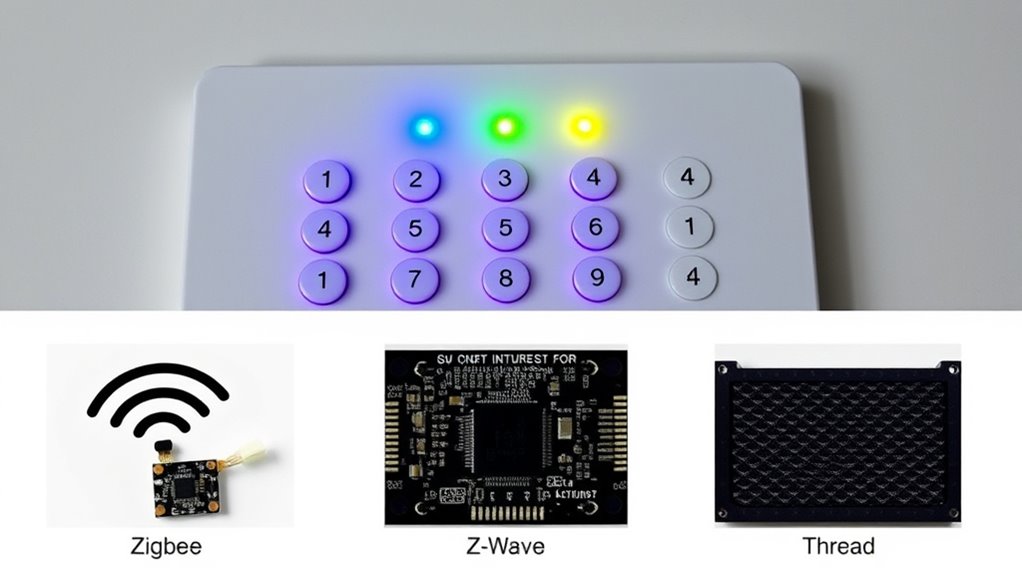
As smart home technology continues to grow, choosing the right wireless protocol becomes vital. You want a system that’s reliable, secure, and compatible with your existing devices. When evaluating options like Zigbee, Z-Wave, and Thread, understanding how each protocol handles security protocols and device compatibility can help you make an informed decision. These factors are essential because they directly impact your smart home’s safety and how seamlessly new gadgets integrate into your setup.
Zigbee is popular for its open standard and versatility. It uses robust security protocols, including AES-128 encryption, to ensure your data stays protected during transmission. This security focus makes Zigbee a reliable choice for sensitive devices like security cameras or smart locks. Plus, Zigbee supports a wide range of devices from various manufacturers, thanks to its open standards. This broad device compatibility means you can often mix and match brands without worry, giving you flexibility in building your smart home ecosystem. However, because Zigbee operates on a crowded 2.4 GHz band, interference can sometimes impact performance, especially if you have many Wi-Fi devices running simultaneously.
Z-Wave, on the other hand, emphasizes low-latency, reliable communication tailored for home automation. Its security protocols are also strong, utilizing AES-128 encryption with additional security layers like secure pairing. This focus on security makes Z-Wave a favorite for locking systems, sensors, and other critical devices. When it comes to device compatibility, Z-Wave boasts a large ecosystem, with thousands of certified devices designed specifically for Z-Wave hubs. This ensures that most compatible devices will work together smoothly, even if they come from different manufacturers. Nonetheless, Z-Wave operates on a less crowded frequency (around 908 MHz in North America), which often results in less interference and more stable connections, especially in complex setups.
Thread is relatively newer and focuses on creating a mesh network optimized for smart home devices. It uses IPv6-based security protocols, ensuring encrypted communications across devices. Thread’s security architecture is built around modern standards, making it a secure choice for future-proofing your smart home. Compatibility can be more limited initially because Thread is still gaining traction, but many devices now support Thread or can connect through bridging with other protocols. Its mesh networking capability allows devices to communicate directly with each other, reducing reliance on a central hub and increasing reliability. Additionally, security protocols play a crucial role in safeguarding your smart home from potential vulnerabilities.
Frequently Asked Questions
Which Protocol Offers the Fastest Data Transfer Speeds?
You’ll find that Thread offers the fastest data transfer speeds among these protocols. Its mesh network design enables quick, reliable communication, making it ideal for high-bandwidth tasks. Because of its scalable protocol, Thread can handle a growing number of devices efficiently, maintaining speed and performance. If fast data transfer is your priority, especially in smart home setups, Thread’s mesh network and protocol scalability give it a clear edge.
Are All Devices Compatible Across Zigbee, Z-Wave, and Thread?
Not all devices are compatible across Zigbee, Z-Wave, and Thread due to differing protocol standards. Device interoperability depends on whether devices support the same protocol standardization, which can limit cross-compatibility. You’ll need to check each device’s specifications to make certain they work together. While some hubs or bridges can facilitate interoperability, understanding each protocol’s standardization helps you decide which devices will seamlessly communicate in your smart home setup.
How Secure Are These Wireless Protocols Against Hacking?
You might find it surprising that over 80% of smart home devices use encryption standards to protect against hacking vulnerabilities. These protocols generally offer strong security, but no system is entirely immune. For instance, potential hacking vulnerabilities can exist if devices don’t implement encryption correctly or if software updates are neglected. To stay safe, verify your devices use robust encryption and keep their firmware up to date regularly.
Which Protocol Has the Best Battery Life for Sensors?
You’ll find that Thread generally offers the best battery life for sensors thanks to its superior power efficiency. Its design minimizes energy consumption, which extends battery longevity, making it ideal for long-term deployments. Z-Wave also performs well in this area, with devices designed for low power usage. Zigbee is efficient too, but Thread often leads in power efficiency, so you can expect longer-lasting sensors with it.
Can These Protocols Be Used Together in a Single Smart Home?
Your smart home can become an intricate symphony if you mix these protocols, but it’s no walk in the park. They can be used together, provided you prioritize protocol interoperability and cross-platform integration. Using a smart hub or compatible controllers helps unify different technologies, making your devices work seamlessly. While it requires some effort, combining Zigbee, Z-Wave, and Thread is totally doable and can create a more flexible, interconnected smart home experience.
Conclusion
So, now that you’re armed with the scoop on Zigbee, Z-Wave, and Thread, you can confidently pretend to understand the tech jargon while secretly hoping your smart home doesn’t turn into a chaotic circus. Whether you choose the reliable Zigbee, the versatile Z-Wave, or the futuristic Thread, just remember: it’s all about making your life easier—until your devices band together and decide to take a vacation. Happy smart living, or at least, semi-intelligent chaos.