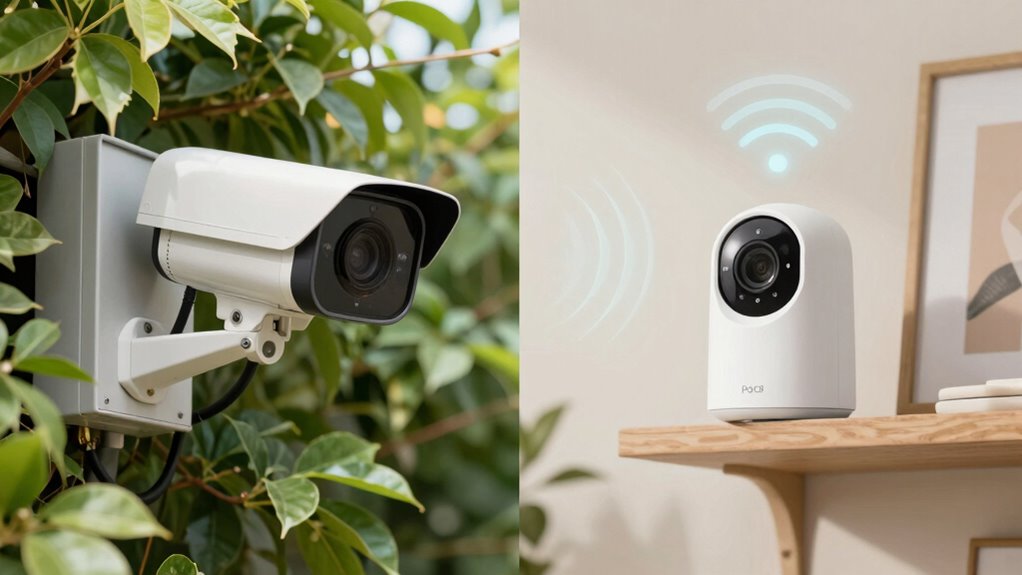

PoE cameras give you a reliable, wired connection that delivers stable footage and easier remote power control, but installing them can be tricky, especially in hard-to-wire areas. Wi-Fi cameras offer flexible placement and quick setup, but their wireless connection might be affected by interference or signal loss, causing interruptions. Depending on your needs, you might prioritize stability or convenience; keep exploring to find the best fit for your security setup.

Get your next haul delivered free with Prime
- Fast, free delivery on millions of items
- Prime Video, Amazon Music and more included
- Member-only deals all year
Key Takeaways
- PoE cameras provide a stable, wired connection for reliable, high-quality footage, while Wi-Fi cameras are more flexible but susceptible to interference.
- Wi-Fi cameras are easier to install and reposition, whereas PoE cameras require extensive cabling and proper wiring.
- PoE systems simplify power management by eliminating batteries and enabling remote power control; Wi-Fi cameras need separate power sources.
- Wired PoE cameras offer enhanced security against hacking and consistent data transfer, unlike Wi-Fi cameras, which are vulnerable to wireless breaches.
- PoE is ideal for outdoor, high-traffic areas needing dependable footage, while Wi-Fi suits indoor or easily accessible locations with quick setup needs.

When choosing a security camera setup, understanding the differences between Power over Ethernet (PoE) and Wi-Fi options is essential. PoE cameras rely on power over Ethernet cables, which deliver both data and electricity through a single connection. This setup offers a stable, wired connection that isn’t prone to interference or signal loss. On the other hand, Wi-Fi cameras utilize wireless connectivity, allowing you to position cameras anywhere within your network’s range without worrying about running cables. Each approach has its advantages and drawbacks, so your choice depends on your specific needs and environment.
With PoE cameras, you get a reliable connection that’s less susceptible to disruptions, making them ideal for outdoor or high-traffic areas where consistent footage matters. Because they use a wired connection, they don’t rely on your Wi-Fi network’s strength, reducing the risk of lag or disconnections. Installing PoE cameras does require running Ethernet cables, which can be a challenge if you don’t have easy access to power outlets or if the area is hard to wire. However, once installed, they tend to require less maintenance and offer better security since they aren’t as vulnerable to hacking through wireless networks. Additionally, PoE technology can support higher data transfer rates, which is beneficial for high-resolution video streaming.
PoE cameras provide reliable, low-maintenance security with fewer disconnections and enhanced security.
Wi-Fi cameras, by contrast, offer greater flexibility in placement. You don’t need to hide or run cables, so setting them up in rooms or outdoor spots becomes much easier. Wireless connectivity means you can quickly reposition cameras if needed or expand your system without pulling new wires. But Wi-Fi isn’t always perfect—interference from other devices, thick walls, or a congested network can weaken the signal, leading to lag or dropped footage. This can be especially problematic if you’re monitoring sensitive areas or require real-time footage with no interruptions.
Power over Ethernet also simplifies power management—there’s no need for separate power adapters or batteries, which can be a hassle to replace or recharge. Plus, PoE systems often support remote power control, allowing you to turn cameras on or off through your network. Wi-Fi cameras typically need their own power sources, which might mean dealing with multiple outlets or replacing batteries regularly. This can add to ongoing maintenance costs and inconvenience. Moreover, understanding the contrast ratio of your cameras can be crucial in ensuring clear footage in various lighting conditions.
As an affiliate, we earn on qualifying purchases.
Frequently Asked Questions
How Does Power Consumption Differ Between Poe and Wi-Fi Cameras?
PoE cameras generally have better power efficiency than Wi-Fi cameras because they draw power directly through the Ethernet cable, reducing energy costs. Wi-Fi cameras often consume more energy due to constant wireless transmission, which can increase your electricity bill over time. If you’re aiming to minimize energy costs and maximize power efficiency, PoE cameras are usually the better choice, especially for long-term savings.
Can Wi-Fi Cameras Operate Without Internet Access?
Yes, Wi-Fi cameras can operate without internet access if they connect to your local network. This setup allows you to maintain camera independence, making sure your footage stays accessible even during internet outages. However, some features like remote viewing or cloud storage won’t work without an internet connection. To keep your Wi-Fi camera functioning locally, ensure it’s properly integrated into your network and configured for local access.
What Are the Scalability Options for Each Camera Type?
Think of your security system as a garden; the more you want to grow, the more you need to plan. PoE cameras offer easier scalability with centralized wiring, but face expansion challenges due to cable limits. Wi-Fi cameras provide flexible scalability, allowing you to add units wirelessly, yet they may encounter limitations with network bandwidth and interference. Your choice depends on balancing expansion needs with potential scalability limitations.
How Do Maintenance Needs Compare for Poe and Wi-Fi Cameras?
You’ll find that PoE cameras generally require less maintenance because they offer easier remote troubleshooting through a single Ethernet cable, which helps identify hardware issues quickly. They tend to have greater hardware longevity due to stable power and connections. Wi-Fi cameras, on the other hand, may need more frequent troubleshooting and updates because they rely on wireless signals, which can be affected by interference and signal strength fluctuations, leading to higher maintenance over time.
Are There Compatibility Issues With Existing Security Systems?
Compatibility issues are like trying to fit puzzle pieces from different sets—you might face some hurdles. With PoE cameras, you may encounter compatibility challenges with older security systems that lack PoE ports or compatible network infrastructure. Wi-Fi cameras usually integrate more easily, but occasional integration hurdles can occur if your existing system uses proprietary software or protocols. Always check your current setup’s specifications before upgrading to avoid unexpected compatibility issues.
As an affiliate, we earn on qualifying purchases.
Conclusion
Choosing between PoE and Wi-Fi cameras is like selecting a sturdy bridge or a breezy hammock. PoE offers a solid, wired foundation that’s reliable but less flexible, while Wi-Fi provides the freedom to set up anywhere with a gentle breeze of convenience. Weigh your needs carefully—whether you prefer the unwavering strength of a bridge or the carefree ease of a hammock—and you’ll find the perfect fit for your security landscape.
PoE camera with remote power control
As an affiliate, we earn on qualifying purchases.
As an affiliate, we earn on qualifying purchases.
wireless security camera with high resolution
As an affiliate, we earn on qualifying purchases.
As an affiliate, we earn on qualifying purchases.
Halloween Picks
halloween
As an affiliate, we earn on qualifying purchases.