To eliminate dead zones and guarantee seamless coverage, place your primary mesh node centrally near your modem, avoiding thick walls and appliances that cause interference. Position satellite nodes about halfway between the main unit and areas with weak signals, keeping line of sight and minimizing obstacles. Elevate nodes and test the signal regularly to optimize placement. If you follow these tips, you’ll maximize your Wi-Fi coverage—there’s more to discover for perfect setup.
Key Takeaways
- Place the primary node centrally near the modem, avoiding obstructions for even coverage.
- Position satellite nodes halfway between the primary and dead zones for optimal signal relay.
- Elevate nodes on shelves or countertops and keep them away from thick walls or interference sources.
- Use a Wi Fi analyzer to identify weak spots and adjust node placement accordingly.
- Create overlapping coverage areas by strategically placing nodes to eliminate dead zones and ensure seamless Wi-Fi.

A well-placed Mesh Wi‑Fi system can dramatically improve your home’s internet coverage and speed. To get the most out of your setup, you need to focus on Wi Fi signal optimization and effective router positioning strategies. Proper placement isn’t just about plugging in your nodes; it’s about positioning them for maximum coverage and minimal dead zones. When you optimize your Wi Fi signal, you ensure that each node communicates efficiently, reducing lag and buffering issues. Start by placing your primary node close to your modem, ideally in a central location within your home. This central placement allows the main node to broadcast signals evenly in all directions, covering the largest area possible. Avoid placing it near thick walls, metal objects, or appliances that can interfere with wireless signals. Once your main node is set, focus on positioning the satellite nodes. These should be placed within a good range of the primary node—usually halfway between the main router and the areas where you experience weak signals. Keep in mind that walls, floors, and furniture can obstruct signals, so aim for a clear line of sight as much as possible. If you find certain areas still have poor coverage, consider moving the nodes slightly or raising them higher off the ground, such as on a shelf or countertop. Router positioning strategies go beyond just placing nodes; they involve understanding your home’s layout and where signals tend to weaken. For example, placing nodes near common usage spots like the living room or home office can boost Wi Fi signal strength where you need it most. Also, avoid placing nodes behind large appliances, inside cabinets, or near electronic devices that emit interference. To further enhance your Wi Fi signal optimization, consider using a Wi Fi analyzer app to identify dead zones and areas with weak signals. This can give you a visual map of your home’s coverage, guiding you to ideal node locations. Additionally, understanding the importance of innovative European cloud servers can inspire you to think about future-proofing your home network infrastructure for increased security and efficiency. Remember, the goal is to create a seamless mesh network where signals overlap smoothly, eliminating dead zones and providing consistent internet access throughout your space. Regularly testing your network after adjustments helps ensure you’re getting the best coverage. If certain spots continue to struggle, reposition your nodes or add additional ones if your system allows. With a strategic approach to Wi Fi signal optimization and router positioning strategies, your Mesh Wi‑Fi system will deliver robust, reliable coverage, making dead zones a thing of the past.
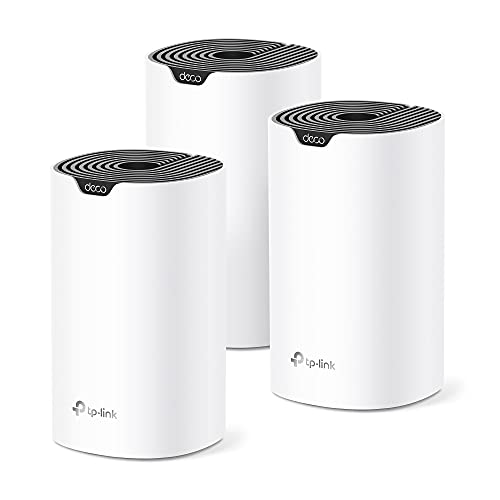
TP-Link Deco S4 Mesh AC1900 WiFi System – Up to 5,500 Sq.ft. Coverage, Replaces WiFi Router and Extender, Gigabit Ports, Works with Alexa, Deco S4(3-Pack)
A New Way to WiFi: Deco Mesh technology gives you a better WiFi experience in all directions with…
As an affiliate, we earn on qualifying purchases.
As an affiliate, we earn on qualifying purchases.
Frequently Asked Questions
How Many Nodes Are Optimal for Large Homes?
For large homes, 3 to 5 nodes are usually ideal. You want to focus on strategic node placement to guarantee signal enhancement throughout your space. Place nodes in central locations, away from obstructions, and near areas with high usage. This setup minimizes dead zones and maximizes coverage. Adjust the number based on your home’s size and layout, and always test your signal to find the most effective placement.
Can Mesh Wi-Fi Work With Existing Routers?
Sure, mesh Wi-Fi can work with your existing router, but don’t expect a seamless love story. Compatibility issues might pop up, making setup a bit of a treasure hunt. You’ll need to configure both devices correctly, or risk them acting like strangers at a party. It’s doable, but be prepared for some tech tango and potential hiccups along the way. Patience is your new best friend.
How Often Should I Update Firmware?
You should update your firmware regularly, ideally every few months, to keep your mesh Wi-Fi system secure and running smoothly. Firmware updates often include important security patches that protect your network from vulnerabilities. Check your router’s admin settings or app for updates, and enable automatic updates if available. Staying current guarantees your network stays fast, secure, and free from dead zones, optimizing your mesh Wi-Fi performance.
What’s the Best Way to Secure My Mesh Network?
Imagine your network as a fortress, and each device is a knight. To secure your mesh network, enable strong encryption on each device and set a unique, complex password. Keep your firmware updated to patch vulnerabilities. Use WPA3 if available, and disable WPS. Regularly monitor connected devices. Think of it as giving your knights shiny armor—making it tough for intruders to breach your network security.
Do Mesh Systems Support Smart Home Devices?
Yes, most mesh systems support smart home devices and offer excellent smart home compatibility. You can easily integrate devices like smart lights, thermostats, and security cameras into your mesh network. The seamless device integration allows you to control everything through a single app or voice assistant. Just make certain your mesh system specifically mentions smart home compatibility, so you get the best performance and reliable connections for all your smart devices.

Wi-Fi Analyzer
Generates a snapshot view of nearby Wi-Fi signals
As an affiliate, we earn on qualifying purchases.
As an affiliate, we earn on qualifying purchases.
Conclusion
By following these simple mesh Wi-Fi placement tips, you’ll turn your home into a seamless online sanctuary. Remember, a well-placed system can make all the difference, so don’t put off fixing dead zones. When you get it right, your connection will be smooth sailing, no matter where you are. Sometimes, it’s the little adjustments that make the biggest impact—so take the time to perfect your setup and enjoy uninterrupted internet everywhere.

TP-Link Deco X55 AX3000 WiFi 6 Mesh System – Covers up to 6500 Sq.Ft, Replaces Wireless Router and Extender, 3 Gigabit Ports per Unit, Supports Ethernet Backhaul, Deco X55(3-Pack)
Wi-Fi 6 Mesh Wi-Fi – Next-gen Wi-Fi 6 AX3000 whole home mesh system to eliminate weak Wi-Fi for…
As an affiliate, we earn on qualifying purchases.
As an affiliate, we earn on qualifying purchases.
TP-Link Deco X55 AX3000 WiFi 6 Mesh System – Covers up to 6500 Sq.Ft, Replaces Wireless Router and Extender, 3 Gigabit Ports per Unit, Supports Ethernet Backhaul, Deco X55(3-Pack)
Wi-Fi 6 Mesh Wi-Fi – Next-gen Wi-Fi 6 AX3000 whole home mesh system to eliminate weak Wi-Fi for…
As an affiliate, we earn on qualifying purchases.
As an affiliate, we earn on qualifying purchases.