
Setting sprays really do work if you use them correctly. They help lock your makeup in place, reduce shine, and improve overall wear time, especially when you choose a formula suited to your skin type. Applying the spray properly—full coverage from a proper distance and after your makeup is set—maximizes their benefits. Keep in mind, they’re most effective as an extra boost rather than a fix for poor application. Find out more about making them work for you.
Key Takeaways
- Properly formulated setting sprays with film-forming agents and humectants can enhance makeup adhesion and longevity.
- Correct application techniques, such as distance and motion, significantly influence the spray’s effectiveness.
- They help reduce shine, improve durability, and maintain a fresh appearance throughout the day when used properly.
- Not all sprays are equal; choosing formulas suited to your skin type and desired finish yields better results.
- While they extend makeup wear, setting sprays do not compensate for poor initial makeup application quality.

Have you ever wondered how to keep your makeup in place all day? If so, you’re not alone. Many people seek that perfect finishing touch to guarantee their look stays fresh from morning to night. That’s where setting sprays come in. These products promise to lock in your makeup, reduce shine, and even improve longevity. But do they really work? The answer depends on a few factors, especially the formula ingredients and application techniques you use.
First, understanding the formula ingredients is key. Most setting sprays contain a mix of water, alcohol, polymers, and sometimes silicones or glycerin. These ingredients work together to create a thin, invisible film over your makeup that helps it stay put. For example, some sprays include film-forming agents like VP/VA copolymers, which act like a glue, binding makeup to your skin. Others use humectants like glycerin to add a boost of hydration, preventing your skin from drying out and makeup from cracking. The presence of alcohol helps the spray dry quickly, creating a barrier that seals in your look. When choosing a setting spray, look for formulations tailored to your skin type and needs—mattifying ones for oily skin, hydrating options for dry skin, or long-lasting formulas for all-day wear.
Additionally, the effectiveness of a setting spray can be influenced by the quality of the ingredients, which impacts how well it adheres and lasts throughout the day. Application techniques also play an essential role in how well a setting spray performs. To get the best results, hold the bottle about 8–12 inches away from your face. Spray in an “X” or “T” motion to evenly cover your entire face, avoiding the eyes and mouth. Make sure your makeup is fully set before applying the spray—wait a few seconds after applying foundation, concealer, and powders. A light mist is enough; avoid oversaturating your face, which can lead to drips or uneven patches. After spraying, gently tap or press your skin with your fingertips to help the product settle and bond more effectively. Using a setting spray immediately after finishing your makeup guarantees that the product creates that invisible, flexible barrier that helps your look last longer.
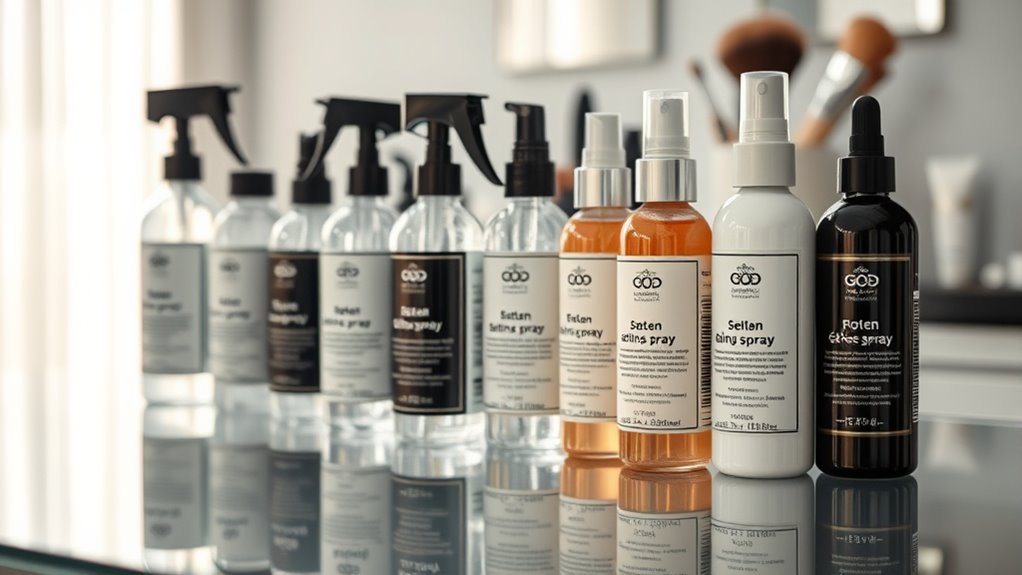
Keep in mind that not all setting sprays are created equal. Some are designed for a dewy, luminous finish, while others aim for a matte, shine-free look. The effectiveness depends on your skin type, the ingredients, and how you apply it. When used properly, setting sprays can indeed make a noticeable difference, especially during hot weather or long days. They won’t turn a poor makeup application into perfection, but they can considerably enhance the durability and appearance of your look. So, if you’re tired of touch-ups and smudging, experimenting with different formulas and mastering application techniques could be just what you need to keep your makeup flawless all day.
Frequently Asked Questions
Can Setting Sprays Replace Primer or Foundation?
Setting sprays can’t fully replace primer or foundation, but they work as primer alternatives and foundation replacements in a pinch. They help lock in your makeup and add a fresh finish, but for best results, use a primer to create a smooth base and foundation for coverage. Relying solely on setting spray might leave your skin less even, so it’s better to combine them with your usual makeup routine for ideal longevity and appearance.
Are There Any Side Effects From Using Setting Sprays?
Like a delicate dance on your skin, setting sprays can sometimes lead to allergic reactions or skin irritation. You might notice redness, itching, or a burning sensation if your skin’s sensitive or if the ingredients clash with your complexion. It’s wise to test a small area first, especially if you have allergies. Always read labels carefully, and if irritation occurs, discontinue use to keep your skin happy and healthy.
How Often Should I Reapply Setting Spray During the Day?
You should reapply setting spray every 4 to 6 hours for ideal timing and freshen up your makeup. Pay attention to your skin’s needs and environment—hot or humid days may require more frequent application. During the day, keep a small bottle handy for quick touch-ups, ensuring your makeup stays in place and looks fresh. Ultimately, listen to your skin and adjust your application frequency accordingly.
Do Setting Sprays Work on All Skin Types?
Setting sprays are like chameleons—they adapt to your skin type. They work on all skin types, but their effectiveness depends on the product formulation and your skin’s needs. If you have oily skin, look for oil-free, mattifying formulas. For dry skin, opt for hydrating or moisturizing options. Always check the label to guarantee compatibility, and patch-test new products to see how your skin reacts.
Can Setting Sprays Help With Makeup Melting in Hot Weather?
Yes, setting sprays can help with makeup melting in hot weather. They often give you a cooling sensation that refreshes your skin and helps control excess oil. Plus, a good setting spray provides a long-lasting hold, keeping your makeup in place despite the heat. Just spritz lightly after applying your makeup, and you’ll notice your look stays fresh and intact longer, even on hot, humid days.
Conclusion
So, while setting sprays might not be magic potions, they can be your secret weapon for a fresh, flawless look. Think of them as a gentle whisper that keeps everything in place without feeling heavy. With a little spritz here and there, you’ll enjoy that just-applied glow a little longer. Ultimately, it’s about finding what works best for you—embracing the subtle art of enhancing your natural beauty with a touch of refreshment.