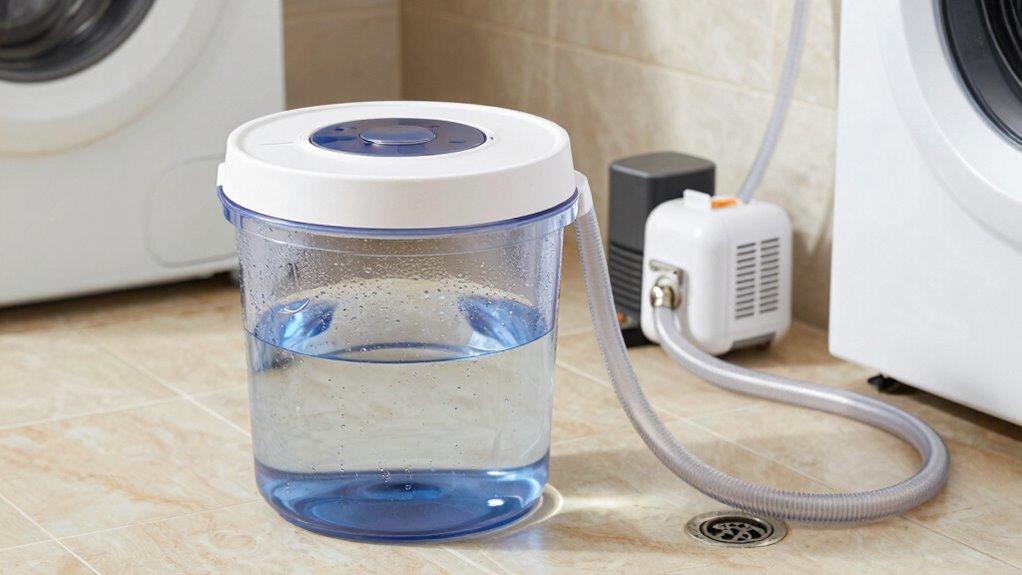
When choosing how to drain your dehumidifier, you can opt for a bucket, hose, or pump. A bucket is simple but needs regular emptying, making it suitable for occasional use. A hose allows continuous drainage directly to a drain, requiring minimal effort. A pump is more advanced and moves water automatically, ideal for basements or hard-to-reach spots. Understanding these options helps you pick the best fit—keep exploring to find out which choice suits your needs best.

Get your next haul delivered free with Prime
- Fast, free delivery on millions of items
- Prime Video, Amazon Music and more included
- Member-only deals all year
Key Takeaways
- Buckets are suitable for portable units with built-in tanks, requiring manual emptying regularly.
- Hoses provide continuous drainage by channeling water outside, ideal for fixed systems or areas with plumbing access.
- Pumps actively move water to a drain, useful when gravity drainage isn’t possible or for higher water volumes.
- Automatic drainage features reduce manual maintenance, combining hoses or pump options for convenience.
- Choose between bucket, hose, or pump based on your space, humidity level, and desired maintenance frequency.
Dehumidifiers require a reliable way to dispose of the collected water, and choosing the right draining option can make maintenance easier and more convenient. Whether you’re using portable units or fixed systems, understanding your draining options helps you decide which method best fits your space and lifestyle. Portable units are designed for flexibility, often featuring a built-in water collection tank you need to empty manually. This bucket system is simple: once the tank fills, you just remove it, empty the water, and replace it. It’s a straightforward approach that works well if you don’t mind regular maintenance or if the dehumidifier is used in a small, confined space. However, the downside is that you have to remember to check the tank frequently to prevent overflow, especially in humid environments where water accumulates quickly. For more efficient operation, some models incorporate automatic drainage options that reduce manual effort.
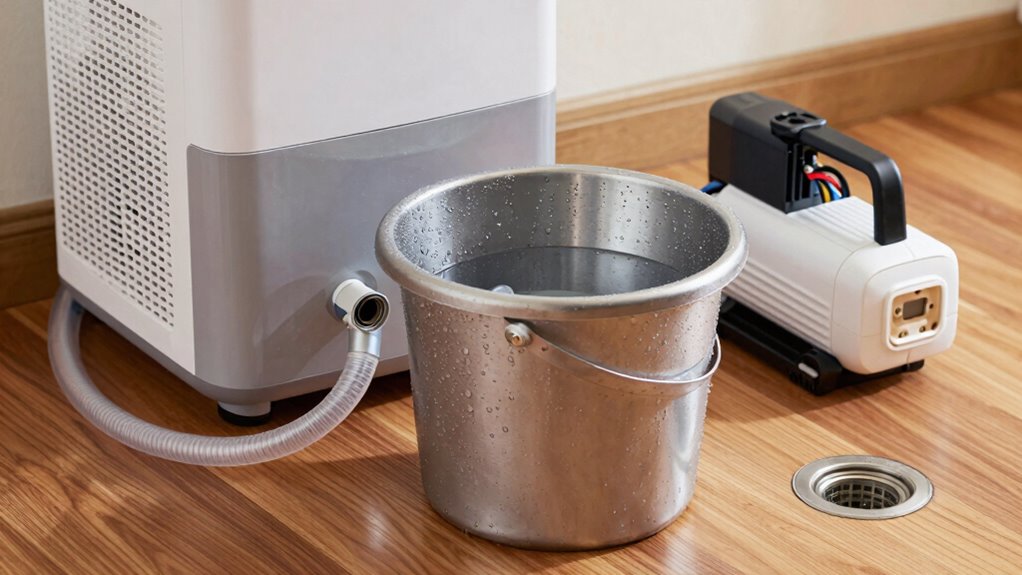
Fixed systems, on the other hand, are typically set up with more permanent drainage solutions. These units are often connected to a drain or plumbing system, allowing continuous operation without manual intervention. For these systems, the draining options usually include hoses or pumps. A hose offers a convenient way to channel water directly to a drain or outside, making it ideal for basements or areas with nearby plumbing. You simply attach the hose to the dehumidifier and run it to the drain, eliminating the need for frequent emptying. This setup is especially useful if you want to keep humidity levels consistent without constant monitoring. Pumps take this a step further, actively moving water from the dehumidifier to a drain location, even if it’s located above or at a different level. Pumps are great if you have limited space or if the drain is not conveniently located near the unit.
When choosing between these draining options, consider your environment and how much maintenance you’re willing to do. For portable units, the bucket method remains popular because of its simplicity, but if you prefer a more hands-off approach, a hose or pump connected to a fixed system offers continuous drainage. Fixed systems with hoses are often more cost-effective and less maintenance-intensive, making them suitable for long-term use. Pumps, while more expensive, provide the most flexibility and are best for setups where gravity drainage isn’t feasible. Ultimately, the right draining method depends on your space, the dehumidifier type, and how much effort you’re willing to invest in maintenance.
As an affiliate, we earn on qualifying purchases.
Frequently Asked Questions
Can I Use Multiple Draining Options Simultaneously?
Yes, you can use multiple draining options simultaneously, but it depends on your dehumidifier’s drainage setup. Make sure the drainage setup supports this configuration and that the hoses or pump are compatible. Using different options at once can ease maintenance routines and prevent water overflow, but monitor the system closely. Always check your manufacturer’s instructions to avoid damaging your dehumidifier or creating leaks.
Which Draining Method Is Most Energy-Efficient?
Using a hose for draining is the most energy-efficient method because it minimizes power usage and reduces energy consumption. Unlike buckets that require manual emptying, a continuous drain with a hose keeps the dehumidifier running smoothly without interruption. Pumps can be efficient too, but they typically consume more power than simple hose drainage. So, if you’re aiming to save energy, opt for a hose connection for consistent, low power usage.
Are There Safety Concerns With Continuous Draining?
Continuous draining can be safe if you guarantee proper electrical safety measures, like plugging into grounded outlets and avoiding water contact with electrical parts. However, beware of mold growth if the drain line leaks or clogs, creating moisture buildup. Regularly inspect your setup for leaks or blockages, and keep the area dry. Taking these precautions helps prevent electrical hazards and mold issues, ensuring safe, continuous dehumidifier operation.
How Often Should I Check the Drainage System?
You should check your drainage system weekly as part of your maintenance schedule. Regular inspections help you spot clogs, leaks, or other issues early. Use troubleshooting tips like ensuring the hose is clear and properly connected, or the pump is functioning correctly. If you notice water isn’t draining properly, address problems immediately to prevent water damage or mold buildup. Consistent checks keep your dehumidifier running efficiently and safely.
Can I Use a Dehumidifier Without Any Drainage Option?
Is it possible to use a dehumidifier without drainage? Absolutely, but imagine your device as a thirsty traveler needing water—without a drainage option, you’ll need to empty the bucket regularly, which can be inconvenient. If you prefer portable placement and want to minimize noise levels, consider a model with an automatic shutoff feature. Otherwise, be prepared for periodic maintenance to keep your air dry and your environment comfortable.
As an affiliate, we earn on qualifying purchases.
Conclusion
Choosing the right draining option depends on your space and needs. Did you know that around 60% of dehumidifier owners prefer continuous drainage for convenience? Whether you opt for a bucket, hose, or pump, make sure it suits your lifestyle. With the right setup, you can keep your home dry effortlessly and reduce maintenance time. So, consider your space and choose the option that keeps your environment comfortable and hassle-free.
portable dehumidifier with water tank
As an affiliate, we earn on qualifying purchases.
As an affiliate, we earn on qualifying purchases.
fixed dehumidifier with continuous drain
As an affiliate, we earn on qualifying purchases.
As an affiliate, we earn on qualifying purchases.
Halloween Picks
halloween
As an affiliate, we earn on qualifying purchases.