Oud sometimes smells ‘animalic’ because it comes from the resin of infected agarwood trees, which naturally develops complex, primal scents. These animalic notes include musky and deep undertones that add sensuality and authenticity to the fragrance. They’re not signs of spoilage but part of the natural chemical process. Understanding this helps you appreciate oud’s rich complexity—if you want to explore further, you’ll discover how this enhances its luxurious appeal.
Key Takeaways
- Animalic notes in oud come from natural chemical processes, not spoilage or poor quality.
- These notes add sensual depth and authenticity, enriching the fragrance’s complexity.
- The resinous heartwood’s infection triggers resin formation, contributing to animalic nuances.
- Animalic and musky undertones develop gradually during aging, evolving the scent over time.
- The unique combination of notes reflects traditional craftsmanship and the natural origin of oud.
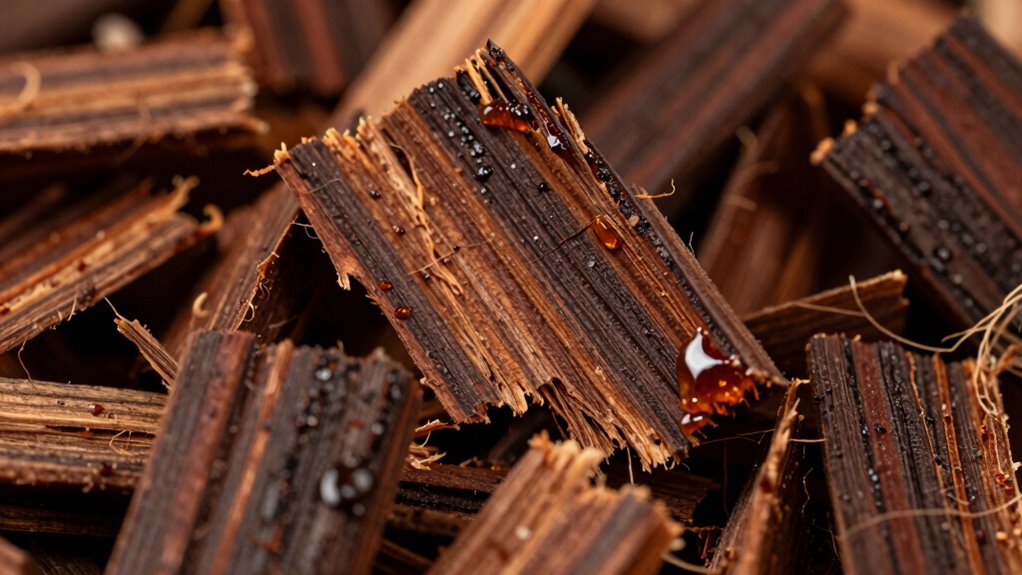
Have you ever wondered what makes oud one of the most sought-after and luxurious fragrances in the world? The answer lies in its complex scent composition and the fascinating fragrance evolution that occurs during its development. Oud, also known as agarwood, is a resinous heartwood that forms in certain trees when they become infected by mold. This unique formation creates a rich, deep scent that has captivated perfumers and enthusiasts alike for centuries. The scent composition of oud is incredibly layered, blending woody, smoky, sweet, and sometimes animalic notes into a harmonious yet intense fragrance. It’s this intricate mix that gives oud its reputation as a luxurious and powerful scent.
When you encounter an oud fragrance, you’re experiencing a carefully balanced scent composition that often includes elements like agarwood’s natural woody aroma, hints of balsam, spices, and occasionally a touch of musk or animalic undertones. These animalic nuances are often what people describe as ‘animalic’ in oud, but they’re not necessarily a sign of poor quality or spoilage. Instead, they are a natural part of the fragrance’s evolution, resulting from the complex chemical processes within the resin. This animalic character can evoke a sense of primal sensuality, adding depth and richness to the scent. It’s precisely this aspect that makes oud so intriguing and desirable for those seeking a fragrance that exudes both sophistication and rawness.
Oud’s animalic notes add sensual depth and authenticity to its rich, evolving fragrance.
The fragrance evolution of oud is a key reason why it continues to captivate fragrance lovers. When you first smell oud, you might notice the initial woody or smoky top notes. As the scent develops on your skin, the animalic and musky undertones gradually emerge, revealing the full complexity of the fragrance. This aging process allows the scent to unfold, transforming from a bold, intense aroma into a more refined, layered experience. Different oud oils and compositions age differently, which is why no two bottles smell exactly the same. The way oud evolves over time creates a sensory journey, inviting you to explore its depths and appreciate its multifaceted nature.
In essence, oud’s allure lies in its rich scent composition and the way it evolves, revealing new facets as it interacts with your skin. Those animalic notes, often misunderstood, are an integral part of its character—adding sensuality, depth, and authenticity. When you wear oud, you’re not just smelling a fragrance; you’re experiencing a centuries-old tradition of craftsmanship that celebrates complexity and natural beauty.
Frequently Asked Questions
Can the Animalic Scent of Oud Vary by Age or Origin?
Yes, the animalic scent of oud can vary by age and origin. As oud matures, its aroma often softens, becoming more refined and less animalic. Regional variations also influence its scent profile; oud from Southeast Asia tends to be milder, while Middle Eastern varieties may have a more pronounced animalic note. These differences are due to regional climate, cultivation methods, and distillation techniques, making each oud unique.
Are There Synthetic Options That Mimic Animalic Oud Scents?
Think of synthetic alternatives to animalic oud scents like a painter’s palette. They offer scent replication that captures the rich, complex notes without the animalic edge. These synthetic options can mimic the deep, musky qualities of traditional oud, making them perfect for those seeking the aroma without animalic undertones. While they may not fully replicate the natural essence, they provide a versatile and cruelty-free way to enjoy the scent’s allure.
How Does Animalic Oud Impact Its Overall Fragrance Profile?
Animalic oud adds a rich, primal depth to its fragrance profile, enhancing scent complexity and making it more intriguing. You’ll notice a warm, musky undertone that evokes an animalic depth, giving the perfume a bold, sensual character. This depth often balances the woody and resinous notes, creating a layered experience. When you wear animalic oud, you’ll enjoy a distinctive, mesmerizing scent that exudes both mystery and sophistication.
Is Animalic Oud Safe for Sensitive or Allergy-Prone Skin?
Oh, of course, animalic oud is perfectly safe for sensitive or allergy-prone skin—said no one ever. If you have skin sensitivity or allergy concerns, you should be cautious. The rich, animalic scent can sometimes trigger reactions. Always do a patch test before full application, and consult a dermatologist if you’re unsure. Better safe than sorry when it comes to delicate skin and complex fragrances.
Can the Animalic Notes in Oud Fade Over Time or With Blending?
Yes, the animalic notes in oud can fade over time or with blending. You can enhance scent longevity by using blending techniques that soften or mask the animalic undertones, such as pairing oud with floral or citrus notes. Applying the fragrance carefully, and layering it with complementary scents, helps control how prominent the animalic qualities remain, ensuring a balanced and pleasing aroma throughout the day.
Conclusion
So, now you understand why some oud smells animalic—it’s all about the resin’s natural qualities and how it interacts with other notes. Imagine you’re trying a perfume with a bold, animalic oud, and it reminds you of a rich, exotic leather. That’s the magic of oud’s complexity. Next time you encounter this scent, you’ll appreciate its deep, primal allure, knowing it’s a beautiful blend of nature’s most intriguing elements.