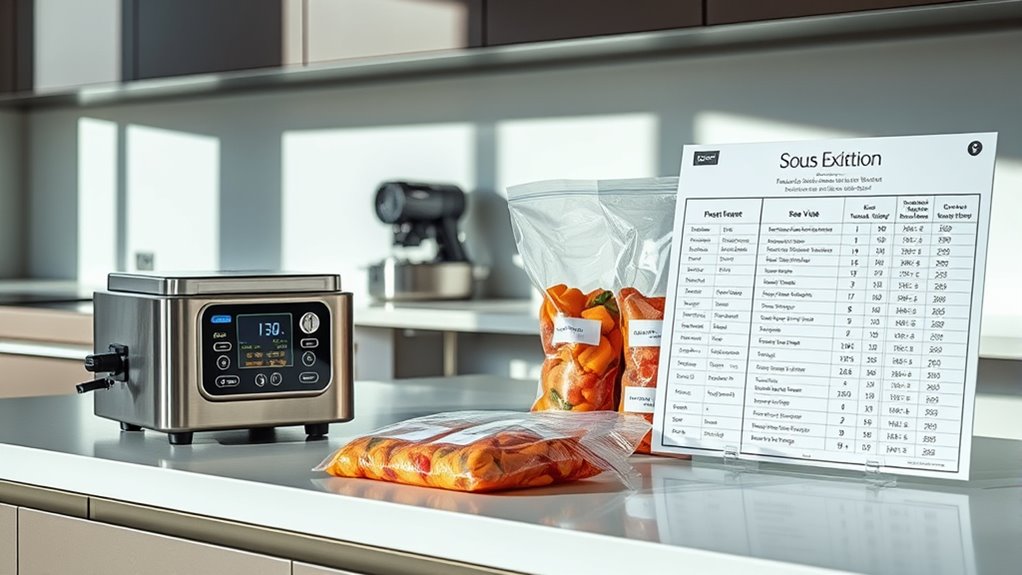
To master sous vide, you need to understand how time and temperature tables guide your cooking. These tables specify the ideal temperatures and times for different foods, helping you achieve perfect doneness, safety, and texture. Setting the right temperature and following suggested times guarantee consistent, professional results. If you want to refine your skills and access more culinary secrets, keep exploring how to use these tables effectively.
Key Takeaways
- Time and temp tables provide specific guidelines for achieving desired doneness for various foods.
- They help prevent overcooking, undercooking, and ensure food safety during sous vide cooking.
- Properly using these tables ensures consistent, professional-quality results at home.
- They are based on scientifically tested times and temperatures for optimal texture and flavor.
- Mastering these tables allows greater flexibility and confidence in sous vide meal preparation.
Ever wondered how to achieve perfectly cooked meals with minimal effort? That’s where sous vide comes in. It’s a method that relies on precise temperature control and consistent results, making it a favorite among home cooks and professional chefs alike. To access the full potential of sous vide, understanding time and temperature tables is essential. These tables serve as your roadmap for cooking different foods to perfection, ensuring ideal texture, flavor, and safety. When you’re preparing to use sous vide, one of the first steps is vacuum sealing your ingredients. Vacuum sealing is vital because it removes air from the bag, allowing heat to transfer evenly and efficiently, which directly impacts cooking precision. With properly vacuum-sealed bags, you eliminate gaps where water might bypass the food, ensuring even heat distribution and preventing spoilage or contamination. Additionally, choosing the right type of bag material, such as BPA-free, food-grade vacuum bags, can help maintain food safety and quality. Once your ingredients are sealed, you can set your sous vide cooker to the desired temperature based on your target doneness. For example, cooking a steak to medium-rare typically requires a temperature of around 130°F (54°C). The beauty of sous vide is that the temperature remains constant throughout the cooking process, so your food is cooked evenly from edge to center. Now, consulting a time and temp table becomes invaluable. These tables provide specific guidelines for different types of food—beef, chicken, fish, vegetables—covering various levels of doneness. They tell you how long to cook each item at a particular temperature to reach the perfect texture without overcooking. For instance, a chicken breast cooked at 140°F (60°C) might need 1 to 2 hours, while tougher cuts like brisket require much longer at a lower temperature to become tender. Cooking precision is what sets sous vide apart from traditional methods, and following these tables helps you avoid common pitfalls like undercooking or overcooking. You don’t have to guess anymore; instead, you rely on scientifically tested times and temperatures that guarantee consistent results every time. This approach also enhances safety, especially with poultry and seafood, because holding food at the right temperature for a certain period kills bacteria effectively. Additionally, because of the gentle heat, you can hold foods at their target temperature for longer periods without sacrificing quality, which adds flexibility to your cooking schedule. Using specialized temperature control devices further ensures accuracy and safety during your sous vide cooking process. In essence, mastering time and temp tables combined with vacuum sealing elevates your sous vide cooking. It’s all about precision and control, giving you the confidence to prepare restaurant-quality dishes at home. Once you get comfortable with these tables, you’ll see how straightforward it is to achieve perfectly cooked meals with minimal effort, making sous vide an essential tool in your culinary arsenal.
Frequently Asked Questions
Can Sous Vide Be Used for Desserts?
Yes, you can definitely use sous vide for desserts. You might make a silky chocolate ganache by heating cream and chocolate at precise temperatures, then chilling it to set. It’s also great for fruit poaching, where you gently cook fruit in flavored syrups to enhance flavor and texture. With sous vide, you control the temperature perfectly, ensuring consistent results for delicious, professional-quality desserts every time.
How Do I Reheat Sous Vide Cooked Food Safely?
Reheating sous vide food is like gently waking a sleeping bear—slow and careful. To do it safely, set your water bath to the original cooking temperature or slightly higher, around 130-140°F, for faster reheating. Use food safety guidelines to avoid bacteria growth. Keep the food submerged, and reheat until it’s heated through. This gentle process guarantees your meal stays tender and safe to enjoy.
What Equipment Is Necessary for Precise Temperature Control?
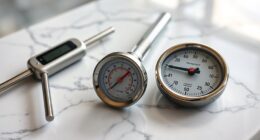
To achieve precise temperature control, you need a reliable water circulator and a precision thermometer. The water circulator maintains a consistent water temperature, while the precision thermometer ensures accuracy, so your food cooks evenly. Make certain your equipment is compatible with sous vide cooking, easy to operate, and can reach your target temperatures. Investing in quality tools helps you get perfect results every time.
Can Sous Vide Be Used for Canning and Preserving?
You might think sous vide is only for cooking, but it can also be used for canning and preserving, thanks to vacuum sealing and precise temperature control. By maintaining accurate temperatures, you guarantee safe processing of foods, killing bacteria without overcooking. While not traditional canning, sous vide offers a modern method to extend shelf life, especially for delicate items like fruits and jams. Just follow proper safety guidelines for best results.
How Does Altitude Affect Sous Vide Cooking Times?
Altitude affects sous vide cooking times because lower air pressure at higher elevations causes water to boil at lower temperatures. You’ll need altitude adjustments to guarantee proper doneness, often requiring longer cooking times to compensate for the cooler water temperatures. Be aware of cooking time variations at different altitudes, and adjust your times accordingly to maintain food safety and desired texture. Always monitor and tweak your process based on your specific elevation.
Conclusion
Now that you’ve got the basics down, you’re ready to master the art of precision cooking. Think of sous vide as your culinary compass, guiding you toward perfectly cooked meals every time. With patience and attention to temperature and time, you’ll unveil flavors that seem almost magical. Just like a symphony reaches its crescendo, your dishes will come alive, leaving everyone in awe. Embrace the journey, and let your kitchen become a place of delicious discovery.