Nonstick pans are safe and durable if you take proper care of them. Modern coatings are designed to meet strict safety standards, and occasional scratches won’t release harmful toxins. Avoid overheating and use gentle cleaning methods to extend their lifespan. While acidic foods can wear down weaker coatings, most pans handle them fine when used correctly. If you want to learn how to keep your nonstick pans looking and performing their best, keep exploring for helpful tips.

Get your next haul delivered free with Prime
- Fast, free delivery on millions of items
- Prime Video, Amazon Music and more included
- Member-only deals all year
Key Takeaways
- Modern nonstick coatings meet strict safety standards; overheating or minor scratches rarely release harmful substances.
- Proper care, like hand washing and avoiding abrasive tools, extends the lifespan of nonstick pans.
- Acidic foods can wear down weaker coatings, but most modern pans are designed to withstand occasional use with acids.
- A nonstick pan should be replaced if the coating begins to peel, flake, or significantly deteriorate.
- When used correctly, nonstick pans are safe, durable, and can serve effectively for several years.
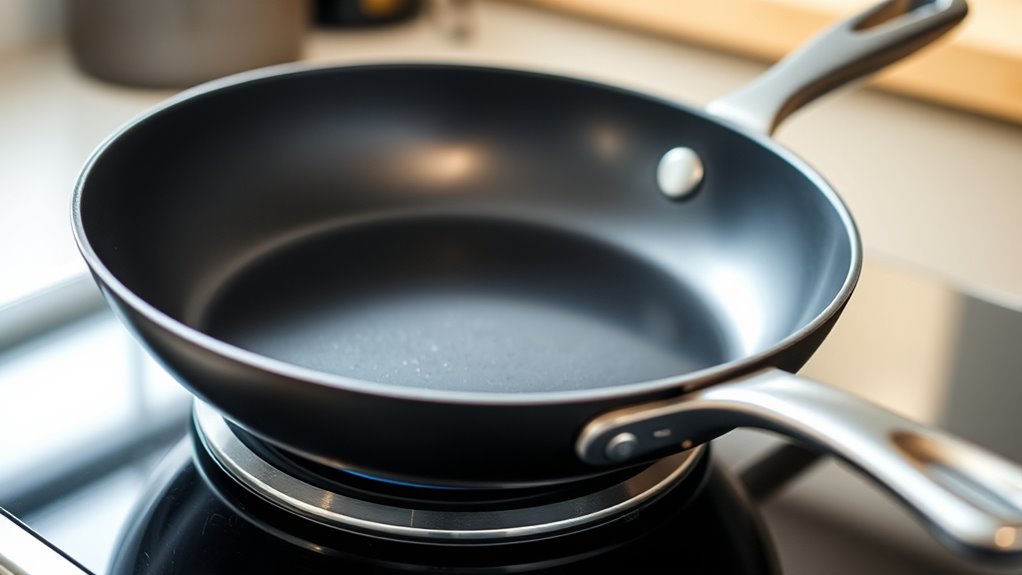
Have you ever wondered why nonstick pans are so popular in kitchens? It’s because they make cooking and cleaning so much easier. With a simple coating, you can cook delicate foods like eggs and pancakes without them sticking, which saves you time and effort. Plus, they require less oil or butter, promoting healthier meals. But despite their convenience, many people worry about safety and how long these pans last. These concerns often lead to myths that can cause unnecessary anxiety or premature disposal of good cookware.
One common myth is that nonstick pans are dangerous because of the chemicals used in their coatings, especially when they get scratched or overheated. While it’s true that older pans may have contained substances like PTFE (polytetrafluoroethylene), modern nonstick coatings are generally safe when used correctly. Manufacturers have improved formulations, and most pans now meet strict safety standards. If you avoid overheating your pan—say, don’t leave it on high heat for long—you minimize any risk of fumes. Scratching the surface isn’t ideal, but a lightly scratched pan doesn’t suddenly release harmful toxins. If the coating begins to peel or flake notably, it’s time to replace the pan, but minor scratches are usually harmless.
Another myth suggests that nonstick pans have a very limited lifespan and should be tossed after a certain period. While it’s true that coatings can wear over time, proper care can extend their useful life considerably. Using non-metal utensils, avoiding abrasive scrubbers, and hand washing instead of dishwashers help preserve the coating. If you notice a decline in performance—food starting to stick more or the coating chipping—it’s a sign to replace the pan. However, many high-quality nonstick pans can last several years if cared for properly. They’re not disposable after a single season; instead, they’re an investment that benefits from gentle handling.
Finally, some believe you should never cook acidic foods in nonstick pans because it damages the coating. This isn’t entirely false, as acids like tomatoes or citrus can wear down weaker coatings over time. But most modern nonstick surfaces are designed to withstand occasional acidic ingredients without issue. Just don’t leave acidic foods simmering for hours or use them as storage containers in the pan, and you should be fine. These myths often stem from outdated information or misunderstandings about how to properly care for nonstick cookware.
In reality, nonstick pans are safe and durable when used correctly. Proper cookie management and following manufacturer guidelines can help prolong their lifespan and ensure safe cooking. With proper handling, your nonstick cookware can serve you well for years, making your cooking easier and cleaner.
nonstick frying pan with durable coating
As an affiliate, we earn on qualifying purchases.
As an affiliate, we earn on qualifying purchases.
Frequently Asked Questions
Are Nonstick Pans Suitable for High-Temperature Cooking?
No, nonstick pans aren’t suitable for high-temperature cooking. When you heat them above recommended levels, typically around 450°F (232°C), the coating can break down and release harmful fumes. To keep your kitchen safe and your pan in good shape, stick to medium or low heat settings. Use nonstick pans mainly for gentle cooking tasks like sautéing or scrambling eggs, and avoid high heat to prolong their lifespan.
How Often Should I Replace My Nonstick Pans?
You should replace your nonstick pans every 3 to 5 years, or sooner if the coating starts to peel, chip, or become scratched. Regular use and cleaning can wear down the surface, so keep an eye out for signs of deterioration. If you notice any damage, it’s best to substitute the pan promptly to ensure safe cooking and prevent ingestion of flakes or particles from the coating.
Can Nonstick Coatings Be Repaired if Scratched?
Did you know that about 60% of nonstick pans develop scratches within a year of use? Unfortunately, once your nonstick coating is scratched, it can’t be repaired effectively. You might try some DIY remedies, but they rarely restore the original nonstick surface. For safety and performance, it’s best to replace scratched pans promptly, as damaged coatings can flake into your food and pose health risks.
Are Ceramic Nonstick Pans Safer Than Traditional Ones?
Yes, ceramic nonstick pans are generally safer than traditional nonstick pans. They’re made with natural materials and don’t contain potentially harmful chemicals like PFOA or PTFE. You can cook confidently with ceramic pans at higher temperatures without worrying about toxic fumes. However, take care of them properly—avoid metal utensils and high heat—to guarantee they stay safe and functional for as long as possible.
Do Nonstick Pans Release Harmful Chemicals Over Time?
You might worry that nonstick pans release harmful chemicals over time, but in reality, modern nonstick coatings are designed to be safe when used properly. As long as you avoid overheating them and replace them when the coating begins to peel, you prevent potential chemical release. Think of it like a well-maintained car engine: with proper care, it runs smoothly and safely, ensuring your cooking remains healthy and worry-free.
As an affiliate, we earn on qualifying purchases.
Conclusion
Now that you know the truth about nonstick pans, you can cook confidently without fear. Think of these pans as a trusty sidekick—when cared for properly, they’ll serve you well and last longer than you might expect. Say goodbye to myths and hello to informed cooking. With the right care, your nonstick pan can become a reliable partner in your kitchen adventures, making every meal a smooth sailing experience.
nonstick cookware set with safety standards
As an affiliate, we earn on qualifying purchases.
As an affiliate, we earn on qualifying purchases.
As an affiliate, we earn on qualifying purchases.
Halloween Picks
halloween
As an affiliate, we earn on qualifying purchases.