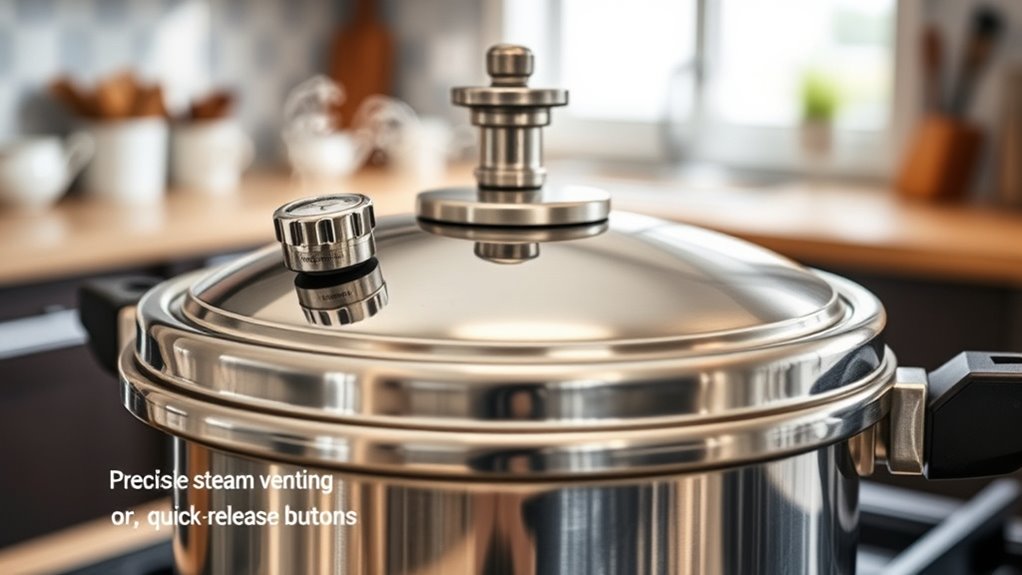

To guarantee safety with your pressure cooker, always check that the safety valve is clean and unobstructed before use. You can release pressure naturally for tender dishes or opt for quick release for vegetables and seafood, but always follow the manufacturer’s instructions. During release, keep your face and hands away from the vent, and use tools or mitts to operate it safely. Understanding these methods helps keep your cooking safe and efficient—learn more to master proper release techniques.
Key Takeaways
- Always verify the safety valve is clean and unobstructed before use to ensure proper pressure release.
- Use natural or quick release methods depending on the recipe, following manufacturer instructions for safety.
- During quick release, keep hands and face away from the vent to prevent steam burns.
- Never force open the lid before pressure fully releases; check the pressure indicator to confirm.
- Regularly inspect the safety valve for damage or blockages to prevent over-pressurization risks.
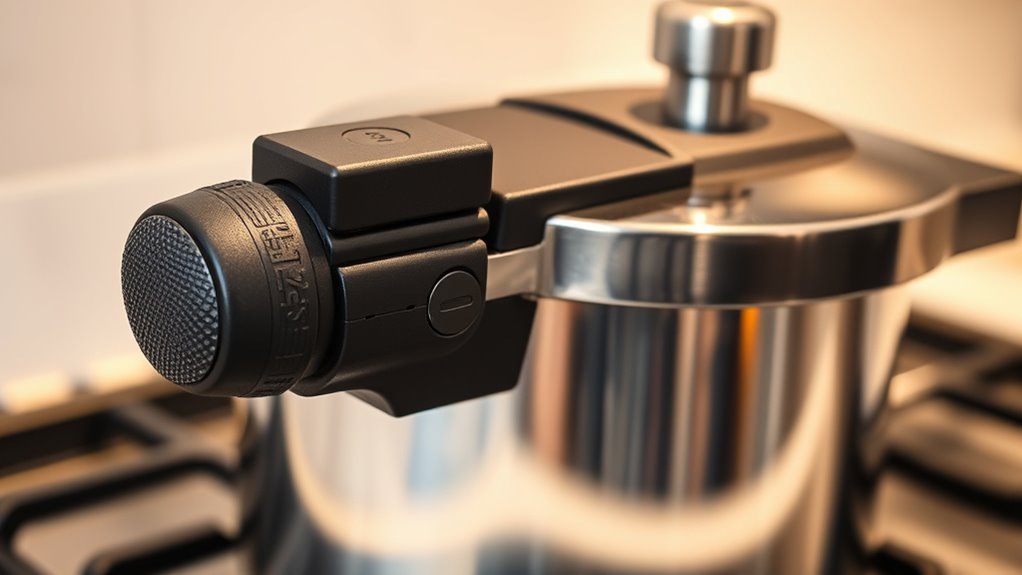
Have you ever wondered how to cook meals faster without sacrificing flavor? Pressure cookers are a fantastic tool for that, but safety must always come first. One of the most important features to understand is the safety valve. This component acts as a safeguard, releasing excess pressure if the cooker’s main pressure regulation system fails or if it becomes too pressurized during cooking. When using a pressure cooker, always verify the safety valve is clean and unobstructed. If you notice steam escaping from the valve during cooking, it’s a good sign that the cooker is working as intended. However, if the valve starts to leak excessively or makes unusual noises, you should turn off the heat immediately and inspect it for blockages or damage. Relying on the safety valve helps prevent dangerous over-pressurization, which can lead to accidents or even explosions. Additionally, understanding the cultural impact of technology on safety features can help users stay informed and cautious.
Knowing the proper release techniques is equally essential. When your cooking time is up, you have two main options: natural release or quick release. Natural release involves turning off the heat and letting the pressure decrease gradually on its own. This method is ideal for dishes like stews or large cuts of meat, where a slow depressurization preserves flavor and tenderness. It can take several minutes, but it’s safer and helps maintain the integrity of delicate ingredients. Quick release, on the other hand, involves carefully turning the valve or using the pressure release button to rapidly vent steam. This technique is best for foods that can become overcooked or mushy if left under pressure too long, such as vegetables or seafood. When performing quick release, always keep your face and hands away from the vent to avoid steam burns. Use a long-handled tool or oven mitts to turn the valve if needed.
It’s essential to follow the manufacturer’s instructions for your specific pressure cooker model, as release techniques can vary. Never force open the lid before all pressure has been released, as this can cause hot steam or liquid to suddenly escape, leading to burns. Always check the pressure indicator or gauge to confirm that the cooker is depressurized before opening. Practicing these safety and release techniques ensures you get the benefits of faster cooking times without risking your safety or the quality of your meals. In the end, understanding how to properly manage pressure and release it safely makes your pressure cooking experience more efficient, enjoyable, and secure.
Frequently Asked Questions
Can Pressure Cookers Be Used on Induction Stoves?
Yes, you can use pressure cookers on induction stoves if they’re induction compatible. Check the bottom of your pressure cooker for an induction symbol or test with a magnet—if it sticks, it’s compatible. Confirm your stove meets the power and size requirements for safe operation. Using an induction-compatible pressure cooker on your stove ensures efficient cooking and safety, making your meal prep faster and easier.
What Safety Features Are Built Into Modern Pressure Cookers?
Imagine a sturdy lid sealing tightly, your pressure cooker equipped with safety sensors that monitor steam levels, ensuring everything stays within safe limits. You’ll notice locking mechanisms that keep the lid securely in place during cooking, preventing accidental openings. These modern safety features work together seamlessly, giving you peace of mind as you cook, knowing the appliance actively safeguards you from potential hazards while delivering perfectly cooked meals.
How Often Should I Replace the Gasket on My Pressure Cooker?
You should replace the gasket on your pressure cooker every 12 to 18 months, depending on use and condition. Regular gasket maintenance involves inspecting it for cracks, tears, or warping, and replacing it if you notice any damage. Proper replacement intervals ensure a secure seal, keeping your pressure cooker safe and functioning efficiently. Don’t wait until leaks occur—timely gasket replacement is key to safe pressure cooking.
Are Pressure Cookers Safe for Canning at Home?
Yes, pressure cookers are safe for home canning when you follow proper canning safety guidelines. You guarantee gasket maintenance by checking it regularly for cracks or wear, replacing it as needed. Always use a reliable pressure cooker designed for canning, follow recommended pressure and processing times, and keep safety in mind. Proper gasket maintenance, adherence to safety procedures, and correct canning methods keep your home-canned foods safe and delicious.
What Should I Do if the Pressure Release Valve Is Blocked?
If you notice a pressure valve blockage, you should immediately turn off the heat and carefully use emergency release techniques, such as manually releasing pressure if your model permits. Never force the valve open, as this can be dangerous. Instead, wait until pressure decreases naturally or use the designated release method. Always stay cautious, keep your face away from the valve, and confirm the cooker is safe before opening.
Conclusion
Remember, handling a pressure cooker is like tending a fiery but loyal beast—you must respect its power. Always follow safety steps and release pressure carefully, like easing a storm’s fury. When done right, your meal becomes a symphony of flavors, and your confidence grows stronger. Embrace these methods, and you’ll master the art of safe cooking, turning a simple kitchen tool into a trusted ally that transforms your culinary journey into a delightful adventure.