
If you’re choosing between a press and a reamer for citrus juice, consider how often you’ll use it. Manual reamers are simple, inexpensive, and great for occasional juicing, but they can be tiring for multiple fruits. Electric press-style juicers save time, require less effort, and are better for frequent or large batches, though they cost more. To find out which option suits your needs best, continue exploring the differences and features.
Key Takeaways
- Manual reamers require twisting by hand, offering greater control but more effort; presses use downward force for ease.
- Electric presses automate juicing, ideal for large batches; manual reamers are suitable for occasional, small-scale use.
- Reamers are simple, inexpensive, and portable; presses are more costly, larger, and often feature additional functions.
- Reamers allow better control over pulp and pulp extraction; presses provide consistent pressure and faster results.
- Choice depends on juicing frequency, convenience preference, and budget—manual reamers suit infrequent use, presses fit regular juicing.
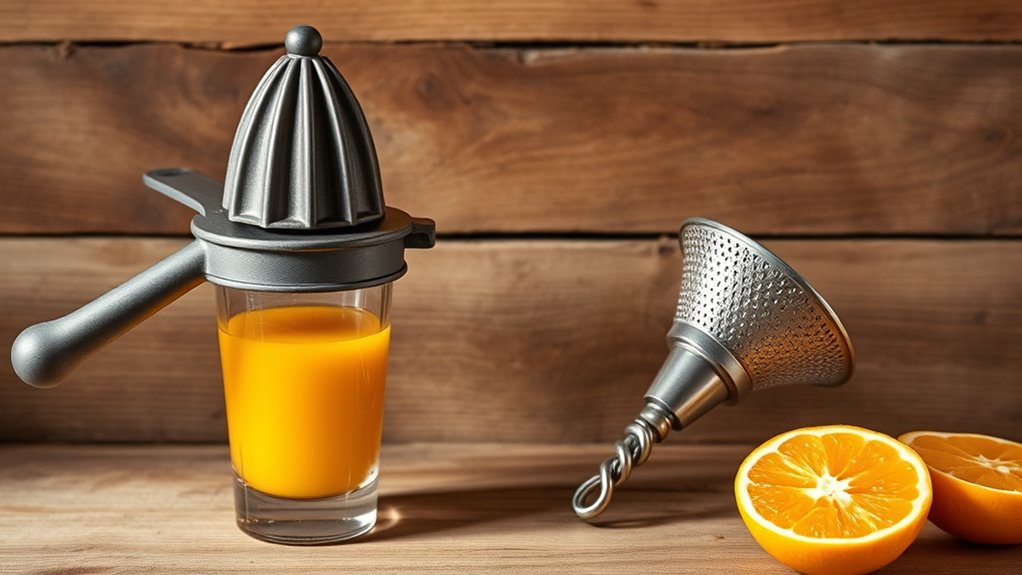
A citrus juicer is a handy kitchen gadget that makes extracting fresh juice quick and easy. When choosing between a press and a reamer, you’ll want to contemplate how you prefer to operate your juicer. For starters, manual operation is common with traditional reamers, which involve squeezing and twisting the fruit by hand. These are simple, inexpensive, and don’t require electricity, making them ideal if you’re looking for a no-fuss option. With a manual reamer, you cut your citrus in half, place it on the cone-shaped top, and twist to extract the juice. This method gives you a good amount of control over the pressure, allowing you to avoid over-extracting bitter pith or pulp. The downside is, it can be tiring if you’re juicing multiple fruits, and it might not be the best choice for those with limited hand strength.
On the other hand, electric models have transformed the way we juice citrus fruits. These models often feature a motorized reamer or press, which makes the process effortless. All you need to do is cut the fruit in half, place it on the juicer, and push down or activate the switch, depending on the design. Electric citrus juicers provide consistent pressure and speed, allowing you to juice large quantities with minimal effort. They’re especially useful if you frequently make fresh juice or serve many people. Plus, many electric models include features like pulp control, adjustable reamer sizes, and even built-in filters, which improve the quality and clarity of the juice. The main advantage is convenience—no manual effort required—and they tend to produce more juice in less time. However, they are typically more expensive, take up more counter space, and need an electrical outlet to operate.
When deciding between a press and a reamer, think about your juicing habits. If you only make juice occasionally and prefer a quiet, simple device, a manual reamer might be your best bet. But if you’re a regular juicer or need to juice large batches quickly, an electric model can save you time and effort. Both types have their merits, but your choice ultimately depends on how much you value convenience versus simplicity. Additionally, AI-powered appliances are increasingly being integrated into kitchen gadgets, which could further streamline your juicing experience in the future. Whichever you pick, understanding the differences helps you get the most out of your citrus juicer, ensuring fresh, delicious juice every time.
Frequently Asked Questions
Which Juicer Type Retains More Nutrients in the Juice?
You’ll find that reamers generally retain more nutrients because they gently extract juice, preserving enzymes and vitamins. Press juicers can be more efficient for higher juice yields, but their process sometimes exposes juice to more oxygen, slightly reducing nutrient preservation. For maximum nutrient retention, a reamer is your best bet, as it offers gentle juice extraction while maintaining higher nutrient levels compared to press juicers.
Are Citrus Juicers Easy to Clean and Maintain?
Citrus juicers are generally quite easy to clean, with about 80% of users finding them low-maintenance. You’ll appreciate the cleaning convenience and maintenance ease, especially with models that have removable parts or non-stick surfaces. Simply rinse or hand wash after use, and most juicers don’t require complicated upkeep. This makes them a practical choice for daily use, ensuring your juicing routine stays simple and hassle-free.
Can Press Juicers Handle Other Fruits Besides Citrus?
Yes, press juicers can handle other fruits besides citrus, showcasing their fruit versatility and machine versatility. You can use them for small fruits like berries or even soft vegetables, but keep in mind they work best with citrus. For more diverse fruit options, a different type of juicer might be better. Still, with some adjustments, you’ll find press juicers quite adaptable for various juicing needs.
What Is the Typical Lifespan of a Citrus Reamer?
A citrus reamer typically lasts about 2 to 5 years, depending on durability concerns and material quality. If you choose one made from sturdy materials like stainless steel or high-quality plastic, it’ll likely endure regular use longer. To maximize lifespan, clean it thoroughly after each use and avoid applying excessive pressure. Proper care and selecting a well-made reamer can considerably extend its durability and ensure you get the most out of your investment.
Do Juice Quality and Quantity Differ Significantly Between Press and Reamer?
You’ll notice that juice quality and quantity differ between press and reamer. A press generally yields more juice with less pulp, giving you a smoother drink. A reamer often produces less juice and more pulp, which can be controlled to some extent. If you prefer a clear, high-yield juice, a press is better. For more pulp and a stronger flavor, a reamer might suit your taste better.
Conclusion
When choosing between a press and a reamer, your decision depends on your desire for efficiency or control. Both bring benefits, but your best bet hinges on your biting into brightness or simply squeezing for satisfaction. By weighing your wants and whims, you’ll wield the perfect citrus juicer with confidence. So, whether you crave quickness or quality, remember: your choice creates citrus satisfaction, so select smartly, squeeze stress-free, and savor the sensationally fresh flavor.