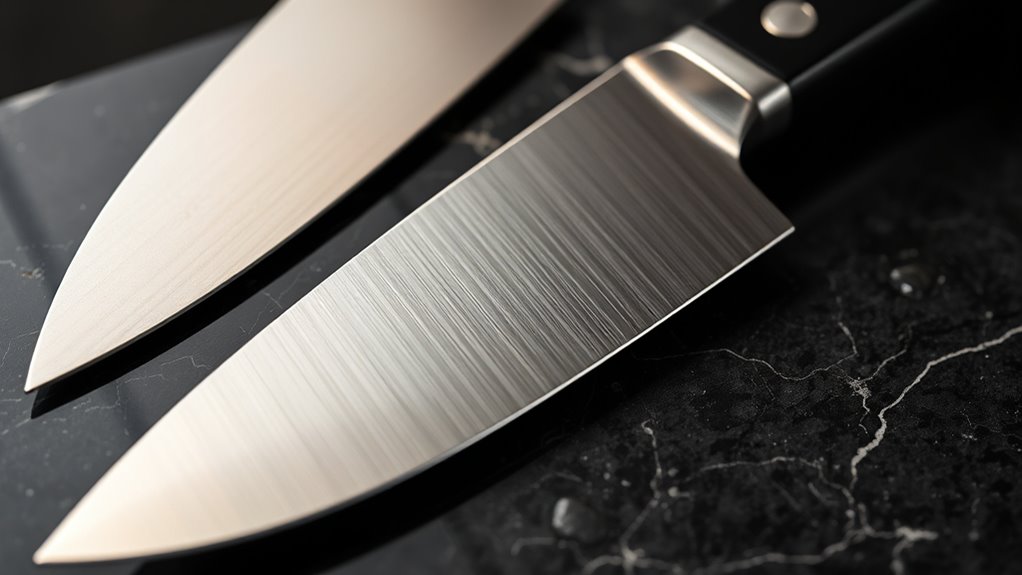

To keep your blades razor-ready, understand the difference between honing and sharpening. Honing realigns microscopic teeth along the edge, maintaining sharpness and preventing misalignment, and should be done regularly. Sharpening, on the other hand, removes material to restore a dull or chipped edge, needing less frequent use. Properly combining both techniques guarantees your knives stay safe, effective, and long-lasting. If you want to master these skills and boost your kitchen performance, there’s more to explore.

Get your next haul delivered free with Prime
- Fast, free delivery on millions of items
- Prime Video, Amazon Music and more included
- Member-only deals all year
Key Takeaways
- Honing realigns microscopic teeth to maintain the existing edge, while sharpening removes material to restore a dull or damaged blade.
- Regular honing keeps blades performing well and prolongs the time between sharpening sessions.
- Sharpening is necessary when a knife becomes dull, chipped, or requires a significant edge reset.
- Over-sharpening can weaken and thin the blade, so it should be done only when truly needed.
- Proper use of honing and sharpening techniques ensures safer, more efficient, and longer-lasting knives.
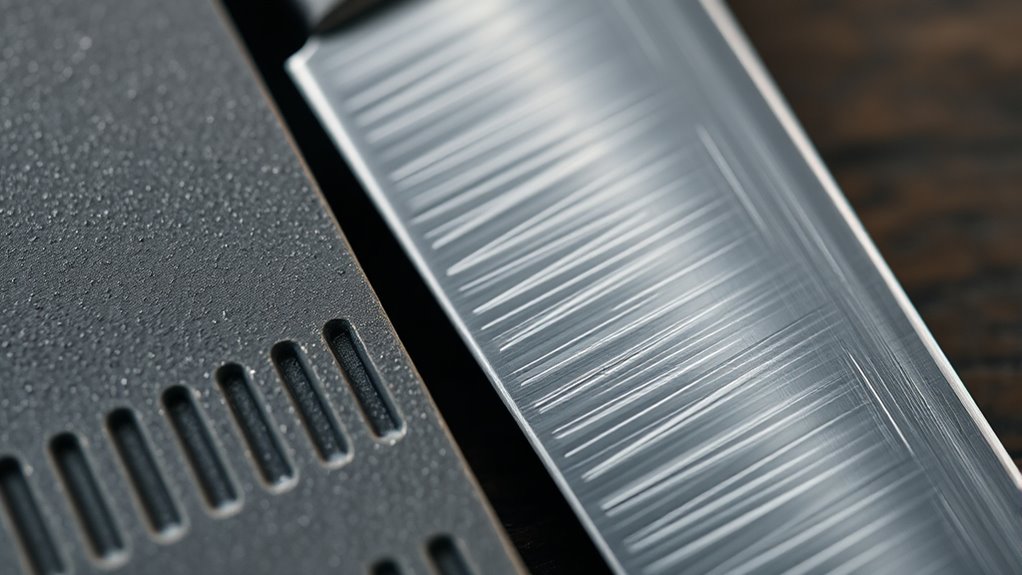
When it comes to maintaining your knives, understanding the difference between sharpening and honing is essential. These two processes might seem similar, but they serve different purposes and are both crucial for keeping your blades in top condition. Sharpening involves removing material from the edge of the blade to restore its sharpness. Over time, cutting through food causes the edge to become dull or chipped, and sharpening grinds away a small amount of metal to create a new, fine edge. This process usually requires a sharpening stone, a grinder, or an electric sharpener. It’s more aggressive and is necessary when your knife has become noticeably dull or damaged. You shouldn’t sharpen your knives too often, though, because removing too much metal can weaken the blade over time.
Sharpening removes metal to restore a dull or damaged knife edge.
Honing, on the other hand, doesn’t actually sharpen the blade but rather realigns the microscopic teeth along the cutting edge. Think of honing as a way to straighten out the edge rather than reshape it. You typically use a honing rod or steel for this task. Honing should be performed regularly—often before or after each use—to keep the edge aligned and maintain the knife’s cutting performance. It’s a quick, easy step that prevents the edge from becoming misaligned or bent, which can happen with frequent use. If you notice your knife pulling or requiring more pressure to cut, honing might be all you need to bring it back into shape.
It’s important to recognize when to hone and when to sharpen. If your knife is still cutting well but feels slightly dull or sluggish, honing is likely enough. However, if you find yourself applying more force or the knife is no longer effective, it’s time to sharpen. Regular honing prolongs the intervals between sharpening sessions, helping you avoid unnecessary metal removal. Conversely, over-sharpening can rapidly thin your blade, so it’s best to sharpen only when truly needed.
In short, honing keeps your blades aligned and performing smoothly on a daily basis, while sharpening restores their edge when it’s lost or damaged. By understanding and properly using both techniques, you ensure your knives stay razor-sharp and safe to use. With consistent care, your knives will serve you well, making food prep safer, easier, and more enjoyable. Remember, a well-maintained knife is not just about quality tools but also about your safety and efficiency in the kitchen.
As an affiliate, we earn on qualifying purchases.
Frequently Asked Questions
How Often Should I Sharpen or Hone My Blades?
You should hone your blades every few uses to maintain sharpness, and sharpen them when they start to dull or cut poorly. Typically, honing once a week or after 10-15 uses works well for kitchen knives, but it depends on how often you cook. Regular honing keeps your blades in top shape, while sharpening every few months or when necessary restores the edge fully.
Can Honing Damage My Blade Over Time?
Honing, if done correctly and occasionally, won’t damage your blade over time. In fact, it helps maintain your blade’s edge and prolongs its sharpness. However, if you hone too aggressively or too often, you could wear down the blade or alter its shape. Always use proper techniques and tools, and don’t overdo it. Proper honing keeps your blades sharp and in good condition without causing harm.
Is Honing Suitable for All Types of Knives?
Honing is suitable for most knives, but not all. While it quickly realigns blades, it’s ideal for everyday maintenance and keeps your knives sharp longer. However, for heavily dulled or damaged blades, honing alone won’t restore their edge; you’ll need sharpening. Think of honing as a tune-up, perfect for regular care, but for a true overhaul, sharpening’s your best bet. Use both wisely to keep your knives in top shape.
What Signs Indicate My Blade Needs Sharpening?
You’ll know your blade needs sharpening if it struggles to cut through food easily or requires more pressure than usual. Dull edges often cause tearing or crushing rather than clean slices. You might also notice a shiny, glazed appearance on the edge, or food sticking to the blade more than before. If these signs appear, it’s time to sharpen your knife to restore its sharpness and efficiency.
Are There Safety Concerns When Sharpening Blades at Home?
Think of sharpening like a knight’s sword; it’s essential for safety. When you sharpen blades at home, you risk cuts, burns, or damaging the blade if done improperly. Always wear gloves and eye protection, work in a well-ventilated area, and follow manufacturer instructions carefully. If unsure, consider consulting a professional. Safety first keeps your blade sharp and your fingers intact, turning home sharpening into a confident, controlled task.
As an affiliate, we earn on qualifying purchases.
Conclusion
Just remember, sharpening actually reshapes your blade, while honing realigns its edge. Regular maintenance keeps your tools effective and safe. Notably, a study shows that properly honed blades can last up to 50% longer before needing sharpening. So, by honing frequently and sharpening only when necessary, you save time and extend your blade’s lifespan. Keep your blades razor-ready by understanding the difference—your tools will thank you, and your results will always be sharper.
As an affiliate, we earn on qualifying purchases.
As an affiliate, we earn on qualifying purchases.
Halloween Picks
halloween
As an affiliate, we earn on qualifying purchases.