To guarantee safety when using sous vide, follow proper time and temperature guidelines for each food type. You need to set your cooker to the right temperature to kill harmful bacteria, then hold it for the appropriate duration—longer for tougher cuts or lower temps. Always check your vacuum seals before starting and handle leftovers promptly to prevent contamination. If you want to learn more about safe sous vide practices, there are important details you should consider.

Get your next haul delivered free — and shop member deals
- Fast, free delivery on millions of items
- Access to Prime Big Deal Days deals on October 6–7
- Prime Video, Amazon Music and more included
Key Takeaways
- Use proper vacuum sealing techniques and inspect bags for leaks before cooking.
- Follow recommended time and temperature guidelines for each food to ensure safety and doneness.
- Maintain precise, consistent temperatures with reliable sous vide equipment throughout the cooking process.
- Chill leftovers promptly and store at 40°F or below to prevent bacterial growth.
- Adhere to established safety charts and avoid undercooking to eliminate harmful bacteria effectively.
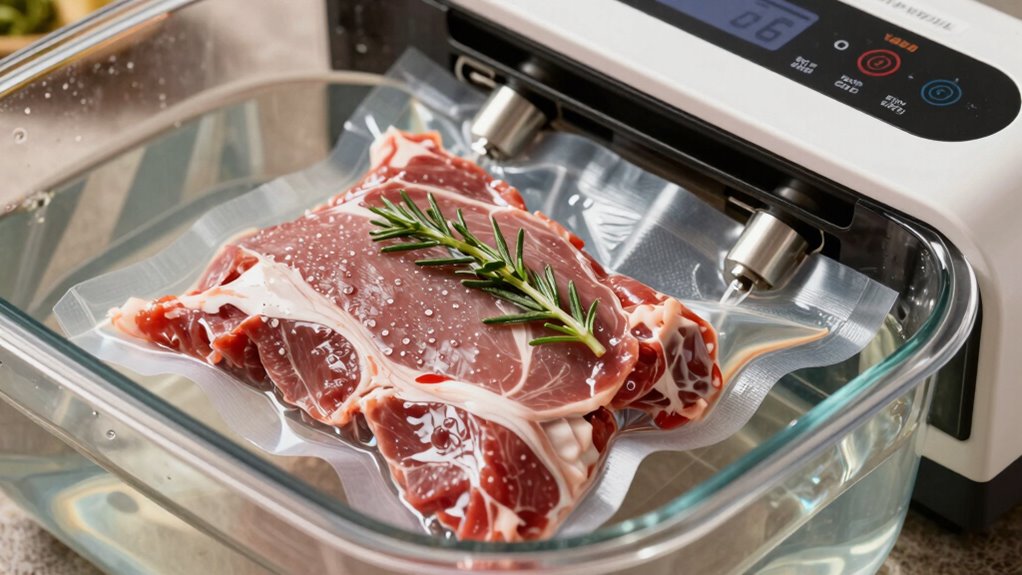
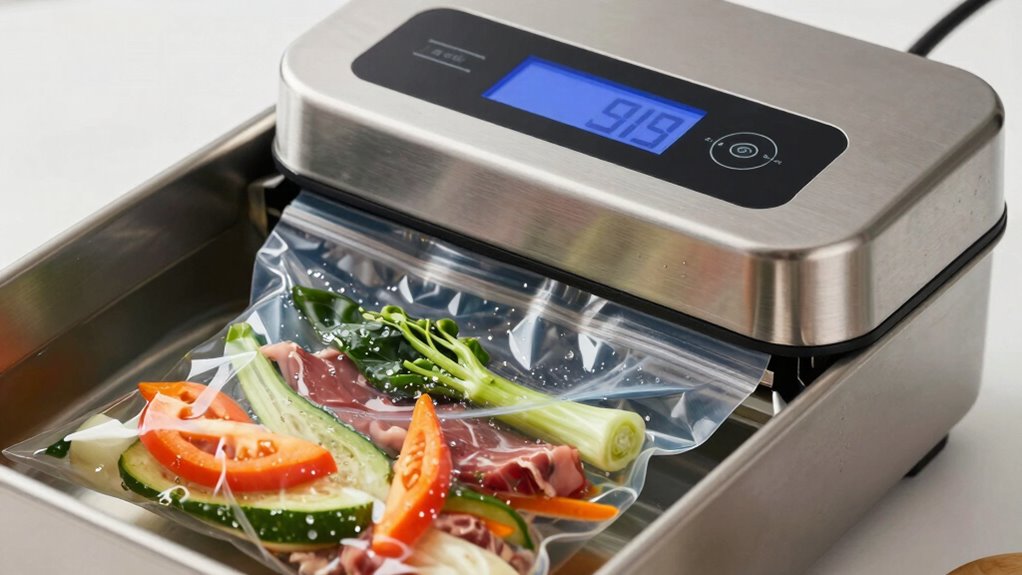
Are you concerned about the safety of cooking food sous vide? It’s a valid worry, especially since this method involves precise temperature control over extended periods. But with proper techniques, you can enjoy perfectly cooked meals without risking foodborne illness. The key lies in understanding how vacuum sealing and cooking temperature work together to guarantee safety. When you vacuum seal your food, you remove the air, which helps prevent bacterial growth and spoilage. This step is essential because it creates an environment where your food can cook evenly and stay fresh longer. Once sealed, you select a specific cooking temperature based on the type of food you’re preparing. Different proteins, vegetables, and other ingredients require different temperature ranges to be safe and tender. For example, cooking chicken at 140°F for several hours can kill harmful bacteria while maintaining moisture, but cooking at a lower temperature or for too short a time might not eliminate pathogens. That’s why knowing the right cooking temperature for each food is crucial. It’s not enough to just cook at a certain temperature; you also need to adhere to time guidelines. Holding food at the correct temperature for the recommended duration ensures that any bacteria present are effectively destroyed. For instance, chicken needs to reach an internal temperature of at least 165°F if you were to cook it conventionally, but sous vide allows you to cook it at a lower temperature for a longer time, which still kills bacteria. Additionally, understanding the importance of temperature safety can help prevent undercooking and ensure food is safe to eat. However, it’s important to follow established safety charts and guidelines to know exactly how long to hold your food at specific temperatures. This is especially true for less common ingredients or when experimenting with new recipes. Proper vacuum sealing combined with accurate temperature control and timing greatly minimizes the risk of foodborne illness. Remember, the integrity of your vacuum seal is essential; a compromised seal can allow bacteria to enter and grow, defeating the purpose of sous vide cooking. Always inspect your vacuum bags for leaks before cooking. Also, use reliable sous vide equipment that can maintain precise temperatures throughout the process. Once cooking is complete, promptly chill or serve your food to prevent bacterial growth. If you plan to store leftovers, cool them quickly and keep them refrigerated at 40°F or below. By paying close attention to vacuum sealing techniques and strictly following recommended cooking temperature and time guidelines, you can enjoy the benefits of sous vide without worries. This method offers precise control and improved safety when done correctly, making it a favorite among home cooks and professionals alike.
As an affiliate, we earn on qualifying purchases.
Frequently Asked Questions
Can I Cook Frozen Food Sous Vide Safely?
Yes, you can cook frozen food sous vide safely. Just guarantee you follow frozen safety guidelines by increasing the cooking time to account for the frozen state. Precooking tips include adding extra time to reach the desired temperature thoroughly. This helps ensure pathogens are eliminated and the food is safe to eat. Always use a reliable thermometer and maintain proper temperature control throughout the process for maximum safety.
How Do I Prevent Bacterial Growth During Long Cooking Times?
You absolutely must master temperature control to prevent bacterial growth during long sous vide cooking. By maintaining precise temperatures, you’re creating a microbial inhibition fortress that keeps harmful bacteria at bay. Think of it as a high-tech shield—if your water stays steady and within safe ranges, you’re confidently stopping bacteria from multiplying, ensuring your food remains safe and delicious no matter how long you cook it.
Is It Safe to Leave Sous Vide Food at Room Temperature?
No, it’s not safe to leave sous vide food at room temperature. Bacterial growth accelerates when food stays between 40°F (4°C) and 140°F (60°C), known as the danger zone. To prevent this, keep your food at the correct food temperature by refrigerating or cooking immediately after sous vide. Leaving it out invites bacterial growth, increasing the risk of foodborne illnesses. Always handle your food safely.
What Are the Signs of Sous Vide Food Spoilage?
Imagine your sous vide bag as a tiny, sealed treasure chest. If you notice signs of spoilage like a sour smell, slimy texture, or strange discoloration—like a shadow creeping over the treasure—it’s time to discard it. Visual cues such as cloudy liquid or mold indicate spoilage. Trust your senses; if anything seems off, it’s better to be safe than sorry and avoid consuming questionable food.
How Do I Ensure Proper Vacuum Sealing for Safety?
To guarantee proper vacuum sealing for safety, first check the vacuum seal integrity before cooking. Use a reliable sealing technique accuracy by removing excess air and sealing slowly to prevent leaks. Inspect the bag for any tears or holes, and use fresh, moisture-free bags. Properly sealed bags prevent contamination and spoilage, making your sous vide process safer. Always double-check seals before immersing your food in the water bath.
As an affiliate, we earn on qualifying purchases.
Conclusion
Remember, mastering sous vide is like tending a delicate garden—you need the right conditions to let your food flourish safely. By following the time and temperature rules, you’re planting seeds of confidence that grow into delicious, worry-free meals. Think of these guidelines as your trusted compass guiding you through uncharted culinary waters. When you respect these principles, you’re not just cooking—you’re nurturing a masterpiece, turning simple ingredients into a symphony of flavor and safety.
food safety thermometer for sous vide
As an affiliate, we earn on qualifying purchases.
As an affiliate, we earn on qualifying purchases.
As an affiliate, we earn on qualifying purchases.
Halloween Picks
halloween
As an affiliate, we earn on qualifying purchases.