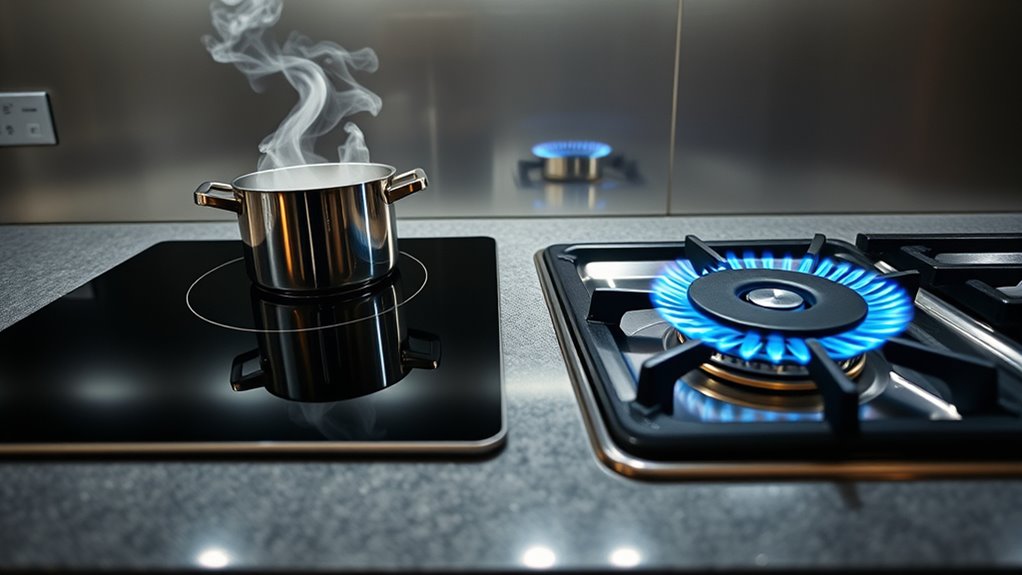

When comparing induction and gas, induction stands out for its faster, more efficient heat transfer directly to your cookware, reducing energy waste and costs over time. It offers precise, instantaneous control, so you can easily adjust temperatures for perfect results every time. Gas responds slower and fluctuates, making consistent cooking harder. Plus, induction is safer since it doesn’t open flames or hot coils. If you want to discover how these differences impact your kitchen, keep exploring the details.

Get your next haul delivered free with Prime
- Fast, free delivery on millions of items
- Prime Video, Amazon Music and more included
- Member-only deals all year
Key Takeaways
- Induction heats cookware directly via electromagnetic fields, offering faster heating and better energy efficiency than gas.
- Induction provides almost instant temperature adjustments, allowing for precise control, unlike the slower, flame-based regulation of gas.
- Induction minimizes heat loss by only heating where cookware contacts the surface, enhancing overall energy savings.
- Gas stoves respond slower to adjustments, with flame fluctuations causing uneven heat and less precise control.
- Induction is more environmentally friendly and cost-effective over time due to higher efficiency and lower energy waste.
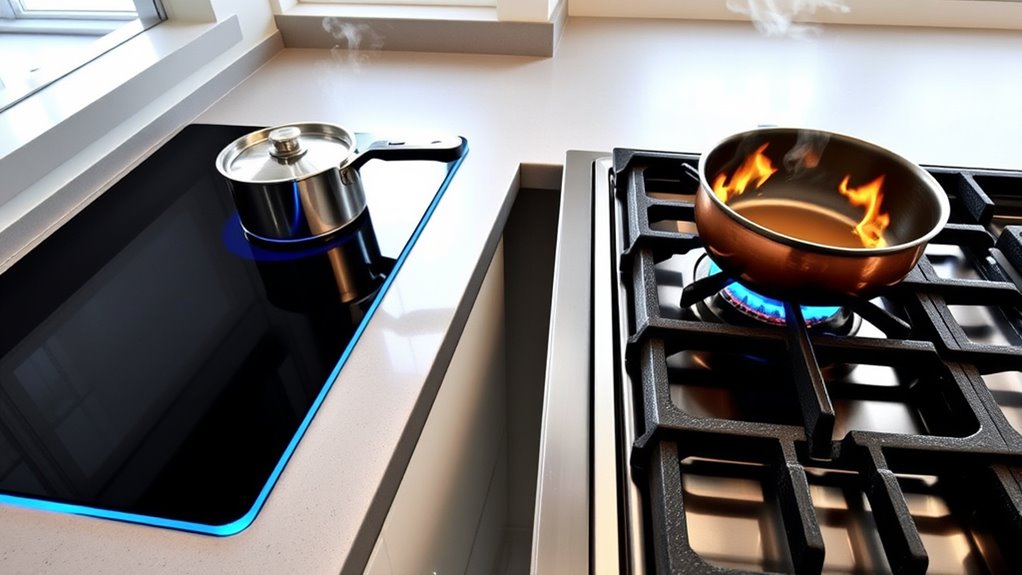
Are you trying to decide between induction and gas cooktops? When weighing your options, efficiency and control are vital factors to consider. Induction cooktops excel in energy savings because they heat cookware directly through electromagnetic fields, reducing wasted energy. Unlike gas stoves, which rely on burning fuel to generate heat, induction models convert most of their energy into cooking power, making them more environmentally friendly and cost-effective over time. This means you get faster heating and quicker responses to temperature adjustments, helping you cook more precisely and efficiently. Plus, because heat is generated only where your cookware touches the surface, energy isn’t wasted heating the surrounding air or the cooktop itself, further enhancing their energy savings.
Cooktop safety is another significant advantage of induction over gas. Gas stoves pose risks such as gas leaks, open flames, and the potential for burns from hot surfaces and flames. Induction cooktops eliminate these hazards because they don’t produce open flames or hot coils. The surface remains relatively cool, only heating up where the cookware sits, which minimizes the risk of accidental burns. This makes induction a safer choice, especially if you have children or are concerned about kitchen safety. Additionally, because induction cooktops shut off immediately when cookware is removed, you don’t have to worry about accidentally leaving the heat on or fires starting from unattended flames.
Control is also a key area where induction outperforms gas. With an induction cooktop, temperature adjustments happen almost instantly—turning the dial or pressing a button results in quick changes in heat. This precision allows you to simmer sauces perfectly or sear meats at just the right temperature. Gas, on the other hand, takes longer to respond, with fluctuations in flame intensity often leading to uneven cooking. The instant control of induction ensures you don’t have to guess or wait for the heat to stabilize, making your cooking more consistent and enjoyable. Furthermore, induction surface heat is easier to regulate, providing a smooth experience that feels more modern and intuitive compared to the sometimes unpredictable nature of gas flames.
induction cooktop with precise temperature control
As an affiliate, we earn on qualifying purchases.
As an affiliate, we earn on qualifying purchases.
Frequently Asked Questions
How Do Induction and Gas Stoves Compare in Maintenance Costs?
You’ll find that induction stoves generally have lower maintenance costs because they have fewer moving parts and less exposure to heat-related wear. They consume energy efficiently, which can lower your energy bills. Gas stoves may incur higher repair expenses over time due to potential issues with burners or leaks. Overall, induction stoves tend to be more cost-effective in maintenance and energy consumption, saving you money in the long run.
Which Stove Type Is Safer for Households With Children?
When it comes to child safety, induction stoves are safer than gas. Unlike gas stoves, induction surfaces don’t get hot enough to cause burns, reducing the burn risk for curious children. Gas stoves pose a higher danger due to open flames and residual heat, making them less suitable for households with kids. You’ll want to choose induction if minimizing burn risk and ensuring child safety are top priorities.
Can Induction Stoves Function During a Power Outage?
During a power outage, your induction stove won’t function because it relies on electricity for cooking functionality. If you want to continue cooking, you’ll need an alternative method like gas or a camp stove. Induction stoves are energy-efficient and offer precise control, but they depend entirely on power. Keep a backup plan in place for emergencies so you can still prepare meals when the power’s out.
Are There Specific Cookware Requirements for Induction Cooking?
Yes, you need induction cookware made from compatible materials like ferrous metals. Look for pots and pans labeled as induction-ready or compatible. These cookware types contain magnetic stainless steel or cast iron, which work well with induction cooktops. Avoid non-magnetic materials like aluminum or glass unless they have a magnetic base. Using the right induction cookware guarantees efficient heating and safe, effective cooking on your induction stove.
How Do Installation Costs Differ Between Induction and Gas Stoves?
You’ll find that installation expenses for induction stoves are often higher than gas because of setup complexity. Induction units require specialized electrical wiring, which can increase costs by 20-30%. Gas stoves, on the other hand, typically need just a gas line connection, making installation simpler and cheaper. If you’re on a budget, expect to spend more initially on induction’s setup, even though it may save money long-term.
As an affiliate, we earn on qualifying purchases.
Conclusion
When choosing between induction and gas, remember that induction stoves offer lightning-fast heat control, making your cooking experience feel like wielding a magic wand. Gas might have that classic, cozy appeal, but induction’s efficiency and precision make it the reigning champion in the kitchen battlefield. So, if you want to transform your cooking from ordinary to legendary, induction will turn your culinary adventures into a symphony of perfection—faster than you can say “delicious”!
As an affiliate, we earn on qualifying purchases.
safety features induction cooktop
As an affiliate, we earn on qualifying purchases.
As an affiliate, we earn on qualifying purchases.
Halloween Picks
halloween
As an affiliate, we earn on qualifying purchases.