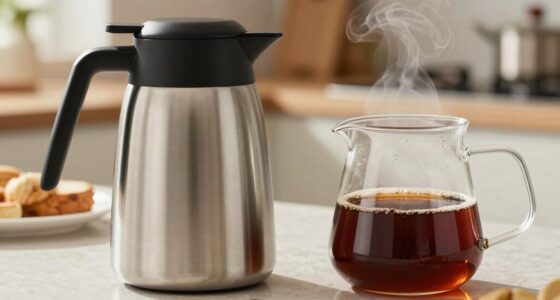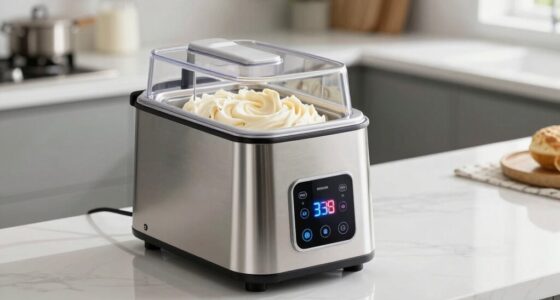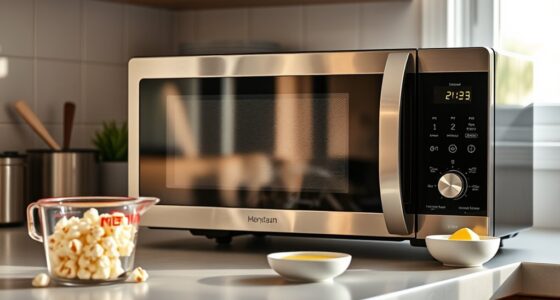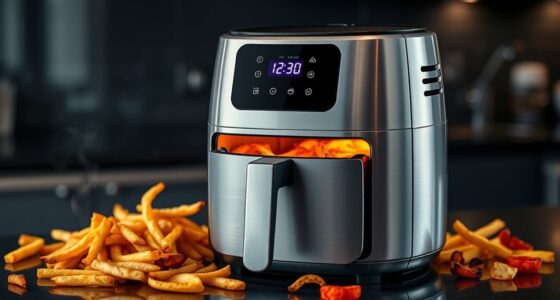

To reduce steam and heat buildup around your small appliances, make sure your kitchen is well-ventilated by using exhaust fans or range hoods and regularly cleaning filters. Keep appliances away from walls and heat-sensitive surfaces, leaving enough space for heat and moisture to escape. Use open countertops and place hot appliances on heat-resistant mats. Installing extra vents or portable fans can also improve airflow. Continue exploring these tips for a safer, more comfortable kitchen environment.

Get your next haul delivered free with Prime
- Fast, free delivery on millions of items
- Prime Video, Amazon Music and more included
- Member-only deals all year
Key Takeaways
- Ensure proper kitchen ventilation with exhaust fans, range hoods, and regular cleaning of filters and vents.
- Maintain adequate spacing between appliances and away from walls or cabinets to facilitate heat and moisture escape.
- Use open countertops and dedicated workspaces to improve airflow around small appliances.
- Regularly clean and check ventilation systems to keep them operating efficiently.
- Consider installing additional vents or portable fans to enhance airflow and moisture removal.

Small appliances can generate significant heat and steam, which can lead to discomfort and even damage to surrounding surfaces if not managed properly. To keep your kitchen comfortable and safe, proper kitchen ventilation is vital. Good ventilation helps remove excess heat and moisture, preventing the buildup that can cause surfaces to warp or mold to develop. Confirm your kitchen has an exhaust fan or range hood that effectively vents steam outside. If your appliances tend to produce a lot of heat, consider installing additional vents or using portable fans to improve airflow. Proper ventilation doesn’t just keep your space cooler; it also safeguards your walls, cabinets, and appliances from moisture damage.
Proper ventilation prevents heat and moisture buildup, protecting your kitchen surfaces and appliances from damage.
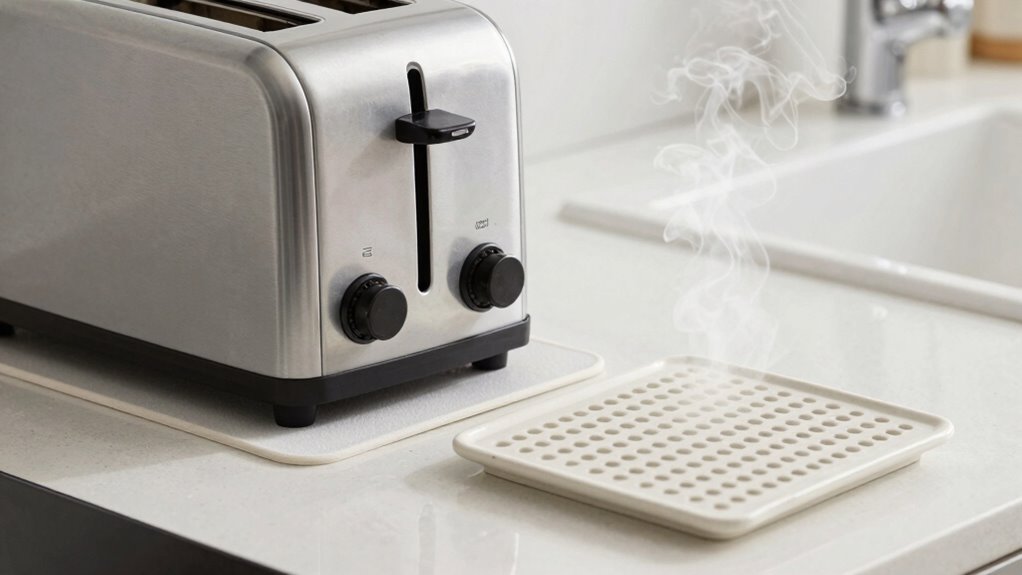
When it comes to appliance placement, strategic positioning can make a big difference. Keep small appliances that generate heat, like toasters, coffee makers, or electric kettles, away from walls and other heat-sensitive surfaces. Creating space around these devices allows heat and steam to dissipate more quickly, reducing the chance of heat buildup. Avoid placing appliances directly beneath cabinets or near walls that might trap heat and moisture. Instead, set them on open countertops or dedicated workspaces with plenty of airflow. This not only minimizes heat accumulation but also makes cleaning and maintenance easier. Proper placement also helps prevent heat entrapment, which can lead to increased heat and moisture issues. Additionally, ensuring proper air circulation around your appliances helps maintain a more comfortable and safe kitchen environment.
Furthermore, consider how your appliances interact with each other. Overcrowding your countertop can trap heat and cause steam to linger, making the environment uncomfortable and potentially damaging your surfaces. Leave enough room between appliances so that heat can escape freely and moisture can evaporate efficiently. If you notice steam sticking around after use, it might be time to rearrange your setup for better airflow. Using heat-resistant mats or pads under hot appliances can also help protect your countertops from heat damage. Proper ventilation is essential for managing heat and moisture effectively in your kitchen. Regularly cleaning your ventilation system is another key step. Dust and grease buildup can reduce the effectiveness of exhaust fans and range hoods, decreasing their ability to clear heat and steam. Make it a habit to check and clean filters or vents to ensure peak performance. Additionally, ensuring the ventilation system is working efficiently helps prevent moisture buildup. When you’re cooking or using appliances that produce a lot of steam, open windows or turn on exhaust fans proactively. These simple steps help maintain a comfortable environment and prevent moisture-related damage.
As an affiliate, we earn on qualifying purchases.
Frequently Asked Questions
Can Using a Fan Improve Heat Dissipation Around Appliances?
Using a fan can definitely improve heat dissipation around appliances. It boosts fan efficiency by increasing airflow, which helps carry away heat and steam faster. Position the fan to direct airflow toward the hot spots, ensuring better cooling. This simple step prevents overheating, reduces steam buildup, and prolongs your appliance’s lifespan. Remember, consistent airflow improvement through a fan makes a noticeable difference in managing heat around small appliances.
Are There Specific Materials to Insulate Small Appliances Effectively?
Think of insulation materials as cozy blankets for your appliances, trapping heat and preventing it from escaping wildly. Use heat barriers made of materials like silicone, ceramic, or fiberglass to shield surfaces and direct heat away. These effective insulation materials act like a fortress, controlling heat buildup and steam, so your appliances stay cooler and safer. Proper insulation transforms chaos into calm, keeping your space comfortable and protected.
How Often Should I Clean Appliance Vents to Prevent Heat Buildup?
You should clean your appliance vents at least once every three to six months to prevent heat buildup. Regular vent cleaning keeps airflow clear, reducing the risk of overheating. If you notice excessive heat or steam around your appliances, increase the frequency of vent cleaning. Proper vent maintenance is essential for heat prevention, helping your appliances run efficiently and safely. Make it a habit to check and clean vents regularly for peak performance.
Is It Safe to Modify Appliances to Reduce Heat Emission?
Modifying appliances to reduce heat emission isn’t safe because it can compromise appliance safety and increase modification risks. You might unintentionally damage internal components or void warranties, leading to safety hazards. Instead of modifying, focus on proper maintenance, like cleaning vents regularly, and using appliances as intended. If overheating persists, consult a professional to guarantee your appliance operates safely without risking fire or damage.
What Are the Signs of Overheating in Small Appliances?
You’ll notice overheating signs in your small appliances when thermal sensors trigger alarms or shut-offs, indicating excessive heat. Overheating indicators include hot exterior surfaces, strange smells, or if the device suddenly stops working. If you see or feel these signs, turn off and unplug the appliance immediately. Regularly inspecting thermal sensors and monitoring for overheating indicators help prevent damage and guarantee safe operation.
As an affiliate, we earn on qualifying purchases.
Conclusion
By blending clever cues and careful cues, you can curb chaos and calm your kitchen’s climate. Keep appliances cool by controlling condensation and heat, creating a cozy, clutter-free culinary corner. With a little awareness and a few simple steps, you’ll tame steam and suppress sizzling surges. So, stay savvy, stay safe, and savor a serene space where steam surrenders and heat hovers happily, happily hinting at harmony in every hearty home-cooked hit.
As an affiliate, we earn on qualifying purchases.
As an affiliate, we earn on qualifying purchases.
Halloween Picks
halloween
As an affiliate, we earn on qualifying purchases.