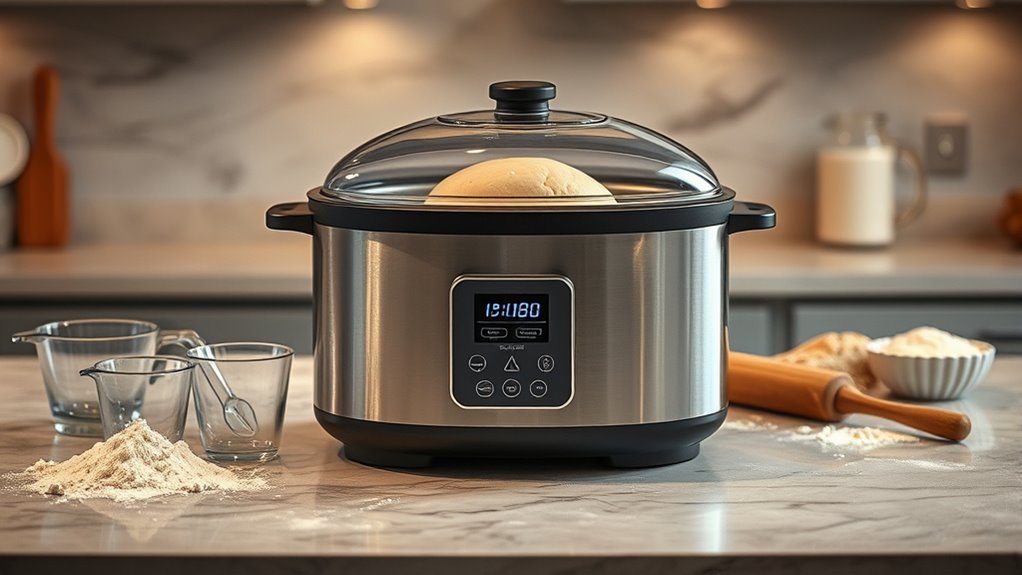
In a bread machine, dough and bake cycles work together to make baking easier for you. The dough cycle kneads and develops gluten, giving your bread elasticity and structure, while the bake cycle heats the bread to produce a golden crust and fully cooked interior. These cycles are carefully timed and calibrated to guarantee consistent, delicious results each time. If you continue exploring, you’ll discover how each part of the process contributes to perfect bread every time.
Key Takeaways
- Bread machines have distinct dough and bake cycles designed for optimal bread texture and flavor.
- The dough cycle includes mixing and kneading to develop gluten structure.
- The bake cycle heats the dough to produce a crust and fully cooked interior.
- Cycles are seamlessly integrated for consistent results with minimal user intervention.
- Understanding these cycles helps in selecting settings and troubleshooting bread-making issues.
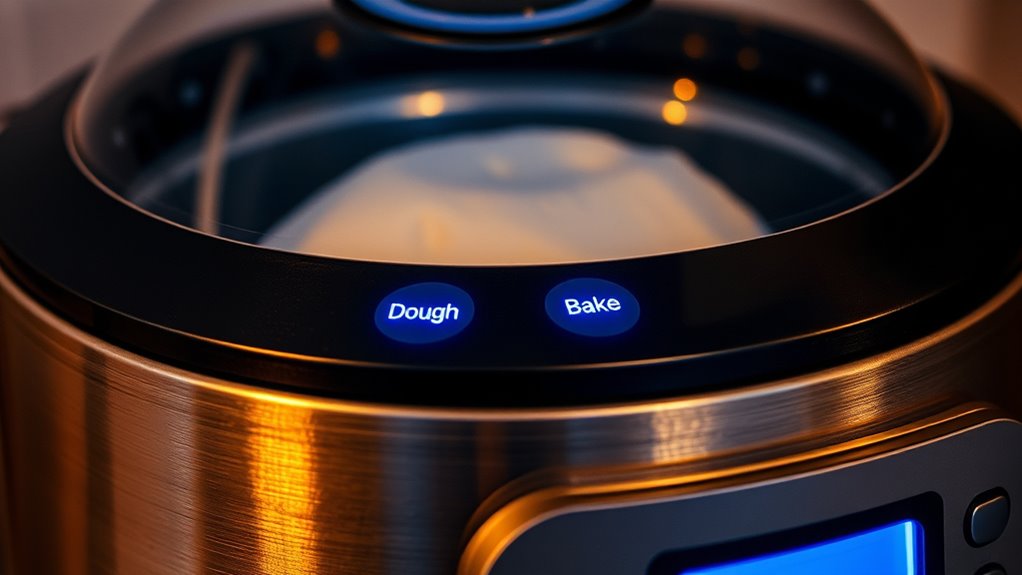
Have you ever wondered how bread machines produce perfect loaves with minimal effort? The secret lies in their carefully programmed bread machine cycles, which coordinate each step of the baking process to guarantee consistent results. When you select a cycle, you’re fundamentally choosing a series of timed steps that include mixing, kneading, rising, and baking. These cycles are designed to maximize the bread’s texture, flavor, and appearance, making baking accessible even for beginners.
One of the most critical phases in these cycles is the kneading function. During this phase, your bread machine works diligently to develop the dough’s gluten structure, which is crucial for trapping gases and creating that light, airy crumb. The kneading function typically lasts several minutes, during which the machine’s paddle rotates to combine ingredients thoroughly and knead the dough into a smooth, elastic ball. This process isn’t just about mixing; it activates the gluten, ensuring the dough can rise properly and hold its shape during baking. The precise timing and speed of the kneading function are calibrated to match different types of bread recipes, whether it’s a basic white loaf or a more complex whole-grain variety.
The kneading function develops gluten for a light, airy crumb and proper rising.
After kneading, the bread machine shifts into the rising phase, where the dough rests and ferments. During this time, the machine may go through one or more proofing cycles, maintaining ideal temperature and humidity levels to encourage proper fermentation. Some advanced models even adjust the temperature automatically, based on the cycle selected, to produce the best possible rise. Once the dough has doubled in size and reached the right fermentation stage, the machine moves into the baking cycle. Here, it heats up to a specific temperature, carefully controlled to produce a golden crust and a perfectly baked interior.
Throughout the entire process, the bread machine cycles work seamlessly together, from initial kneading to final baking. Each cycle is carefully timed and calibrated to guarantee your bread turns out just right, with minimal intervention on your part. Understanding these cycles helps you choose the appropriate settings for different breads and troubleshoot if needed. Whether you’re making a simple white loaf or experimenting with artisan recipes, the bread machine cycles, especially the kneading function, are the backbone of consistent, delicious results every time. Additionally, the inclusion of high-quality components in these cycles ensures durability and precise operation over time.
Frequently Asked Questions
Can I Customize the Duration of Each Cycle?
Yes, you can customize the cycle duration on most bread machines. Many models allow cycle customization, giving you control over how long each phase runs. You simply need to access the menu or settings, then adjust the cycle duration to fit your needs. Keep in mind that changing the cycle duration may affect the final bread quality, so experiment carefully to find the best settings for your preferences.
Are There Cycles Suitable for Gluten-Free Bread?
Yes, there are cycles suitable for gluten-free bread. Many bread machines include gluten-free recipes that require specific cycle adjustments, like shorter kneading or baking times. You should select the gluten-free cycle if available or customize the cycle settings to match your recipe. Experimenting with cycle adjustments helps make sure your gluten-free bread turns out well, providing the right texture and crumb.
How Do I Troubleshoot a Cycle That Stalls?
Think of your bread machine as a finely tuned orchestra; if one instrument stalls, the whole performance suffers. When troubleshooting a cycle that stalls, first check the cycle calibration to make certain settings are correct. Examine the motor for issues like overheating or obstruction, which can cause it to halt unexpectedly. Clear any debris, reset the machine, and try again; these steps often resolve minor motor issues and get your cycle back on track.
Can I Pause a Cycle and Add Ingredients Later?
Yes, you can pause the cycle to add ingredients later, but it’s best to do so during ingredient timing stages. Turn off the machine and open the lid carefully, then add your ingredients quickly to minimize cycle interruption. Keep in mind, frequent cycle interruption can affect bread quality. For best results, follow your bread machine’s manual guidelines on when and how to pause for ingredient addition.
What Maintenance Is Needed for the Machine’s Cycles?
You should regularly clean the bread machine’s components, check for residue, and guarantee the paddle moves smoothly. To maintain cycle longevity and accurate machine calibration, follow the manufacturer’s instructions for occasional calibration adjustments. Keep the lid and sensors clean, and inspect the power cord for damage. Doing these simple steps helps your machine run efficiently, extends its lifespan, and keeps your baking cycles consistent and reliable.
Conclusion
Now that you understand the different bread machine cycles, you can confidently choose the right one for your perfect loaf. Whether you’re mixing, kneading, rising, or baking, each cycle guides you step by step. By mastering these cycles, you simplify the baking process, enhance your bread’s quality, and enjoy fresh, homemade bread whenever you want. Embrace each cycle, trust the process, and enjoy the delicious results that come from your newfound knowledge.