

Labels work better in rooms that are well-organized and free of clutter since visual noise makes labels harder to notice. When you simplify the space and create a clear visual hierarchy, labels become more visible and effective. Thoughtful placement, color coordination, and contrast help labels stand out naturally, guiding your eye where needed. If you keep these strategies in mind, you’ll discover ways to make labels work even more efficiently in your space.

Get your next haul delivered free with Prime
- Fast, free delivery on millions of items
- Prime Video, Amazon Music and more included
- Member-only deals all year
Key Takeaways
- Reduced visual clutter enhances label visibility and ensures they stand out effectively.
- Proper placement and clear visual hierarchy guide attention naturally to key labels.
- Color coordination that contrasts with the background improves label recognition.
- Simplified, organized spaces minimize competing stimuli, boosting label usefulness.
- Strategic design and visual cues direct focus toward labels, increasing their effectiveness.
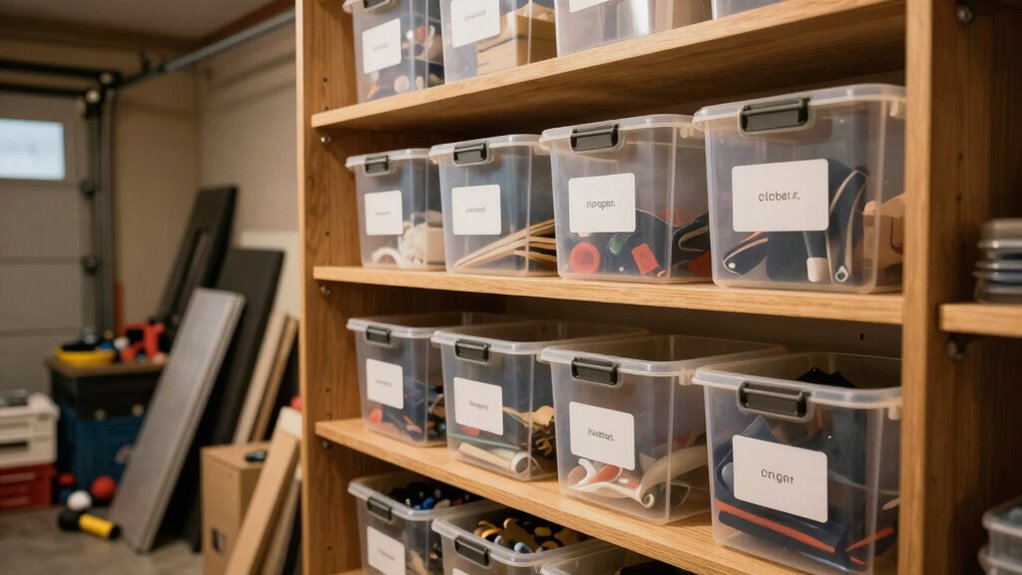
Have you ever wondered why labels seem to work better in some rooms than others? It often comes down to how the space is organized and how well the labels integrate with the environment. In rooms filled with visual clutter, labels can easily get lost or ignored, defeating their purpose. When there’s a lot competing for your attention, the labels need to stand out without adding to the chaos. That’s where good design, especially color coordination, makes a huge difference. When labels complement the room’s color scheme, they don’t just serve as functional markers—they become part of the overall aesthetic. This harmony encourages you to notice and use them, rather than overlook or dismiss them.
In cluttered rooms, visual noise makes it harder for labels to catch your eye. If everything is jumbled together with no clear visual hierarchy, labels tend to blend into the background. To make labels effective, you need to cut down on visual clutter first. Simplify the space by removing unnecessary items or reorganizing things, so labels aren’t competing with other visual stimuli. Once the clutter is under control, the labels can do their job better—guiding you efficiently and reducing search time. Proper placement also matters; labels should be positioned where they’re naturally seen when entering or moving through the room. Additionally, understanding how visual hierarchy influences attention can help in designing more effective labeling strategies. Incorporating color contrast** techniques, such as using bold or bright colors against muted backgrounds, can further improve visibility. When labels are in colors that contrast with the background, they become instantly recognizable. But it’s not just about high contrast; it’s about choosing colors that fit seamlessly into the room’s existing palette. For example, if your room features cool tones like blues and greens, opting for labels in similar shades or complementary colors creates a cohesive look that still highlights the labels. This harmony helps the labels attract attention without clashing visually. When labels blend too much or clash harshly, their effectiveness diminishes. Thoughtful color coordination ensures they’re noticeable but still aesthetically pleasing. Additionally, visual cues can further enhance their visibility and usability by guiding the eye naturally toward important labels. Incorporating testing** or feedback can also help determine which labels are most effective in different environments.
As an affiliate, we earn on qualifying purchases.
Frequently Asked Questions
How Do Labels Impact Children’s Learning in Different Spaces?
You’ll find that labels impact children’s learning by providing clear motivational cues and spatial cues, helping them navigate and understand their environment. When labels are used consistently, they guide children’s actions and foster independence. In spaces with organized labels, children easily connect words to objects or areas, boosting their vocabulary and comprehension. This structured environment encourages confidence, making learning more engaging and effective through visual and contextual cues.
Are Digital Labels More Effective Than Physical Ones?
Digital labels can be more effective than physical ones because of digital integration, which allows for easy updates and interactive learning. However, physical labels often excel in durability, especially in high-traffic or messy areas where digital devices might get damaged. You should consider your room’s usage and environment; if you need flexibility, go digital, but if you prioritize longevity, physical labels are the safer choice.
How Does Lighting Influence Label Visibility?
Lighting largely determines label visibility because it affects color contrast and light reflection. Bright, balanced lighting enhances the contrast between the label and its background, making it easier to see. Conversely, poor or uneven lighting causes glare or shadows, obscuring labels. When you optimize lighting—using natural light or well-placed artificial lights—you create clear, engaging labels that catch your eye and communicate effectively.
Can Labels Improve Organization in Shared or Cluttered Rooms?
Yes, labels can considerably improve organization in shared spaces and clutter management. By clearly marking storage bins, shelves, or drawers, you make it easy for everyone to find and return items, reducing chaos. Labels foster accountability and streamline tidying efforts, especially in cluttered rooms where items often get misplaced. They create a visual system that helps everyone quickly understand where things belong, keeping shared spaces neat and functional.
What Materials Are Best for Long-Lasting Labels?
For long-lasting labels, you should choose materials that pass durability testing, like laminated paper, vinyl, or plastic. These materials withstand moisture, tearing, and fading better than standard paper. Conduct a material comparison to find the most suitable option for your needs. Vinyl labels are especially durable, making them ideal for high-traffic or humid areas. Investing in quality materials guarantees your labels stay legible and intact over time.
As an affiliate, we earn on qualifying purchases.
Conclusion
So, if you want labels to lead to lasting lessons, look closely at your space and stay consistent. When your room’s ready and your labels are lively, learning becomes lively too. Remember, the secret to success is simplicity and strategy—making your labels clear, colorful, and compelling. By blending boldness with consistency, you create a space where learning sticks and students shine. Keep it simple, stay steady, and watch your room transform into a teaching treasure trove.
As an affiliate, we earn on qualifying purchases.
clutter reduction storage labels
As an affiliate, we earn on qualifying purchases.
As an affiliate, we earn on qualifying purchases.
Fall Picks
fall essentials
As an affiliate, we earn on qualifying purchases.