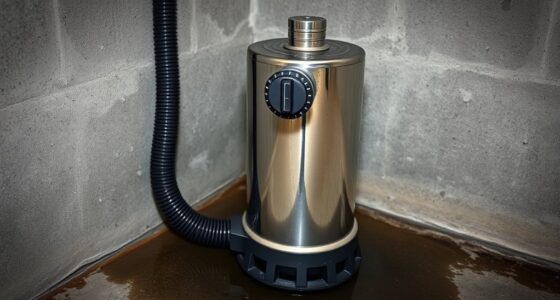
Before storms, you should test your sump pump backup system to guarantee it functions properly during power outages or heavy rain. Turn off your primary pump or main power, then observe whether the backup kicks in automatically. Listen for unusual noises or leaks, and confirm water is being pumped out efficiently. Regular testing helps prevent surprises when severe weather hits. If you want to learn more about how to properly test your system, keep exploring.
Key Takeaways
- Turn off the primary sump pump or main power to simulate a failure during testing.
- Manually activate the backup system to ensure it turns on automatically.
- Check that the backup pump is pumping water effectively and quietly.
- Inspect batteries for proper charge and replace any that are old or weak.
- Perform this test regularly, especially before storms, to confirm system readiness.

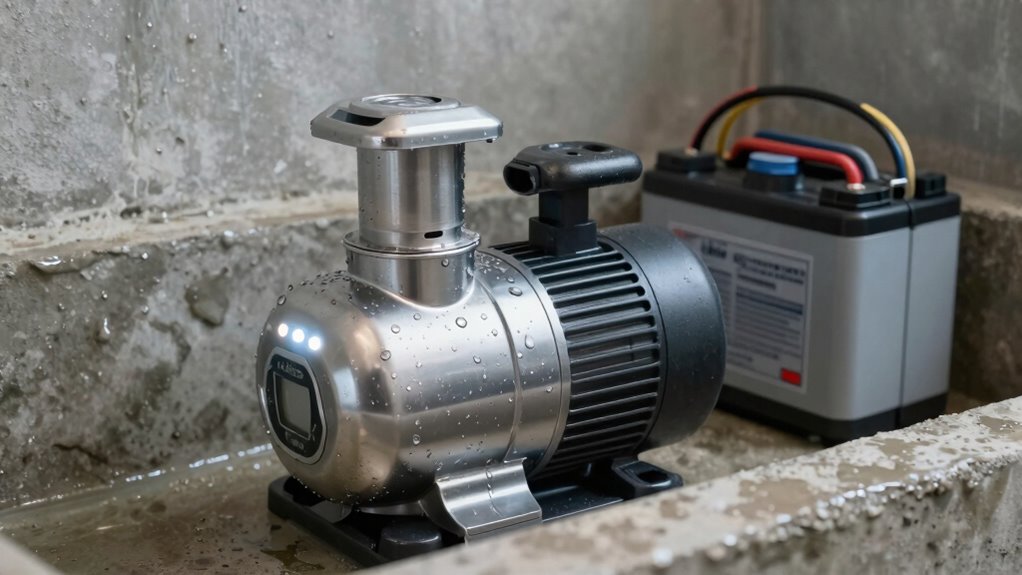
A sump pump backup system is indispensable for protecting your basement from flooding during power outages or pump failures. When storms hit, the last thing you want is to find your basement flooded because your primary sump pump couldn’t handle the heavy rain or lost power. That’s where a battery backup comes into play. Installing a reliable battery backup system guarantees your sump pump can continue operating even when the electricity goes out. It acts as a safeguard, giving you peace of mind that your home is protected during severe weather events.
A reliable sump pump backup system safeguards your basement during power outages and severe weather.
To keep your backup system ready to perform, regular sump pump maintenance is indispensable. Many homeowners overlook this step, but it’s essential for ensuring your backup system works when needed most. During maintenance, check the battery’s charge level and replace it if it’s old or not holding a charge properly. Batteries typically last 3 to 5 years, so staying on top of their condition can prevent unexpected failures. Also, clean the sump pit and check the sump pump for debris or obstructions that could hinder its operation. Inspect the float switch to make sure it moves freely and activates the pump when water reaches a certain level. Color accuracy impacts the overall image quality of projectors, and ensuring your system is free of dust and obstructions helps maintain optimal visual performance.
Running a test on your backup system before storms arrive isn’t just a good idea—it’s indispensable. You want to confirm that your battery backup kicks in seamlessly when the primary pump fails or when power is cut. To do this, temporarily turn off the main power supply to your primary sump pump and then observe whether the backup system activates automatically. Listen for unusual noises, check for leaks, and verify that water is being pumped out efficiently. This test helps you identify any issues with the battery or the backup system early, so you’re not caught off guard during a storm.
Don’t forget to review your sump pump maintenance routine regularly. Schedule a test at least once every few months, especially before the heavy storm season. This way, you get a clear idea of how well your backup system performs and can address any problems beforehand. Keep your battery charged and replace it when needed, make sure all components are clean, and always check that your backup system is working properly. Taking these simple steps can save you from costly water damage and the stress of dealing with a flooded basement when you least expect it. Proper maintenance and testing ensure your sump pump backup system is ready to protect your home when storms roll in.
Frequently Asked Questions
How Often Should I Test My Sump Pump Backup System?
You should test your sump pump backup system at least once a month to guarantee it’s working properly. Follow installation tips and safety precautions during testing, such as unplugging the main pump and wearing protective gear. Regular testing helps identify issues early, preventing flooding during storms. Keep a schedule, and don’t skip inspections—this way, you’ll stay confident your backup system will activate when needed most.
What Signs Indicate My Backup System Might Fail?
Your backup system might betray you like a silent alarm if you notice battery failure warnings or strange, unusual noises. These signs suggest it’s struggling to do its job, risking a flood when storms hit. Don’t ignore these signals; they’re the system’s cry for help. Regular testing keeps your backup in top shape, ensuring it’s ready to leap into action when you need it most, safeguarding your home.
Can I Install a Backup System Myself or Need a Professional?
You can attempt a DIY installation of your sump pump backup system if you’re comfortable with basic plumbing and electrical work. However, for a safer, more reliable setup, it’s best to seek professional assistance. Professionals have the experience and tools to guarantee everything is installed correctly, reducing the risk of failure during storms. If you’re unsure about your skills, don’t hesitate to hire an expert for peace of mind.
How Long Does a Backup Power Source Typically Last During a Blackout?
During a blackout, your backup power source typically lasts between 4 to 24 hours, depending on the system. Battery lifespan varies, usually providing 3 to 5 years with proper maintenance, while generator runtime depends on fuel capacity, often running 8 to 12 hours per tank. To guarantee continuous protection, regularly test your backup system and keep spare batteries or fuel on hand.
Are There Maintenance Tips to Ensure Backup Systems Function Properly?
To keep your backup system working reliably, regularly perform alarm testing to make certain it alerts you to any issues. Additionally, maintain your battery by checking its charge, cleaning terminals, and replacing it every 2-3 years. These simple steps help prevent failures during storms. Don’t forget to review the manufacturer’s maintenance instructions and keep a backup plan ready, so you’re prepared when power goes out.
Conclusion
Don’t wait until the storm hits and your basement floods like a volcano eruption. Run that backup system test now, and you’ll be the hero who stops a catastrophe before it starts. Imagine waking up to a flood of biblical proportions—trust me, it’s not a pretty picture. Take action today, or risk being the next homeowner swimming through chaos. Your home’s safety depends on that quick test—don’t let a storm turn your house into a waterpark overnight!