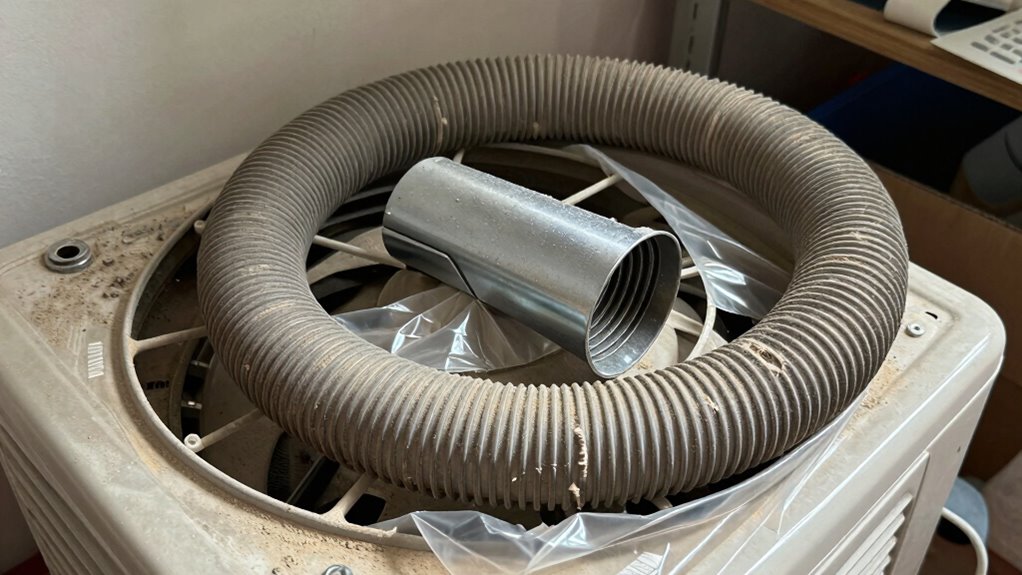

Poorly designed or installed exhaust setups can seriously hurt your portable AC’s efficiency. If you don’t seal connections properly, hot air leaks back into the cooled space, making it work harder. Long hoses, sharp bends, or improper vent placement restrict airflow and strain the unit. Even small gaps or loose fittings decrease performance. To get the most out of your portable AC, attention to exhaust setup details is essential—stay tuned to discover how to optimize your system effectively.

Get your next haul delivered free with Prime
- Fast, free delivery on millions of items
- Prime Video, Amazon Music and more included
- Member-only deals all year
Key Takeaways
- Improperly sealed or leaky exhaust connections allow hot air to re-enter, reducing cooling efficiency.
- Excessively long or sharply bent hoses restrict airflow, straining the AC unit.
- Poorly positioned exhaust vents cause airflow restrictions or connection issues.
- Using ill-fitting or makeshift venting materials creates gaps and leaks, decreasing performance.
- Kinking hoses or insecure connections lead to airflow loss and inefficient cooling.
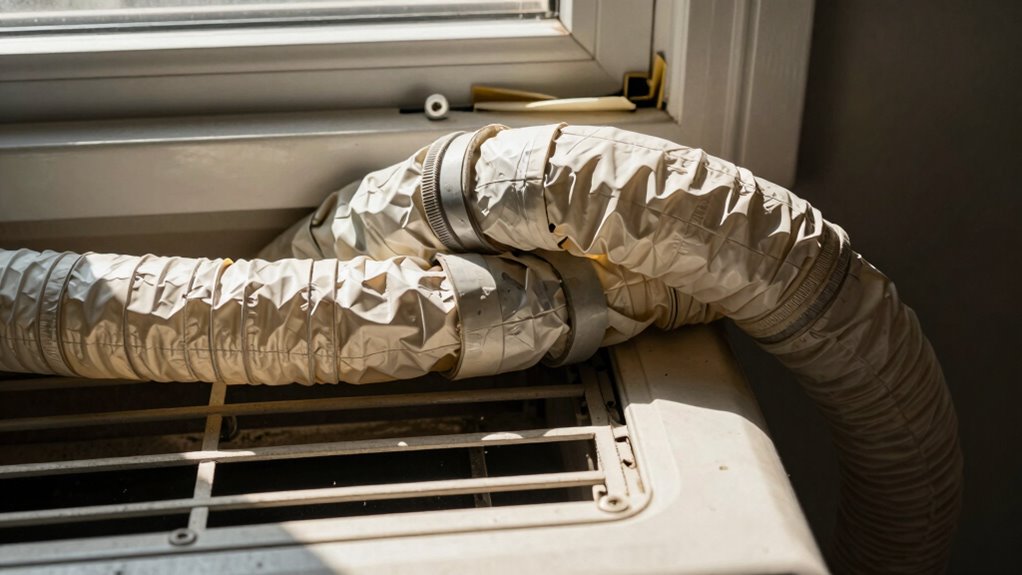
When setting up a portable AC exhaust system, choosing the right configuration is vital for ideal cooling performance. The way you set up the exhaust impacts not only how cool your space gets but also how efficiently your unit runs. Poorly planned exhaust setups can lead to decreased ventilation efficiency, making your AC work harder and less effectively. This means higher energy costs and longer cooling times, which can be frustrating. To avoid these issues, you need to pay close attention to how you position and connect your exhaust components.
One of the most common mistakes is not properly sealing the exhaust hose or vent. Gaps or leaks allow hot air to re-enter the cooled space, undermining the entire cooling process. When hot air leaks in, your AC has to work harder to maintain the desired temperature, reducing overall ventilation efficiency. Additionally, the length and bends of the exhaust hose matter greatly. Excessively long hoses or those with sharp bends restrict airflow, causing strain on your unit. This restriction can be mitigated by understanding the exhaust airflow dynamics, which can help you optimize your setup for better performance. Proper airflow management ensures your system runs smoothly and conserves energy.
Proper sealing and minimizing hose length and bends are key to efficient portable AC exhaust setup.
Installation challenges often stem from trying to set up an exhaust system without considering the physical layout of your room. For example, improper placement of the exhaust vent can cause airflow restrictions or make it difficult to secure the hose properly. When you don’t have a clear plan, you might find yourself battling with hoses that kink or disconnect easily, leading to frequent adjustments. This can be especially problematic if you’re working with limited window space or uneven surfaces. The key is to find a configuration that minimizes the length of the hose and ensures a tight, secure seal at all connection points. Choosing an appropriate venting method plays a crucial role in maintaining efficiency and ease of installation. Properly assessing the venting options available can help you select the most effective solution for your space, reducing the likelihood of leaks or disconnections. A well-chosen method can also help prevent common issues like leaks or disconnections that compromise performance. In addition, understanding the venting materials can help you select durable components that last longer and perform better.
Another aspect that influences ventilation efficiency is the choice of venting method. Using a universal window kit often simplifies installation, but not all kits fit perfectly, leading to gaps and potential leaks. Custom solutions may be more effective, but they come with their own installation challenges, like cutting or modifying existing structures. Whichever method you choose, ensure that the exhaust path is as direct and airtight as possible. This way, you can maximize airflow, reduce strain on your AC, and keep your room comfortably cool without unnecessary energy waste. Properly considering these installation factors can significantly improve your setup’s overall efficiency.
As an affiliate, we earn on qualifying purchases.
Frequently Asked Questions
Can I Use a DIY Exhaust Setup for My Portable AC?
Yes, you can use a DIY exhaust setup for your portable AC. However, you need to focus on exhaust customization to guarantee it works efficiently. Proper DIY installation involves creating a secure, airtight connection to prevent leaks that reduce cooling performance. Avoid using makeshift solutions that cause air leaks or block airflow. Investing time in a well-designed exhaust setup will maximize your portable AC’s efficiency and cooling power.
How Often Should I Clean the Exhaust Hose?
You should clean your exhaust hose every few weeks to guarantee ideal exhaust hose maintenance. Regular cleaning prevents dust, dirt, and pet hair buildup, which can restrict airflow and reduce efficiency. Keep an eye out for any mold or unpleasant odors, and clean more frequently if needed. Consistent cleaning frequency helps your portable AC run smoothly, prolongs its lifespan, and maintains cooling performance.
Does the Exhaust Setup Affect Noise Levels?
Like a whisper in a quiet room, your exhaust setup considerably impacts noise levels. Poorly installed or unsealed hoses can amplify sound, making your portable AC louder. Proper sound insulation and airflow optimization minimize these noises, keeping your space peaceful. Ensuring the exhaust is tightly sealed and using insulated hoses helps reduce vibrations and sound transmission. You’ll enjoy cooler air without the distracting hum, making your environment more comfortable and serene.
Can I Vent My Portable AC Through a Window?
Yes, you can vent your portable AC through a window. Use proper installation tips to guarantee a secure fit and ideal ventilation options. Choose a window kit designed for portable AC units to prevent leaks and maintain efficiency. Make sure the exhaust hose is correctly connected and sealed to maximize cooling performance. Proper venting through a window is essential for effective operation and energy savings.
What Materials Are Best for a Durable Exhaust Hose?
You want the best materials for a durable exhaust hose, and it’s no use skimping on quality. Look for hoses made from high-grade, weather-resistant rubber or reinforced PVC, which offer excellent material durability and hose flexibility. These materials resist cracking and tearing, ensuring your setup stays airtight. While some hoses bend easily, they also withstand wear and tear, so you won’t be caught flat-footed when you need reliable performance.
As an affiliate, we earn on qualifying purchases.
Conclusion
To wrap it up, understanding the importance of a proper portable AC exhaust setup is key to maximizing efficiency. If you don’t pay attention to details like sealing the vent or choosing the right window kit, you’re just throwing good money after bad. Think of your setup like a well-oiled machine—every part needs to work in harmony. When you get it right, you’ll keep cool without breaking the bank, proving that a stitch in time truly saves nine.
exhaust hose sealing tape for AC
As an affiliate, we earn on qualifying purchases.
As an affiliate, we earn on qualifying purchases.
portable air conditioner vent extension
As an affiliate, we earn on qualifying purchases.
As an affiliate, we earn on qualifying purchases.
Evergreen bestsellers Picks
bestsellers
As an affiliate, we earn on qualifying purchases.