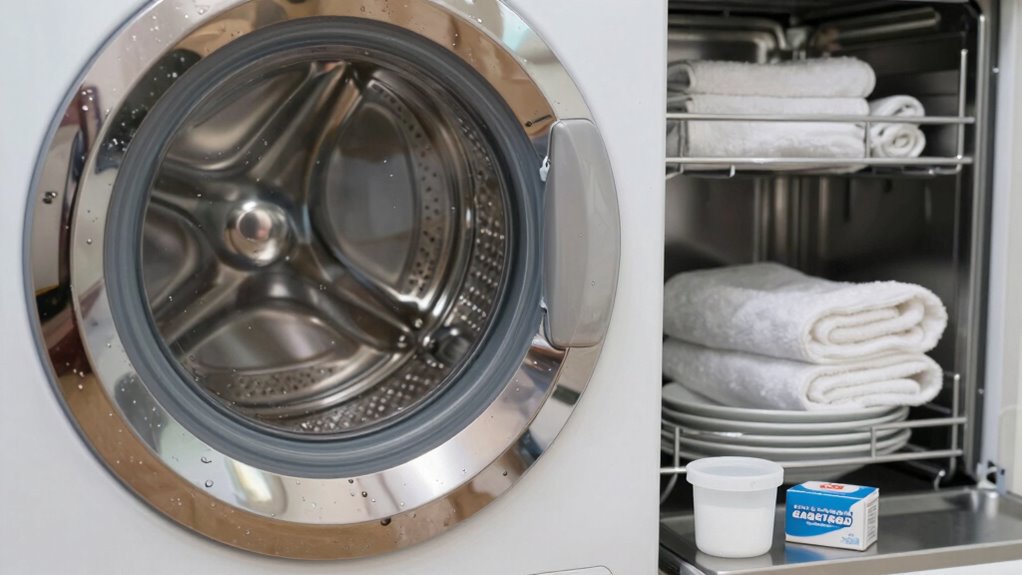

To prevent odors in your washers and dishwashers, use the recommended amount of detergent and avoid excess, which can cause residue buildup. Run regular hot cycles with vinegar or cleaner to flush out mold and soap scum. Keep doors or lids slightly open after use to allow moisture to escape and prevent mold. Regularly inspect and clean seals, gaskets, and filters. For more tips on keeping your appliances fresh, discover the full guide below.

Get your next haul delivered free with Prime
- Fast, free delivery on millions of items
- Prime Video, Amazon Music and more included
- Member-only deals all year
Key Takeaways
- Use the recommended amount of detergent to prevent residue buildup that causes odors.
- Run regular hot cycles with vinegar or cleaner to flush out residues and mold spores.
- Leave doors or lids slightly open after each use to promote airflow and moisture evaporation.
- Clean seals, gaskets, and filters weekly to prevent mold and odor-causing residues.
- Ensure proper ventilation around appliances to reduce humidity and moisture buildup.
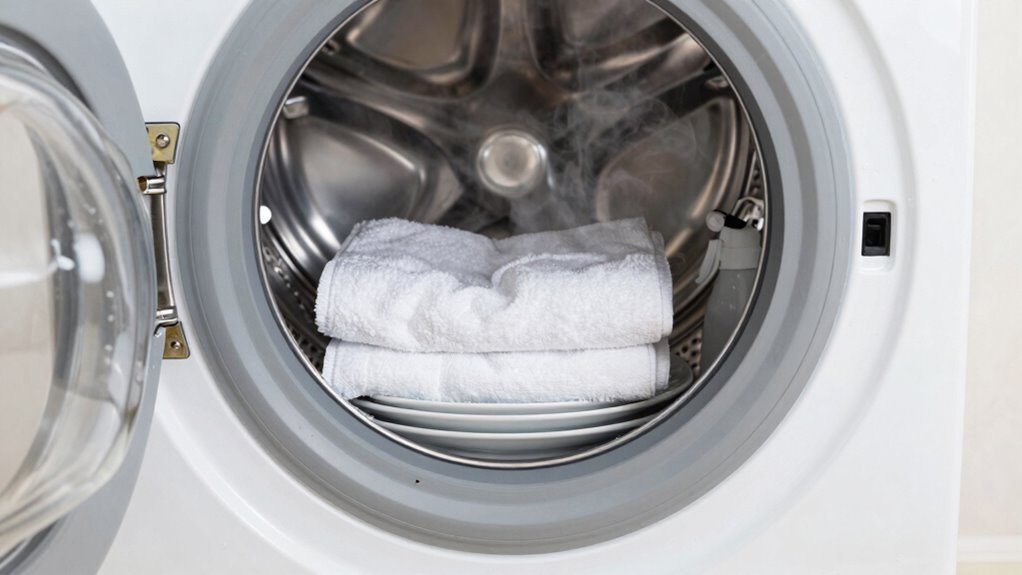
Ever wonder why your washer or dishwasher sometimes develops that unpleasant odor? It’s usually because of detergent buildup and mold growth. When soap and other residues aren’t completely rinsed away, they create a breeding ground for mold and bacteria, which cause those sour, musty smells. To prevent this, you need to focus on regular maintenance and proper usage habits.
First, pay attention to how much detergent you use. Using too much can lead to excess soap residue left behind, especially in hard-to-reach areas. Always follow the manufacturer’s recommendations for your machine. Opt for high-efficiency (HE) detergents if your appliance requires them, and avoid pouring in extra detergent just to boost cleaning power. Less is often more when it comes to preventing detergent buildup. When residues accumulate, they trap dirt and moisture, which fosters mold growth. Hence, using the correct amount of detergent plays an essential role in mold prevention and keeping odors at bay.
Use the correct amount of detergent to prevent buildup and mold growth. Less is more for a fresher, cleaner machine.
Another key step is to run your washer and dishwasher empty on a hot cycle once a month. This helps flush out any lingering detergent residue and kills mold spores. During these cycles, add a cup of white vinegar or a specialized cleaner designed for appliances. These substances break down soap scum and disinfect the interior surfaces. Additionally, proper ventilation by leaving the door or lid slightly open after each use allows moisture to evaporate, reducing the chances of mold development. Proper air circulation is also vital, as stagnant air can trap moisture and promote mold growth inside your appliances. Ensuring good airflow can significantly reduce moisture buildup, which is a key factor in odor formation. Regularly inspecting and cleaning the seals, gaskets, and filters also prevents the buildup of residues that encourage mold growth, ensuring your appliances stay fresh and odor-free.
Additionally, regularly cleaning the seals, gaskets, and filters is essential. These areas tend to trap soap residue, dirt, and moisture, making them prime spots for mold to grow. Use a soft cloth dipped in vinegar or a mild cleaning solution to wipe these parts down weekly. Keeping these components dry and clean prevents the formation of mold and reduces odors. It’s also wise to leave the door or lid slightly ajar after each cycle to improve airflow and decrease humidity inside, further preventing mold development.
washer and dishwasher odor eliminator
As an affiliate, we earn on qualifying purchases.
As an affiliate, we earn on qualifying purchases.
Frequently Asked Questions
Can Using Fabric Softeners Cause Washer Odors?
Yes, using fabric softeners can cause washer odors. They often contribute to odor buildup because the softeners leave residues that trap dirt and moisture inside your machine. Over time, this creates a musty smell. To prevent this, use softeners sparingly, opt for fragrance-free options, and run regular cleaning cycles. Keeping the washer dry and airing it out after each use also helps reduce odor issues caused by fabric softeners.
Are There Natural Remedies to Eliminate Dishwasher Smells?
Yes, you can use natural remedies to eliminate dishwasher smells. Try a natural deodorizer by adding a cup of white vinegar and a few drops of essential oils like lemon or tea tree oil to the bottom of your empty dishwasher and run a hot cycle. This helps break down odors naturally. Regularly cleaning your filter and sealing any leaks also keeps your dishwasher smelling fresh without harsh chemicals.
How Often Should I Run Cleaning Cycles on My Appliances?
Think of your appliances as silent guardians, quietly working behind the scenes. To keep them rejuvenated and odor-free, run a cleaning cycle once a month, especially if you use them frequently. Stick to maintenance tips like leaving doors open after use and checking for buildup. Regular cleaning frequency prevents odors from brewing, ensuring your appliances stay reliable and smell inviting—like a breath of fresh breeze every time you open them.
Do Water Quality Issues Contribute to Appliance Odors?
Yes, water quality issues can contribute to appliance odors. Water contamination introduces impurities that may cause unpleasant smells, while mineral buildup from hard water can create a breeding ground for bacteria and mold. These deposits often linger in washer and dishwasher components, leading to persistent odors. To combat this, consider installing water softeners or regularly cleaning your appliances to reduce mineral deposits and improve water quality, preventing foul smells.
Can Improper Drainage Cause Persistent Washer or Dishwasher Smells?
Did you know that about 60% of washer and dishwasher odors stem from drainage blockages or ventilation issues? Improper drainage can cause water to linger, creating a damp environment that fosters mold and bacteria, leading to persistent smells. Ventilation problems trap moisture inside, worsening odors. To fix this, clear out drain clogs regularly and guarantee your appliances’ vents are unobstructed, preventing musty smells from taking hold.
As an affiliate, we earn on qualifying purchases.
Conclusion
To keep your washer and dishwasher smelling fresh, regular cleaning is key. Some believe running a hot cycle with vinegar once a month prevents odors, but research shows this might not eliminate all bacteria or buildup. Instead, using a specialized cleaner or baking soda can be more effective. Consistent maintenance, like leaving the door ajar after use, truly helps prevent odors. So, stick to proven methods for a cleaner, fresher appliance—your nose will thank you!
As an affiliate, we earn on qualifying purchases.
high efficiency dishwasher detergent
As an affiliate, we earn on qualifying purchases.
As an affiliate, we earn on qualifying purchases.
Halloween Picks
halloween
As an affiliate, we earn on qualifying purchases.