Your fridge has specific temperature zones to keep foods fresh and safe. The top shelf is usually around 40°F, ideal for leftovers and drinks. The middle shelf is a bit cooler, perfect for dairy. The lower shelves are the coldest, around 35°F, best for raw meats and seafood. Crisper drawers control humidity for fruits and vegetables, while door shelves are warmer and suit condiments. Understanding these zones helps prevent spoilage and cross-contamination—keep exploring to learn more about ideal storage!
Key Takeaways
- Different fridge zones have specific temperature ranges to optimize food freshness and safety.
- The top shelf is warmer (~40°F), ideal for leftovers and ready-to-eat foods.
- Middle shelves maintain a slightly cooler environment suitable for dairy products.
- Lower shelves are the coldest (~35°F), perfect for raw meats and seafood.
- Crisper drawers and door shelves are designed for produce and condiments, with adjustable humidity settings.
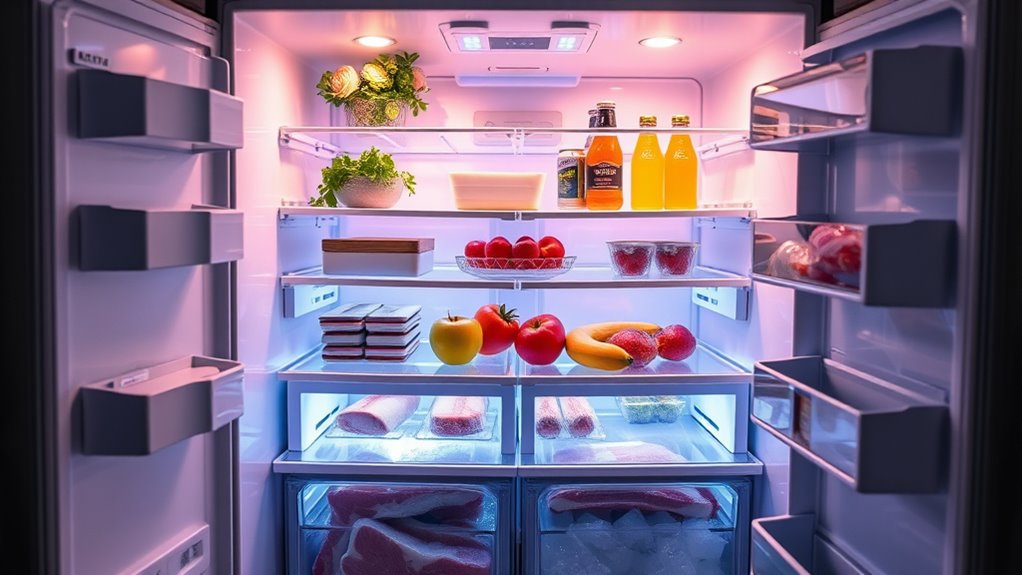
Your refrigerator is more than just a cold storage unit; it’s designed with specific temperature zones that help keep different foods fresh and safe. Understanding how these zones work is essential for maintaining food safety and ensuring your groceries stay fresh longer. Proper temperature control within each zone minimizes the risk of bacterial growth and spoilage, making sure your food remains safe to eat and retains its quality. The top shelf of your fridge is typically the warmest area, usually around 40°F (4°C). While it’s suitable for leftovers, drinks, and other ready-to-eat items, it’s not ideal for raw meats or dairy, which require colder temperatures for safety. Placing these items here could lead to cross-contamination or faster spoilage. The middle shelf offers a slightly cooler environment, ideal for dairy products like milk, cheese, and yogurt. These foods benefit from consistent temperature control to prevent spoilage and bacterial growth, which can happen if they’re stored in warmer zones. The lower shelves are the coldest part of your refrigerator, usually around 35°F (1.7°C). This zone is perfect for raw meats, poultry, and seafood. Keeping these items in the coldest part of the fridge minimizes the risk of bacteria spreading to other foods. Use a separate, sealed container or tray to prevent drips and cross-contamination. The crisper drawers are designed for fruits and vegetables, and many fridges have adjustable humidity controls. High humidity settings help keep produce fresh longer, while lower settings prevent spoilage for items that rot quickly. Proper organization and understanding of sound design principles can also enhance the efficiency of your refrigerator’s storage by optimizing airflow and temperature distribution. The door of your fridge is the warmest spot, with temperature fluctuations caused each time you open it. It’s best suited for condiments, juices, and other shelf-stable items. Avoid storing perishable foods like eggs or dairy here because the temperatures can vary too much, compromising food safety. Maintaining a consistent temperature across all zones is key to preventing bacterial growth. Regularly checking your fridge’s temperature with a thermometer ensures that each zone stays within the safe range, ideally around 37°F to 40°F.
Frequently Asked Questions
How Often Should I Calibrate My Fridge Thermometer?
You should calibrate your fridge thermometer at least once a year to guarantee thermometer accuracy. However, if you notice temperature fluctuations, inconsistent readings, or after any power outage, it’s a good idea to check calibration more frequently. Regular calibration helps maintain proper food safety and prevents spoilage. Keep an eye on the thermometer’s accuracy and adjust it when needed to keep your fridge’s temperature reliable and safe.
Can Certain Foods Be Stored Outside the Recommended Zones?
You might be tempted to store certain foods outside recommended zones, but beware—this risks compromising food safety. Ignoring storage guidelines can lead to spoilage or bacteria growth, putting your health at stake. Always follow proper storage practices, keeping perishable items in the right zones. Don’t gamble with food safety—trust the guidelines to protect yourself and your loved ones from potential health hazards.
How Does Door Opening Affect Internal Temperature Stability?
When you open the fridge door, door temperature fluctuations occur, causing internal temperature to rise temporarily. This affects door insulation efficacy, making it harder to maintain a stable environment. Each door opening allows warm air in, which the fridge then works to cool down again. To minimize these effects, open the door quickly and less often, helping keep the internal temperature consistent and your food fresh longer.
Are There Specific Zones for Storing Leftovers Safely?
Yes, there are specific storage zones for leftovers to guarantee safety. Keep leftovers in the coldest part of your fridge, usually near the back or bottom shelves, to prevent bacterial growth. Proper leftover safety involves storing leftovers in airtight containers and labeling them with dates. Avoid placing leftovers in the door, as temperature fluctuations there can compromise safety. Following these storage zones helps keep your leftovers fresh and safe to eat.
What Signs Indicate My Fridge Temperature Is Malfunctioning?
You’ll know your fridge might be malfunctioning if you notice temperature fluctuations, such as food spoiling faster or ice melting unexpectedly. Also, if your fridge isn’t maintaining a consistent cool temperature after power outages, it could indicate a problem. Keep an eye on the thermometer inside, and if temperatures rise above 40°F (4°C), it’s time to check or call for maintenance to prevent food spoilage.
Conclusion
Now that you know how your fridge’s temperature zones work, you’re like a conductor orchestrating a symphony of freshness. Keep the right foods in their perfect spots, and your fridge will run smoothly, keeping everything fresh as a daisy. Think of these zones as secret compartments of freshness, each playing its part. Master this, and you’ll turn your fridge into a fortress of food safety—an orchestra of perfect storage harmony.