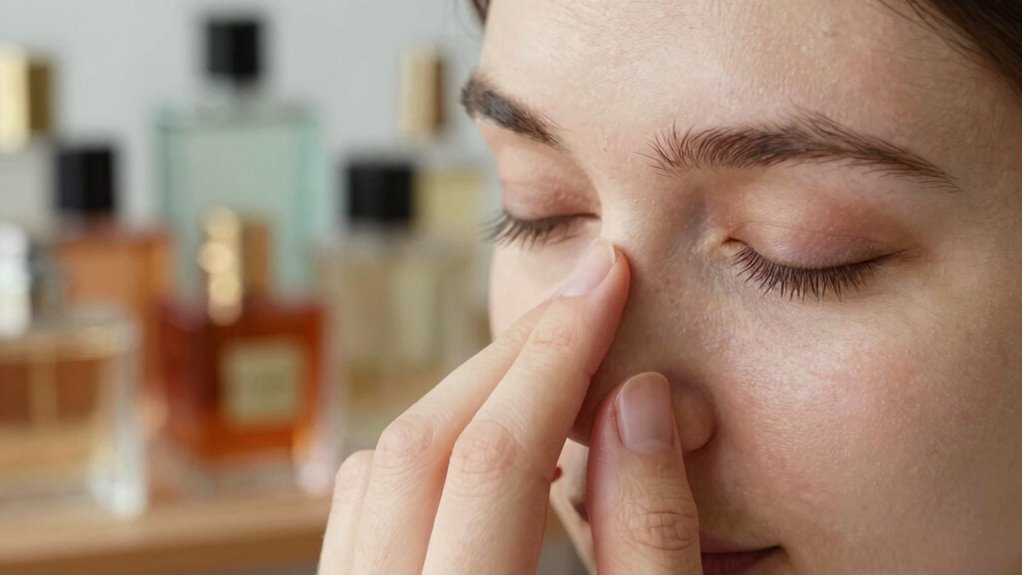

To reset your nose after smelling too many fragrances, start by avoiding strong scents and irritants in your environment. Use saline nasal sprays to flush out irritants and keep your nasal passages moist. Steam inhalation with eucalyptus or peppermint oils can loosen mucus and clear your sinuses. Inhale vapors from hot water infused with essential oils, and practice nasal hygiene regularly. If you want to learn more tips on helping your nose recover quickly, keep going.

Get your next haul delivered free with Prime
- Fast, free delivery on millions of items
- Prime Video, Amazon Music and more included
- Member-only deals all year
Key Takeaways
- Minimize exposure to strong scents and irritants to prevent further sensory overload.
- Use steam inhalation with eucalyptus or peppermint oils to clear nasal passages.
- Apply saline nasal sprays regularly to hydrate and flush out irritants.
- Incorporate essential oils in diffusers or inhalation for olfactory reset and relief.
- Rest, stay hydrated, and avoid fragrances until your senses fully recover.

Have you ever felt like your nose is off-kilter, making it difficult to breathe or causing discomfort? If you’ve been exposed to too many strong fragrances or overwhelmed by scent, your nasal passages might be clogged or overly sensitive. Resetting your nose becomes essential to restore clear breathing and comfort. The first step is to identify and avoid further irritants—stay away from perfume-heavy environments and smoky spaces. Once you’ve minimized exposure, you can focus on soothing your nasal passages.
One effective method involves using essential oil blends designed to open up your sinuses. Eucalyptus oil is a popular choice because it contains cineole, which has anti-inflammatory properties and helps clear mucus. Peppermint oil works similarly, thanks to its menthol content, which creates a cooling sensation and eases nasal congestion. You can add a few drops of these oils to a diffuser or dilute them in a carrier oil for topical application around your nostrils. Inhaling the vapors straight from a bowl of hot water infused with these oils can also provide immediate relief, helping to reset your olfactory senses after scent overload. Incorporating air quality improvement strategies can further support your recovery by reducing airborne irritants.
Use eucalyptus and peppermint oils in diffusers or hot water inhalations to clear sinuses and reset your sense of smell.
In addition to essential oils, nasal spray remedies can offer quick and targeted relief. Saline nasal sprays are gentle and effective for flushing out irritants and excess mucus, helping to restore nasal balance. Using a saline spray several times a day can hydrate your nasal passages and reduce inflammation caused by scent overload. There are also medicated nasal sprays available, but it’s best to consult a healthcare provider before using them regularly to avoid dependency or side effects. Maintaining proper indoor air quality can also prevent future scent overloads by reducing airborne irritants in your environment. Proper nasal hygiene can play a significant role in maintaining nasal health and preventing sensitivity buildup. Additionally, practicing proper breathing techniques can help your nasal passages recover more efficiently.
Another helpful step is steaming your face with hot water infused with essential oils. Cover your head with a towel over a bowl of hot water with drops of eucalyptus or peppermint oil, and breathe deeply. This method helps loosen mucus and clears your nasal passages, making it easier to breathe and resetting your olfactory system. Remember to keep the steam at a safe temperature to avoid burns. Incorporating indoor air quality solutions can also help prevent future scent overloads by reducing airborne irritants in your environment.
Lastly, give your nose time to recover. Rest, stay hydrated, and avoid strong scents until your senses normalize. Using essential oil blends and nasal spray remedies can accelerate recovery, but patience is key. When your nose feels clearer and your breathing improves, you’ll notice your sense of smell returning to normal. Taking these steps helps you reset your nose after scent overload, so you can breathe comfortably and enjoy scents again.
saline nasal spray for congestion
As an affiliate, we earn on qualifying purchases.
As an affiliate, we earn on qualifying purchases.
Frequently Asked Questions
Can Nasal Sprays Help Reset My Sense of Smell?
Nasal sprays can help reset your sense of smell, but their effectiveness varies. Some sprays, like saline solutions, flush out irritants and support your nose’s natural detox process. For fragrance detox strategies, avoid strong scents and give your nose time to recover. While nasal sprays may provide relief, combining them with rest and avoiding fragrances is the best way to restore your olfactory sensitivity.
How Long Does It Take for Your Nose to Reset Naturally?
Surprisingly, your nose naturally resets in about 15 minutes to a few hours, though you might wish for a quicker fix. Practicing nasal hygiene, like gentle rinses, can speed this process, helping combat fragrance fatigue. Irony strikes here—your nose needs a break, yet it’s constantly working. Give it time, stay hydrated, and avoid overwhelming scents. Your senses will restore, proving patience is truly a virtue in scent recovery.
Are There Specific Scents That Can Refresh Your Nose?
Yes, certain scents can refresh your nose. Fresh, neutral fragrances like citrus or mint work well, especially if you practice scent avoidance afterward. You can also try fragrance layering with light, subtle aromas to help reset your senses. Avoid strong or overwhelming perfumes, and give your nose time to recover. Regular breaks and sniffing neutral scents like coffee beans can aid in quick resetting, keeping your sense of smell sharp.
Is It Harmful to Sniff Strong Odors Repeatedly?
Is it harmful to sniff strong odors repeatedly? Not necessarily, but it can lead to olfactory fatigue and scent desensitization, which dull your sense of smell temporarily. Constant exposure to intense scents may cause discomfort or even headaches. To protect your nose, take breaks and avoid prolonged exposure. Your olfactory system needs time to reset, ensuring you can still enjoy fragrances without risking long-term harm.
Can Allergies Interfere With Resetting Your Sense of Smell?
Yes, allergies can interfere with resetting your sense of smell. If you’re allergic, environmental triggers like pollen or dust can block your nasal passages, making it harder to smell clearly. Taking allergy medication can help reduce inflammation and clear your airways, aiding in resetting your nose. Avoiding known triggers and staying indoors during high pollen seasons also supports your efforts to restore your sense of smell effectively.
eucalyptus essential oil diffuser
As an affiliate, we earn on qualifying purchases.
As an affiliate, we earn on qualifying purchases.
Conclusion
So, next time your nose feels overwhelmed by too many fragrances, remember that resetting it is simple and effective. Just take a break, breathe in fresh air, or sniff a neutral scent like coffee or lemon. Did you know that your sense of smell can adapt to over 400 different scents? By giving your nose a break, you help maintain its sensitivity and enjoy fragrances more fully. Keep these tips in mind to keep your nose fresh and alert!
As an affiliate, we earn on qualifying purchases.
steam inhalation bowl with essential oils
As an affiliate, we earn on qualifying purchases.
As an affiliate, we earn on qualifying purchases.
Halloween Picks
halloween
As an affiliate, we earn on qualifying purchases.