Ceramic cookware makes sense if you prioritize non-toxic, eco-friendly materials that heat evenly and are easy to clean without harmful chemicals. It’s great for gentle cooking, such as simmering and sautéing, and supports sustainable living. However, it’s less ideal for high-heat applications or heavy-duty use since it can be fragile and prone to chipping. Want to know more about when ceramic cookware fits your needs? Keep exploring to find out.

Get your next haul delivered free with Prime
- Fast, free delivery on millions of items
- Prime Video, Amazon Music and more included
- Member-only deals all year
Key Takeaways
- Ceramic cookware is ideal for gentle, even heating and easy cleanup, especially for health-conscious and eco-friendly users.
- It makes sense when avoiding toxic chemicals like PTFE or PFOA is a priority for your cooking.
- Not suitable for high-heat methods or heavy-duty cooking, as ceramic can chip or crack more easily.
- Best for light, everyday use rather than frequent, intense, or professional-grade cooking.
- Consider durability and maintenance; ceramic is more fragile and may require careful handling.
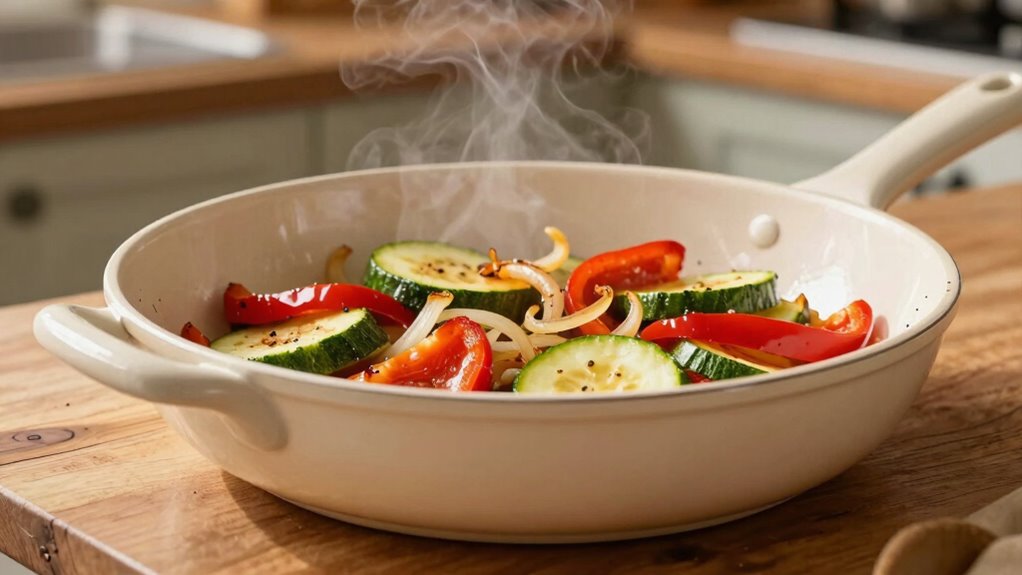
Ceramic cookware can be an excellent choice when you’re seeking a non-toxic, environmentally friendly option that offers even heating and easy cleanup. Its eco-friendly benefits make it appealing if you’re conscious of reducing your carbon footprint and avoiding harmful chemicals in your kitchen. Unlike traditional non-stick pans that often contain chemicals like PTFE or PFOA, ceramic cookware is made from non-toxic materials that won’t release toxic fumes when heated. This means you can cook with peace of mind, knowing your food isn’t being contaminated by potentially hazardous substances. Additionally, ceramic coatings are generally free of heavy metals and other toxic substances, making them a safer choice for your health and the environment.
Ceramic cookware is a safe, eco-friendly choice that heats evenly and cleans easily.
You’ll find that ceramic cookware heats evenly, which helps prevent hot spots that can burn your food. This even heat distribution means you don’t have to worry about constantly adjusting the flame or temperature, making your cooking process more efficient. Plus, cleanup is a breeze because the smooth ceramic surface is naturally non-stick without relying on synthetic coatings. You can often wash it with just warm water and mild soap, saving you time and effort in the kitchen. As an added benefit, ceramic cookware’s non-toxic nature aligns with eco-friendly benefits, making it a sustainable choice for environmentally conscious cooks. Moreover, the materials used in ceramic coatings are often derived from natural sources, further emphasizing their eco-friendly appeal. Using eco-conscious manufacturing methods can also enhance the sustainability of ceramic cookware, contributing to a greener kitchen environment.
It’s also worth noting that advances in ceramic glaze technology have improved the durability of some ceramic cookware, making it more resistant to chipping and cracking. Some manufacturers are now incorporating reinforced ceramic layers, which can improve longevity and resistance to everyday wear and tear. However, it’s important to recognize when ceramic cookware might not be the most suitable for your needs. While it offers many benefits, ceramic pans can be more fragile than metal cookware. They’re prone to chipping or cracking if you drop them or use metal utensils on their surfaces. If you’re someone who cooks very frequently or prefers heavy-duty cookware, you might find ceramic pans less durable over time. Also, some cheaper ceramic options may lose their non-stick properties quickly, requiring additional oil or fat during cooking. This can sometimes negate some of the eco friendly benefits if you rely heavily on oils to prevent sticking.
Another consideration is high heat. While ceramic cookware can handle moderate heat well, exposing it to very high temperatures can damage the coating or cause it to break down prematurely. If you often cook at high heat, such as searing steaks or stir-frying, you might need to look for more robust options like stainless steel or cast iron. Overall, ceramic cookware makes sense when you prioritize non-toxic, eco-friendly materials and gentle, even heating. But if durability and high-heat cooking are your main concerns, it might not be the ideal choice. Knowing your cooking style and priorities will help you decide whether ceramic cookware is right for you.
As an affiliate, we earn on qualifying purchases.
Frequently Asked Questions
Is Ceramic Cookware Suitable for Induction Stovetops?
Ceramic cookware isn’t typically suitable for induction stovetops because it usually lacks the magnetic properties needed for induction compatibility. Induction cooktops require cookware with a ferromagnetic base to generate heat efficiently. If your ceramic cookware has a magnetic layer or base, then it can work on induction stoves. Otherwise, you’ll need an adapter or select cookware explicitly labeled as induction-compatible to guarantee proper heating and safety.
How Long Does Ceramic Cookware Typically Last?
Ceramic cookware typically lasts around 1 to 5 years, depending on durability concerns and how well you care for it. To extend its lifespan, follow maintenance tips like avoiding metal utensils, hand washing, and not exposing it to sudden temperature changes. Proper care prevents chipping and keeps the non-stick surface intact. With careful maintenance, you can maximize your ceramic cookware’s longevity and enjoy its benefits longer.
Can Ceramic Cookware Be Used in the Oven at High Temperatures?
Yes, ceramic cookware can be used in the oven at high temperatures, but you should check its heat resistance and oven safety guidelines first. Most ceramic pieces are designed to withstand oven temperatures up to 450°F or higher, making them versatile for baking and roasting. Always verify the manufacturer’s recommendations to prevent damage or safety hazards. Properly rated ceramic cookware guarantees you can cook confidently at high heat without worries.
Is Ceramic Cookware Safe for Non-Stick Cooking?
Ceramic cookware is generally safe for non-stick cooking because it doesn’t contain harmful chemicals like PTFE or PFOA. You can cook with confidence, knowing it’s chemical-safe, especially if it’s made from high-quality materials. Plus, ceramic often has a lower environmental impact compared to traditional non-stick pans that may release chemicals over time. Just avoid overheating to maintain its safety and longevity.
How Does Ceramic Compare to Other Non-Stick Cookware Options?
Ceramic cookware outshines other non-stick options like Teflon with its stunning aesthetic appeal and safer non-stick surface, but it’s not invincible; durability concerns are real. While it resists scratches and adds a sleek look to your kitchen, it can chip or crack over time if mishandled. If you prioritize style and safer cooking, ceramic’s a stellar choice, but treat it gently to keep it looking pristine.
As an affiliate, we earn on qualifying purchases.
Conclusion
So, next time you’re choosing cookware, consider ceramic if you want a non-stick surface that’s easy to clean and free of harmful chemicals. However, don’t rely on it for high-temperature searing or quick heat changes, since it can chip or crack. Think of ceramic as your gentle, everyday cook—perfect for slow simmering and gentle frying, but not for heavy-duty tasks. Knowing its strengths and limits helps you make smarter kitchen choices.
As an affiliate, we earn on qualifying purchases.
As an affiliate, we earn on qualifying purchases.
Fall Picks
fall essentials
As an affiliate, we earn on qualifying purchases.