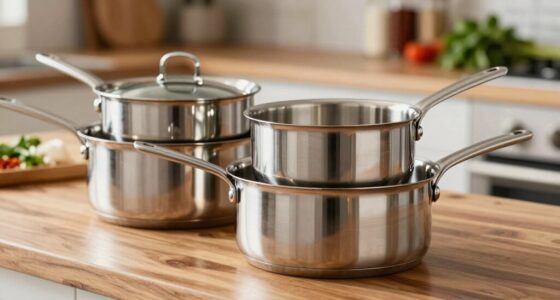

Use a saucepan instead of a saucier when boiling, reheating, or cooking large volumes of liquids like soups, rice, or vegetables. Saucepans are ideal for tasks requiring straightforward heat and quick temperature adjustments. They are less suited for delicate sauces or slow reductions, which a saucier handles better. If you want to master choosing the right tool for each task, keep exploring how each piece can make your cooking easier.

Get your next haul delivered free — and shop member deals
- Fast, free delivery on millions of items
- Access to Prime Big Deal Days deals on October 6–7
- Prime Video, Amazon Music and more included
Key Takeaways
- Use a saucepan for boiling, reheating, or cooking larger volumes of liquids quickly and efficiently.
- Opt for a saucepan when you need easy pouring and transferring of liquids.
- Choose a saucepan for tasks requiring rapid temperature changes and simple stirring.
- Use a saucepan for cooking foods like pasta, vegetables, or rice that need uniform heat distribution.
- Select a saucepan for general cooking tasks that don’t require delicate sauce preparation or precise reduction.
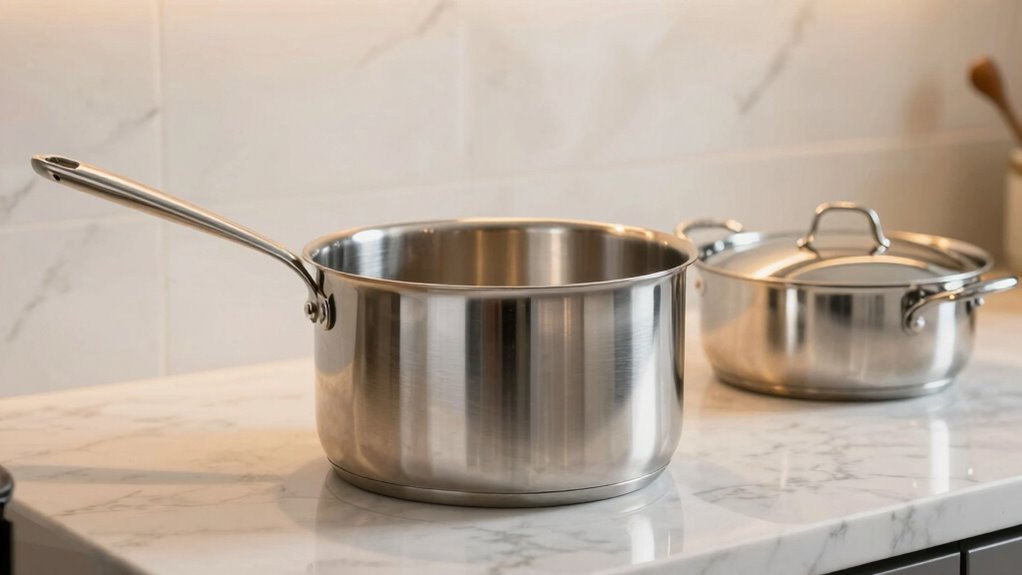
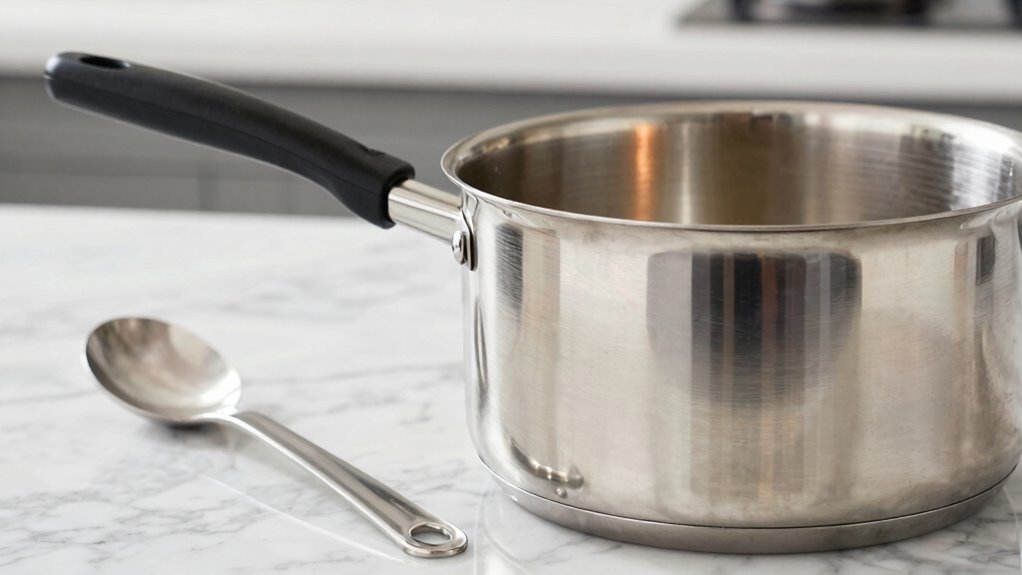
Choosing between a saucepan and a saucier depends on what you’re cooking and how you want to prepare it. Both are essential kitchen utensils, but their differences notably influence cooking techniques and the results you get. When you’re deciding which to use, consider the specific task at hand. A saucepan, with its straight sides and flat bottom, is versatile and suited for many cooking techniques, especially when you need to boil, simmer, or heat liquids evenly. Its design makes it easier to stir ingredients and allows for quick temperature adjustments, which is why it’s your go-to for making soups or boiling pasta.
A saucepan’s straight sides and flat bottom make it perfect for boiling, simmering, and heating liquids evenly.
In contrast, a saucier has a rounded, sloped sides that make stirring and whisking smoother, especially for delicate sauces. The curved shape prevents ingredients from sticking to the sides, making it ideal for reducing sauces or preparing emulsions. When you’re working with recipes that require constant stirring, like a Hollandaise or a delicate custard, the saucier’s shape helps you control the process more precisely. The differences in kitchen utensils also mean that a saucier typically has a narrower opening, which can make pouring and transferring liquids easier without spillage, especially when working with sauces that need to be reduced or thickened. Additionally, the design of the saucier facilitates better heat distribution, making it more suitable for slow reduction processes. A well-designed saucier can also help prevent burning or scorching delicate mixtures, which is crucial for achieving high-quality results. Using the right utensil can also impact the ease of cleaning and maintenance, which is an important consideration in kitchen efficiency. Moreover, selecting the appropriate vessel can also improve cooking precision and consistency, especially in complex recipes.
Understanding the material and construction of these utensils can also influence their performance and longevity, making it worthwhile to choose high-quality options. Knowing when to use a saucepan instead of a saucier largely depends on the cooking techniques involved. For example, if you’re boiling vegetables, reheating soups, or making rice, the saucepan’s straight sides make it straightforward to handle larger volumes of liquids. Its design also helps when you need to incorporate ingredients gradually or monitor the liquid level closely. Conversely, if you’re preparing a sauce that requires careful emulsification or reduction, the saucier’s shape offers better control, allowing you to stir continuously without splashing or spilling.
Ultimately, the differences in kitchen utensils come down to function and convenience. A saucepan is your reliable, all-purpose vessel for liquids and basic cooking techniques. Meanwhile, the saucier excels when you need precision and finesse, especially with sauces and delicate mixtures. Knowing which to choose based on what you’re cooking ensures you work efficiently and achieve better culinary results. It’s about matching the right tool with the right task, so understanding these differences helps you become more confident and effective in your cooking.
As an affiliate, we earn on qualifying purchases.
Frequently Asked Questions
Can I Use a Saucepan for Making Risotto?
Yes, you can use a saucepan for making risotto as an alternative cookware. While a saucier is ideal for its wide, shallow design, a saucepan’s high sides help prevent splatters and allow for even heat distribution. Just remember to stir frequently and maintain steady, gentle heat. This cooking technique guarantees the rice absorbs the broth evenly, resulting in a creamy, perfectly cooked risotto despite not using a traditional saucier.
Is a Saucier Better for Emulsifying Sauces?
A saucier is better for emulsifying sauces because its curved, rounded shape helps you whisk and incorporate ingredients smoothly. If you’re making oil-based sauces or aiming for a creamy texture, a saucier allows better control and agitation. This shape prevents ingredients from sticking or separating, making it easier to achieve a consistent, silky finish. So for emulsifying, a saucier truly offers advantages over a traditional saucepan.
When Should I Avoid Using a Saucepan for Sauces?
You should avoid using a saucepan for delicate sauces, especially those that require constant stirring or gentle heat, because its shape can cause uneven heat distribution. Cooking with non-stick coatings makes cleaning and maintenance easier, but avoid metal utensils that can scratch. For complex emulsions, a saucier is better, as it offers better control. Using a saucepan for these tasks might lead to sticking, burning, or difficult cleanup.
Can a Saucier Be Used for Boiling Pasta?
A saucier isn’t ideal for boiling pasta because it’s designed for delicate sauces and has a curved shape that’s less suited for large quantities of water. Instead, use a saucepan for this task. For alternative cooking techniques, you could try a stockpot. Remember to maintain your kitchen utensils properly, ensuring they’re clean and in good condition, so they perform well when boiling pasta or preparing sauces.
What Are the Differences in Heat Distribution?
You’ll notice that heat distribution varies between pans due to their material and design. A saucepan generally offers more even heat conductivity, especially if made from copper or aluminum, which quickly spreads heat across the surface. Saucier pans, with their rounded sides, focus heat more centrally, making them ideal for delicate sauces. Choosing the right pan depends on how evenly you want heat to distribute during your cooking process.
As an affiliate, we earn on qualifying purchases.
Conclusion
Knowing when to pick a saucepan over a saucier can truly elevate your cooking game. A saucepan is your trusty sidekick for boiling, simmering, and reheating — it’s like having a culinary superhero in your kitchen. When you need to handle larger quantities or more straightforward tasks, don’t hesitate to reach for it. Trust me, your dishes will turn out smoother than silk, making every meal feel like a masterpiece.
As an affiliate, we earn on qualifying purchases.
As an affiliate, we earn on qualifying purchases.
Halloween Picks
halloween
As an affiliate, we earn on qualifying purchases.