If you want precise control for small to medium meals, a skillet is your go-to, perfect for searing, browning, and delicate foods like eggs. Use a griddle when cooking large quantities at once, such as pancakes or bacon, since it offers a flat, expansive surface for even heat across many items. Each tool has its strong suit, so understanding their differences helps you choose the right for every task—explore more to improve your cooking game.
Key Takeaways
- Use a skillet for high-heat searing, browning, and cooking small to medium portions requiring precise control.
- Choose a griddle for cooking large quantities simultaneously, such as pancakes, bacon, or breakfast foods.
- Opt for a cast iron skillet when even heat distribution and retention are essential for tasks like searing meats.
- Use a flat-surface griddle for preparing multiple items at once, especially when even heat over a broad area is needed.
- Select the tool based on dish size, technique, and whether quick responsiveness or heat retention is more important.
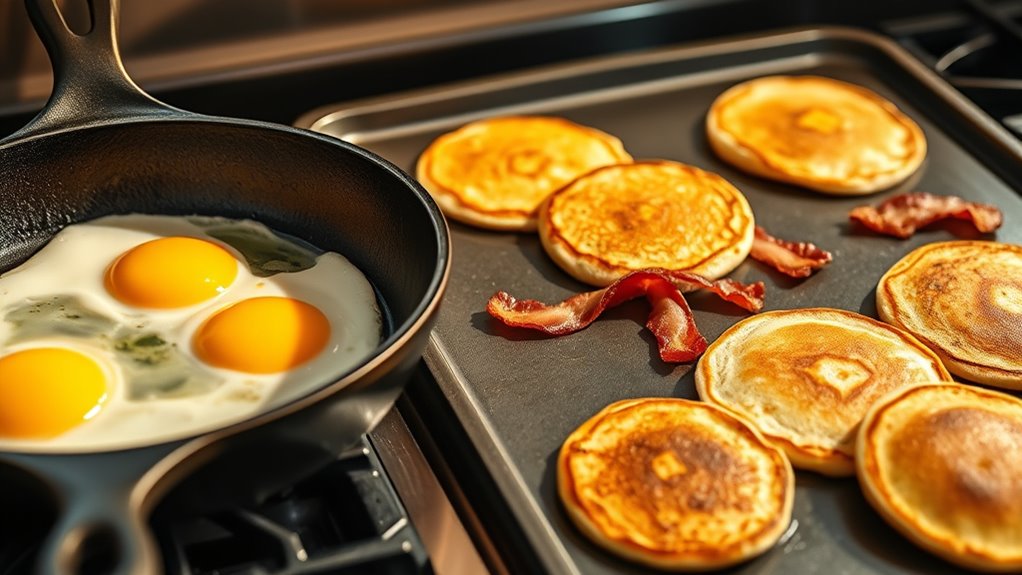
Are you trying to decide between a griddle and a skillet for your cooking needs? Understanding when to use each can make a big difference in your results. Both tools are staples in the kitchen, but they excel in different situations because of their design and material differences. Your choice depends on the cooking techniques you plan to employ and the specific dishes you want to prepare.
Choosing a skillet or griddle depends on your cooking style and the dishes you want to perfect.
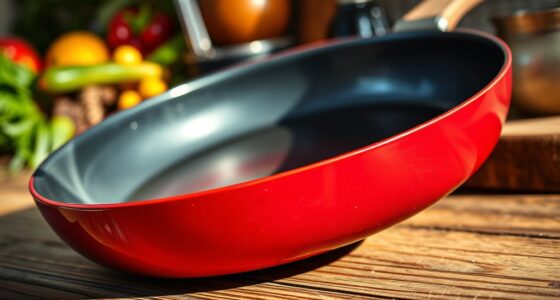
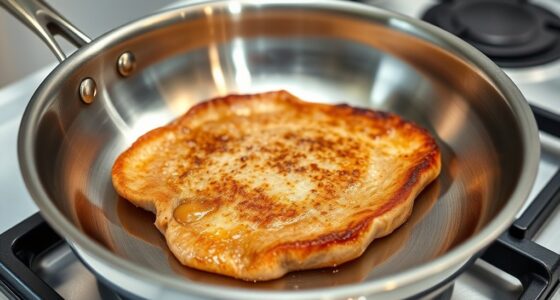
A skillet, typically made of cast iron, stainless steel, or non-stick material, is a versatile piece of cookware. Its high sides and rounded edges make it perfect for tasks like sautéing, searing, frying, and browning. Because of its material differences, especially with cast iron, a skillet retains and distributes heat evenly, which is essential for precise cooking techniques. Cast iron skillets, for example, excel at high-heat searing and browning, giving your meats a flavorful crust. They also double as oven-proof cookware, expanding their versatility. Non-stick skillets are ideal for delicate foods like eggs or pancakes, where sticking can ruin the dish. The material influences how heat is transferred and how easy it is to clean, which affects your overall cooking experience.
On the other hand, a griddle offers a flat, expansive surface that’s great for cooking multiple items at once. Usually made of cast iron, aluminum, or stainless steel, griddles are designed to handle large quantities and promote even heat distribution across a broad surface. This makes them ideal for preparing breakfast foods like pancakes, bacon, or French toast, where you want consistent browning and quick cooking across many pieces. The large surface area also lends itself well to cooking sandwiches, quesadillas, or stir-fry dishes, allowing you to cook everything simultaneously without crowding the pan. Because of their material differences, especially with aluminum, griddles heat up quickly and respond well to temperature adjustments, making them suitable for high-volume cooking.
Deciding when to use each depends on your cooking techniques. Use a skillet when you need precise temperature control, searing, or browning, especially for small to medium portions. A griddle is your go-to for feeding a crowd or preparing multiple items at once, where even heat distribution over a large surface matters. Both tools can complement each other in the kitchen, depending on what you’re cooking and the results you want. Ultimately, knowing their material differences and how they handle different cooking techniques will help you decide which is best suited for each task.
Frequently Asked Questions
Can a Skillet Be Used on an Electric Stove?
Yes, you can use a skillet on an electric stove. Just guarantee your skillet is compatible with electric stoves, meaning it has a flat, smooth bottom for even heat transfer. Avoid warped or uneven-bottom skillets, as they won’t heat properly. When cooking on an electric stove, a well-made skillet provides excellent heat distribution, making it perfect for stovetop frying, sautéing, or simmering.
Is a Griddle Better for Breakfast Foods?
Imagine hosting a weekend brunch where you cook pancakes, bacon, and eggs simultaneously. A griddle excels here, offering breakfast versatility and boosting cooking efficiency. It provides a large, flat surface ideal for multiple items at once, saving time and effort. So, if you often prepare breakfast for several people or want quick, even cooking, a griddle is better suited for breakfast foods than a skillet.
How Do I Clean a Cast Iron Skillet?
To clean your cast iron skillet, rinse it with hot water immediately after cooking and use a brush or non-abrasive scrubber to remove food particles. Avoid soap, as it can strip seasoning. For stubborn residue, use salt as an abrasive, then rinse and dry thoroughly. Regularly apply seasoning techniques by oiling the skillet lightly after cleaning to maintain its non-stick surface and prevent rust.
Are Non-Stick Griddles Safe for High Heat?
Did you know non-stick coatings typically withstand temperatures up to 500°F? Yes, non-stick griddles are generally safe for high heat, but you should always check the manufacturer’s heat resistance guidelines. Most non-stick coatings are designed to handle everyday high-temperature cooking, making them convenient for searing or frying. Just avoid overheating beyond their recommended temperature to prevent coating degradation and potential health risks.
Can I Cook Stir-Fry on a Griddle?
Yes, you can cook stir-fry on a griddle, but keep in mind it’s not a traditional wok alternative. Use high heat and proper stir-fry techniques, like tossing the ingredients quickly to prevent sticking. While a wok is ideal for even heat distribution and tossing, a griddle can work if you’re careful with heat control and work in small batches. It’s a handy substitute when you don’t have a wok.
Conclusion
So, whether you choose a griddle or skillet, remember each has its moment—like a trusty quill in a time of typewriters. Use the griddle for large, even surfaces and the skillet for intimate, detail-oriented cooking. Knowing when to switch gears makes you the master of your kitchen domain. Embrace these tools, and you’ll never be caught off guard, even if you feel like you’ve stepped out of a bygone era. Happy cooking!