When baking with convection, you should lower your oven temperature by about 25°F (15°C) to prevent over-browning and adjust your baking time by reducing it roughly 25%. This means checking for doneness earlier than the recipe indicates, around 25% sooner. Using these adjustments helps guarantee even baking, better texture, and flavor. If you want to master convection baking and improve your results, keep exploring these tips.

Get your next haul delivered free with Prime
- Fast, free delivery on millions of items
- Prime Video, Amazon Music and more included
- Member-only deals all year
Key Takeaways
- Lower the oven temperature by about 25°F (15°C) to prevent over-browning.
- Reduce baking time by approximately 25%, checking for doneness earlier.
- Use an oven thermometer to ensure accurate temperature settings.
- Monitor baked goods closely during initial convection use to avoid over-baking.
- Convection is ideal for even cooking, especially for baked goods and roasted items.
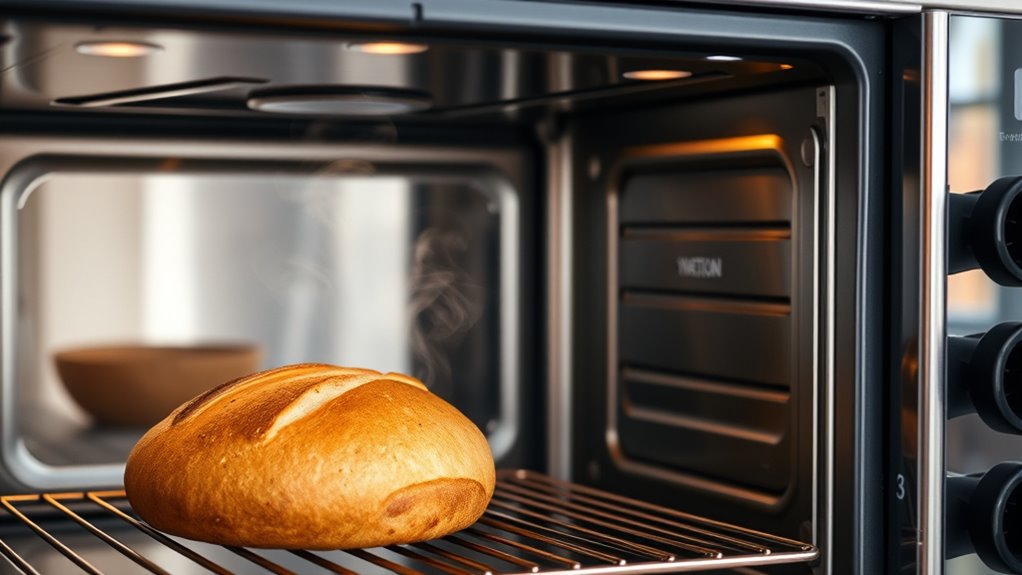
Baking with convection can markedly improve your results by guaranteeing even heat distribution and faster cooking times. When you switch to a convection oven, you’ll notice that your baked goods often cook more uniformly, with fewer hot spots or uneven patches. However, because of this efficiency, you need to make some adjustments to your usual baking process, especially regarding oven temperature and baking time.
To start, you should lower your oven temperature by about 25°F (15°C) compared to what a recipe calls for in a conventional oven. This doesn’t mean you’re reducing the overall heat; rather, it compensates for the convection fan’s circulating air, which accelerates heat transfer to your baked items. If a recipe suggests baking at 350°F (175°C), set your convection oven to 325°F (160°C). This adjustment helps prevent over-baking or burning the exterior before the inside is fully cooked.
Lower oven temperature by 25°F (15°C) when baking with convection to prevent over-browning.
In addition to adjusting the oven temperature, you’ll also need to modify your baking time. Because convection ovens cook faster, your baked goods will reach their ideal doneness sooner. Typically, you should check for doneness about 25% earlier than the time indicated in a standard recipe. For example, if a cake normally takes 40 minutes, start checking around 30 minutes. Keep in mind that different recipes may vary, so it’s best to keep a close eye on your food during the initial trials to avoid over-baking.
Using the proper oven temperature and baking time adjustments ensures that your baked goods turn out perfect every time. It’s also helpful to use an oven thermometer to confirm that your oven is maintaining the correct temperature after adjustments. Convection baking is particularly advantageous for items like cookies, pies, and roasted vegetables, where even heat leads to better texture and flavor.
oven thermometer for accurate temperature
As an affiliate, we earn on qualifying purchases.
As an affiliate, we earn on qualifying purchases.
Frequently Asked Questions
Can Convection Baking Be Used for All Types of Baked Goods?
Yes, convection baking offers great baking versatility, but it’s not ideal for all baked goods. You should consider recipe adaptation, especially for delicate items like cakes or soufflés, which may dry out or cook unevenly. For best results, use convection for roasting, cookies, and casseroles. Keep an eye on your baking time and temperature, and modify accordingly to guarantee your baked goods turn out perfect every time.
How Do I Convert Traditional Recipes for Convection Oven Use?
You should modify recipes for convection ovens by lowering the temperature by 25°F and reducing baking time. These adjustments help prevent over-baking or burning since convection ovens cook faster and distribute heat evenly. Keep an eye on your baked goods and check for doneness earlier than usual. Making these recipe modifications guarantees your treats turn out perfect, just like in traditional ovens.
Is Preheating Necessary When Baking With Convection?
Preheating your convection oven is important because it helps guarantee your oven reaches the correct temperature quickly, which is essential for even baking. Always preheat to your recipe’s recommended oven temperature to prevent undercooking or uneven results. Convection ovens heat faster and distribute heat more evenly, so preheating helps you achieve consistent, perfect baking outcomes. Skipping preheat could lead to unpredictable results and longer baking times.
What Cookware Is Best Suited for Convection Baking?
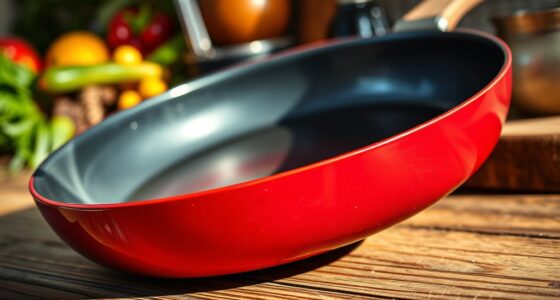
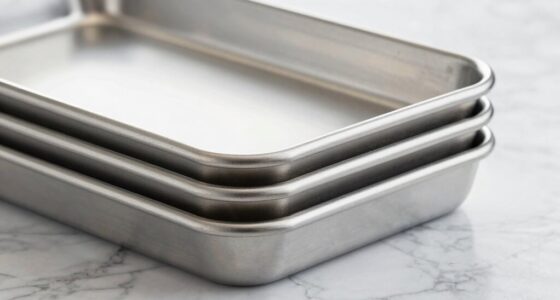
You might wonder which cookware works best for convection baking, and the answer lies in compatibility and material. Opt for shallow, rimmed baking sheets and glass or metal pans, as they promote even heat distribution. Avoid thick, heavy cookware that can trap heat. Light-colored, non-reflective surfaces help prevent over-browning. Choosing the right cookware guarantees your baked goods turn out perfectly, with even baking and beautiful results every time.
How Do I Prevent Over-Browning With Convection Baking?
To prevent over-browning with convection baking, focus on browning control by lowering your oven temperature by about 25°F from what a recipe suggests. Keep an eye on your food, especially towards the end of baking, and consider tenting it with foil if it starts to brown too quickly. These small adjustments help you achieve even baking and prevent your baked goods from becoming overly dark.
convection oven baking thermometer
As an affiliate, we earn on qualifying purchases.
As an affiliate, we earn on qualifying purchases.
Conclusion
Embracing convection baking gently guides you toward more even results, subtly enhancing your creations without demanding drastic change. With a little patience and an open mind, you’ll find your baked goods turn out just right, almost as if by magic. Remember, every oven has its own personality, so trust your senses and make small adjustments. Before long, convection will become your quiet partner in crafting beautifully baked treats—an understated secret to perfection.
baking sheet for convection baking
As an affiliate, we earn on qualifying purchases.
As an affiliate, we earn on qualifying purchases.
oven temperature calibration tool
As an affiliate, we earn on qualifying purchases.
As an affiliate, we earn on qualifying purchases.
Halloween Picks
halloween
As an affiliate, we earn on qualifying purchases.