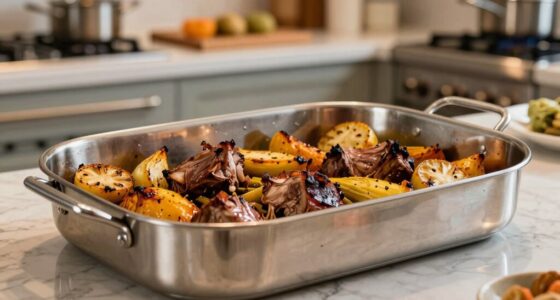
To avoid warped pans, start with a clean, dry surface and warm it gradually on medium or low heat before increasing the temperature if needed. Avoid sudden temperature changes like rinsing hot cookware with cold water or placing it on cold surfaces. Use burners that match the pan size to promote even heating, and don’t overuse high heat settings unnecessarily. Following these heat practices helps preserve your cookware’s shape and durability—continue to explore how proper habits make a difference.

Get your next haul delivered free with Prime
- Fast, free delivery on millions of items
- Prime Video, Amazon Music and more included
- Member-only deals all year
Key Takeaways
- Start with a clean, dry pan and avoid adding oil before heating to ensure even temperature distribution.
- Gradually heat pans over medium or low settings to prevent thermal stress and warping.
- Use appropriate heat levels for your cookware material, such as low for non-stick or slow heating for cast iron.
- Avoid rapid cooling by letting hot pans cool naturally before cleaning to prevent metal contraction.
- Match burner size to the pan to promote even heating and reduce the risk of warping over time.

Mastering heat practices for pans is essential to achieve perfect cooking results and prevent damage to your cookware. When you understand how to control heat effectively, you protect your seasoned cookware and ensure even heat distribution, which is key to avoiding warped pans. Warping often occurs when pans are subjected to rapid temperature changes or uneven heating, so developing proper heat habits is crucial.
First, always start with a clean, dry pan. If your cookware is seasoned, this initial step helps maintain its non-stick qualities and prevents sticking or damage. Once your pan is prepped, avoid turning the heat up too high right away. Instead, begin with medium or low heat, gradually increasing as needed. This gradual approach allows the heat to distribute evenly across the pan’s surface, reducing the risk of hotspots that can cause warping.
Always start with a clean, dry pan and gradually increase heat to prevent warping.
Using the right heat setting for your specific cookware is vital. For example, cast iron and carbon steel pans benefit from slow, steady heating, which promotes even heat distribution and preserves their seasoning. Non-stick pans, on the other hand, should be heated gently to avoid damaging the coating. By matching your heat level to the material, you help maintain the integrity of seasoned cookware and prevent warping caused by thermal stress.
Another effective practice is to avoid sudden temperature shifts. Don’t rinse a hot pan with cold water or place a hot pan directly into the sink. Instead, let your cookware cool gradually before cleaning. Rapid cooling can cause metal to contract unevenly, leading to warping over time. Also, when cooking, use a burner that matches the size of your pan. Using a small burner on a large pan can create uneven heat distribution, which contributes to warping and hot spots that mess with your cooking.
To further protect your cookware, consider proper storage techniques that prevent unnecessary stress and damage. Finally, pay attention to your cookware’s condition. Warped pans are often the result of neglecting proper heat practices over time. Regularly inspect your pans for signs of warping or damage, and avoid overheating them—especially if they’re seasoned or made of materials prone to distortion. By maintaining good heat practices, you not only extend the life of your cookware but also ensure your dishes turn out perfectly every time. When you control the heat carefully and respect your pan’s needs, you’ll prevent warping, preserve your seasoned cookware, and enjoy consistent, evenly cooked meals.
As an affiliate, we earn on qualifying purchases.
Frequently Asked Questions
Can Using Metal Utensils Cause Warping?
Using metal utensils can impact your pan by scratching its surface, especially if it’s non-stick, but it’s unlikely to cause warping. Warping mainly results from improper heat practices or sudden temperature changes rather than metal utensil impact. The pan material effects play a bigger role; for example, thin or poor-quality materials are more prone to warping. Always use appropriate utensils and avoid rapid temperature shifts to keep your pans in good shape.
How Often Should I Replace My Pans?
You should replace your pans when they show signs of significant wear, such as warping, deep scratches, or uneven heating, to maintain pan longevity. Typically, a good replacement schedule is every 3 to 5 years, depending on usage and care. Regularly inspecting your pans ensures they perform well and last longer. Don’t delay replacing damaged ones, as that can affect cooking quality and safety.
Do Glass or Ceramic Pans Warp More Easily?
Glass pans tend to warp more easily than ceramic ones because of differences in material durability and thermal expansion. For example, if you heat a glass pan too quickly, it can crack or warp due to sudden temperature changes. Ceramic pans usually handle thermal expansion better, making them more resistant to warping. To prevent warping, always heat your pans gradually, regardless of the material, and avoid extreme temperature shifts.
Is It Safe to Use Damaged or Warped Pans?
Using damaged or warped pans isn’t safe because the pan material and storage conditions affect their integrity. Warped pans, especially glass or ceramic, can lead to uneven heating, causing food to cook improperly or spill. Damaged pans may also leak or break during use. Always inspect your cookware regularly, store it properly, and substitute any warped or damaged pans to guarantee safe, effective cooking.
Can Temperature Changes Cause Pan Warping?
Yes, temperature changes can cause pan warping. Sudden shifts in heat, especially during heat cycling, stress pan materials like aluminum or cast iron. When you rapidly heat or cool your pan, the material expands or contracts unevenly, leading to warping over time. To prevent this, avoid drastic temperature changes and use consistent heat. Proper heat practices help maintain your pan’s shape and extend its lifespan.
cast iron skillet pre-seasoning kit
As an affiliate, we earn on qualifying purchases.
As an affiliate, we earn on qualifying purchases.
Conclusion
Now that you know how to prevent warping, imagine the perfect meal you’ll create with your well-maintained pan. But here’s the twist—what if one careless heat practice could undo all your effort? Stay vigilant, follow these tips, and keep your pans in top shape. The secret to lasting cookware lies in your hands. Are you ready to master these heat practices and reveal your kitchen’s true potential? The next move is yours.
As an affiliate, we earn on qualifying purchases.
As an affiliate, we earn on qualifying purchases.
Fall Picks
fall essentials
As an affiliate, we earn on qualifying purchases.