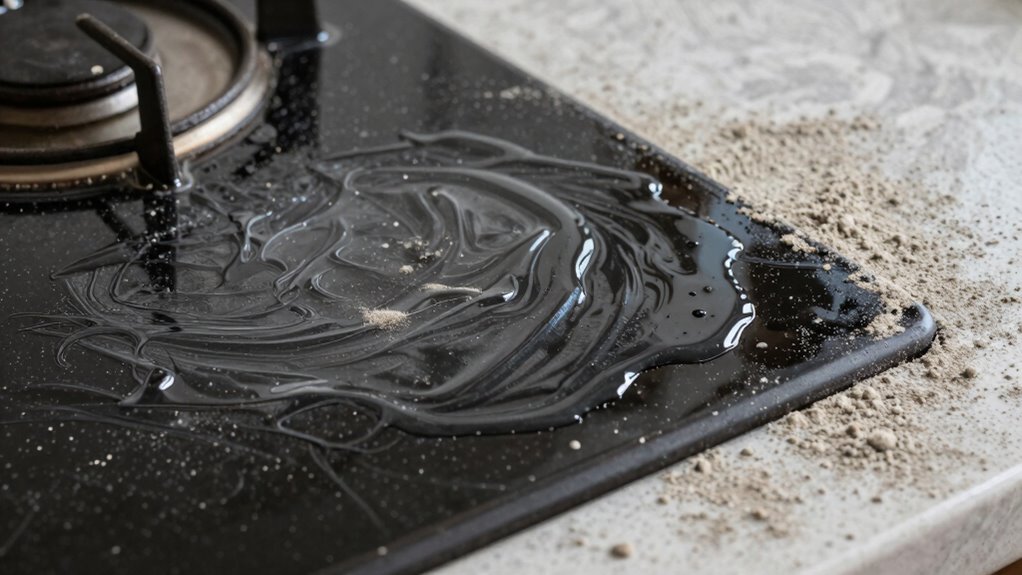

Grease is harder to clean than dust because it bonds more strongly to surfaces and penetrates porous materials, making it resistant to regular cleaning methods. It settles from airborne fumes during cooking and creates a stubborn film that normal dusting can’t remove. Proper ventilation helps reduce grease buildup, but knowing how different surfaces react is key. Keep going to discover effective strategies for tackling tough grease and making cleaning easier.

Get your next haul delivered free with Prime
- Fast, free delivery on millions of items
- Prime Video, Amazon Music and more included
- Member-only deals all year
Key Takeaways
- Grease bonds more strongly and penetrates surfaces, making it harder to remove than dust.
- Grease particles settle from fumes and form stubborn films that resist regular cleaning.
- Porous surfaces trap grease in tiny crevices, increasing adhesion and cleaning difficulty.
- Grease requires specific cleaning agents and vigorous scrubbing, unlike dust which is easily wiped away.
- Proper ventilation reduces grease buildup, but without it, grease bonds more permanently to surfaces.
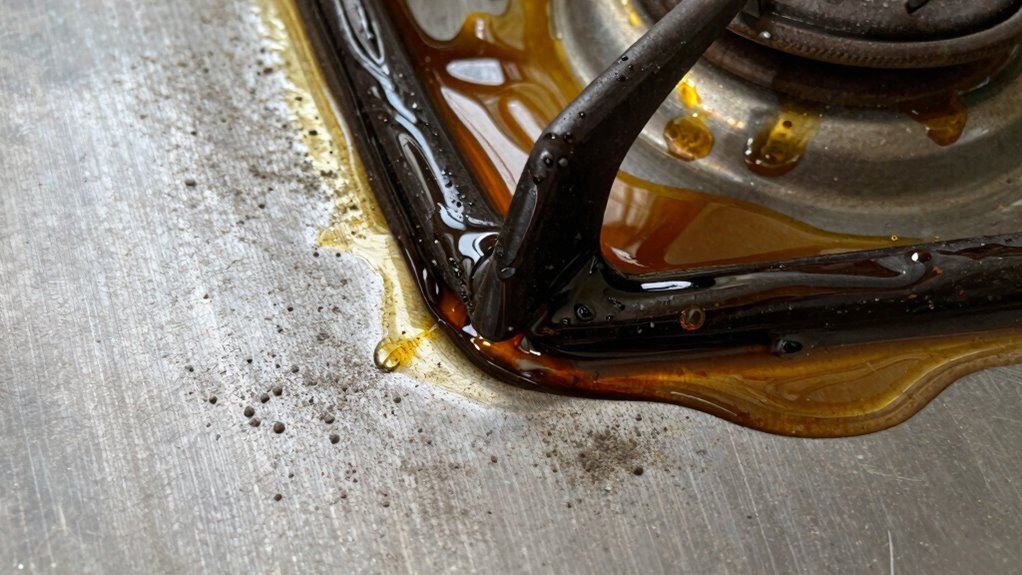
Grease is often tougher to clean than dust because it bonds more strongly to surfaces, creating a stubborn film that resists regular cleaning methods. This adhesion is especially problematic in areas like your kitchen, where cooking produces airborne grease particles that settle on surfaces. To combat this, proper kitchen ventilation is essential. A good range hood or exhaust fan pulls greasy fumes away from surfaces before they can settle, reducing the buildup you have to deal with later. Without effective ventilation, grease particles linger longer, making cleaning more difficult over time.
Effective kitchen ventilation prevents grease buildup, making cleaning easier and keeping surfaces cleaner longer.
Surface porosity plays a significant role in how easily grease can be removed. Porous surfaces, like unsealed wood or certain types of stone, have tiny holes and crevices that trap grease molecules, making them more difficult to wipe away completely. When grease penetrates into these small pores, it bonds more tightly, often requiring stronger cleaning agents or more vigorous scrubbing. Conversely, non-porous surfaces like stainless steel or tile are less absorbent, so grease sits on the surface rather than sinking in, which simplifies cleanup. Knowing the porosity of your surfaces helps you choose the right cleaning approach and products. Additionally, surface sealing can help prevent grease from penetrating into porous materials, making future cleaning easier. Proper surface maintenance and prompt cleaning are key to keeping grease from bonding more permanently and making removal easier over time. When grease does settle, cleaning it promptly with appropriate solutions minimizes its bond strength and makes removal easier.
A thorough understanding of cleaning techniques can also significantly impact the effectiveness of your grease removal efforts, especially on different surface types.
As an affiliate, we earn on qualifying purchases.
Frequently Asked Questions
How Does Grease Affect Different Types of Cleaning Tools?
Grease affects cleaning tools by clogging and reducing their effectiveness, especially on kitchen appliances. Tools like sponges and cloths struggle with grease because they can’t absorb it well, leading to smearing instead of cleaning. You need tools with strong grease absorption, like scrub brushes or microfiber cloths, to break down and remove grease efficiently. Regularly cleaning your tools prevents grease buildup and keeps your cleaning process effective.
Can Homemade Solutions Effectively Remove Tough Grease Stains?
Your DIY remedies can definitely tackle tough grease stains, but they might not work like magic. Homemade solutions like baking soda, dish soap, or vinegar are great for stain removal and can loosen grease effectively. However, some stubborn stains may require commercial cleaners. For best results, apply your DIY remedies promptly, scrub gently, and repeat if needed. With patience, you’ll find that homemade methods can be surprisingly powerful in cleaning grease.
Does the Age of Grease Buildup Impact Cleaning Difficulty?
Yes, the age of grease buildup impacts cleaning difficulty. Over time, grease becomes thicker and more hardened, changing its consistency and making it tougher to remove. As buildup density increases, it adheres more strongly to surfaces, requiring stronger solutions or scrubbing. Younger grease is usually softer and easier to wipe away, but older, hardened grease demands more effort and effective cleaning agents to break down its stubborn consistency.
Are There Environmental Concerns With Certain Grease Cleaners?
Yes, there are environmental concerns with certain grease cleaners. Some products contain harsh chemicals that can harm ecosystems and pose health risks, so you should look for eco-friendly solvents that are safer for the environment. Always check chemical safety labels to guarantee you’re choosing products that minimize environmental impact. By selecting eco-conscious cleaners, you protect both your home and the planet while effectively removing grease.
How Often Should Grease-Prone Areas Be Cleaned to Prevent Buildup?
A stitch in time saves nine, so clean grease-prone areas regularly to prevent buildup. You should clean your kitchen ventilation and surfaces at least weekly, especially if you cook frequently or greasy foods. Regular maintenance keeps grease from hardening and becoming tougher to remove. Good cooking habits, like covering pans and wiping down surfaces after use, also help minimize grease accumulation, making cleanup easier and more effective.
stainless steel grease cleaning cloth
As an affiliate, we earn on qualifying purchases.
As an affiliate, we earn on qualifying purchases.
Conclusion
Cleaning grease feels like trying to wash away a stubborn stain that clings tightly, unlike dust that easily settles and lifts away. Grease bonds with surfaces, forming a slick, stubborn layer that resists simple wiping. To tackle it, you need stronger cleaners and more effort, almost like peeling stubborn paint off a wall. So, next time grease proves tough, remember it’s like trying to erase a stubborn mark—requires patience, the right tools, and a little extra elbow grease.
heavy-duty scrub brushes for grease
As an affiliate, we earn on qualifying purchases.
As an affiliate, we earn on qualifying purchases.
As an affiliate, we earn on qualifying purchases.
Halloween Picks
halloween
As an affiliate, we earn on qualifying purchases.