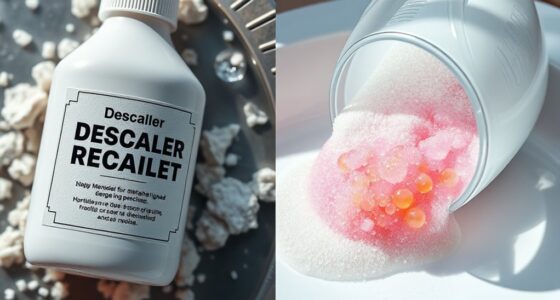
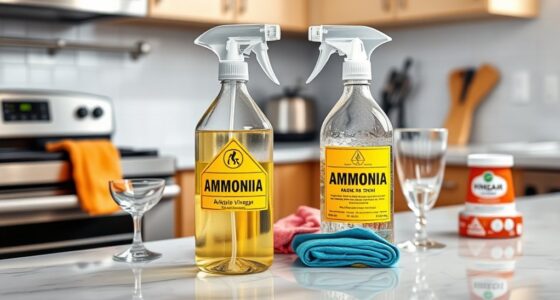
For safe DIY cleaners, stick with natural ingredients like vinegar, baking soda, and lemon juice. Combine equal parts water and vinegar for a gentle, all-purpose spray, and add lemon zest for extra scent and cleaning power. Avoid using vinegar on natural stone surfaces like granite or marble. Always test solutions first and use essential oils sparingly. If you keep exploring, you’ll discover more easy, eco-friendly, and safe cleaning combinations to try.
Key Takeaways
- Combine vinegar and water in equal parts for a safe, effective multi-purpose cleaner, avoiding use on natural stone surfaces.
- Add lemon juice or lemon zest to vinegar solutions for a natural, fragrant cleaning boost without harsh chemicals.
- Use baking soda with water to create gentle scrubs for sinks, tubs, and surfaces, ensuring compatibility with most materials.
- Avoid mixing vinegar with essential oils directly; instead, add oils to water-based solutions for safety and scent enhancement.
- Test all homemade cleaners on small, inconspicuous areas before widespread use to prevent surface damage or chemical reactions.
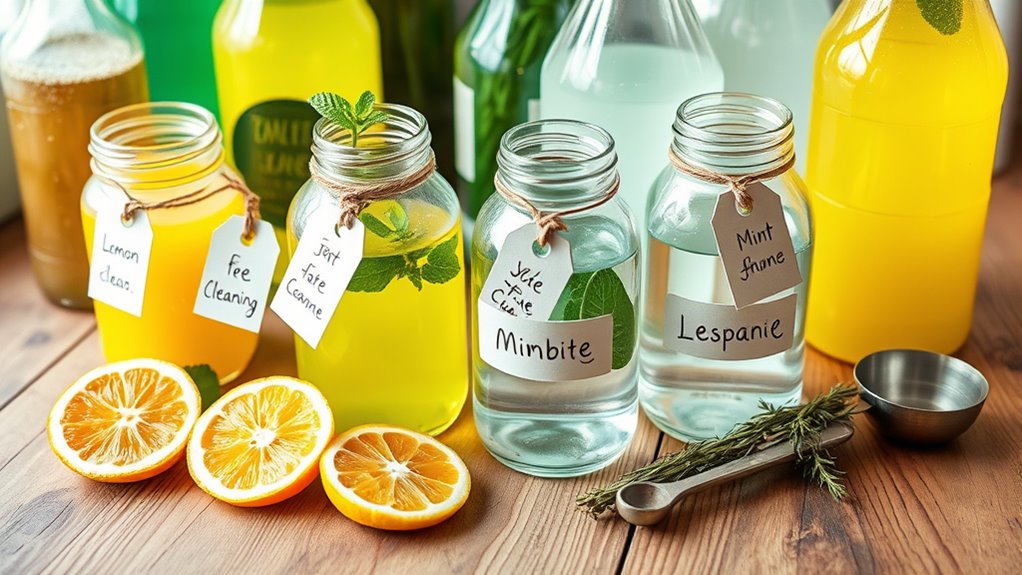
Are you tired of spending too much on commercial cleaning products? If so, creating your own DIY cleaners can be a game-changer. Not only do you save money, but you also get to control what goes into your cleaning solutions. When you focus on using natural ingredients, you can craft effective, safe, and eco-friendly solutions that are gentle on your home and the environment. These natural ingredients are readily available and often cost less than store-bought cleaners. Plus, they eliminate the harsh chemicals found in many commercial products, making your cleaning routine safer for your family and pets.
Starting with simple ingredients like vinegar, baking soda, and lemon juice allows you to make versatile cleaners suitable for various surfaces. Vinegar is a powerful natural disinfectant and can cut through grime and mineral deposits. Baking soda acts as a gentle abrasive and deodorizer, perfect for scrubbing sinks, tubs, and even carpets. Lemon juice not only adds a fresh scent but also works as a natural bleach and stain remover. Combining these ingredients thoughtfully ensures you create eco-friendly solutions that are effective without compromising safety.
When you make your own cleaners, you also reduce your plastic waste and the number of chemical pollutants released into the environment. Commercial cleaners often come in plastic bottles that contribute to landfill waste, and many contain ingredients that can harm aquatic life once washed down the drain. By opting for natural ingredients, you minimize your ecological footprint. For example, mixing equal parts water and vinegar in a spray bottle provides a multi-purpose cleaner for glass, countertops, and appliances. Adding some lemon zest can boost the scent naturally while enhancing cleaning power.
It’s important to remember that not all natural ingredients are suitable for every purpose. For instance, avoid using vinegar on natural stone surfaces like granite or marble, as the acidity can cause damage. Similarly, some essential oils, while eco-friendly and fragrant, should be used sparingly to prevent skin irritation or allergic reactions. Always research and test your homemade solutions on a small, inconspicuous area first. Additionally, understanding safe ingredient combinations can help you craft more effective and environmentally friendly cleaners.
Creating your own DIY cleaners with natural ingredients is a straightforward way to maintain a clean home while supporting eco-friendly solutions. It empowers you to avoid unnecessary chemicals, reduces waste, and saves money. When you combine common kitchen staples in the right way, you’ll find that cleaning becomes more sustainable and less stressful. With a little effort and the right ingredients, you can enjoy a sparkling, fresh home that’s safe for everyone and gentle on the planet.
Frequently Asked Questions
Are Natural Ingredients Always Safer Than Commercial Cleaners?
Natural ingredients aren’t always safer than commercial cleaners because they can cause chemical reactions or irritation in some cases. Natural preservatives help extend shelf life, but they don’t guarantee safety for everyone. You should always research ingredients and test small areas first. While natural cleaners are often gentler, they can still trigger allergic reactions or damage surfaces if used improperly. Safety depends on proper use and individual sensitivities.
Can DIY Cleaners Replace All Store-Bought Cleaning Products?
You can’t replace all store-bought cleaning products with DIY cleaners because ingredient safety and shelf life vary. While DIY options are effective for many tasks, some commercial products contain specialized formulas for tough stains or disinfecting. You need to assess each cleaner’s safety and storage needs. Relying solely on DIY cleaners might leave certain surfaces or germs unprotected, so consider mixing homemade and store-bought solutions for ideal cleanliness and safety.
How Long Do Homemade Cleaners Typically Last Before Expiring?
Homemade cleaners are like fresh bread—best enjoyed soon after making. Typically, their storage duration varies from a week to a few months, depending on ingredients. Most have a shelf life of about 1-3 months when stored properly in airtight containers. To guarantee they stay effective and safe, it’s best to label them with the date made and discard any that develop an off smell or change in appearance.
Are There Any Surfaces That Should Never Be Cleaned With DIY Solutions?
You should avoid using DIY solutions on delicate surfaces and antique finishes, as they can be damaged by harsh ingredients like vinegar or baking soda. These surfaces require gentle cleaning methods to prevent etching, discoloration, or deterioration. Always test a small, hidden area first, and opt for mild, pH-neutral cleaners or professional products specifically designed for delicate or antique items to keep them looking their best.
Can DIY Cleaners Effectively Remove Stubborn Stains and Mold?
Yes, DIY cleaners can effectively remove stubborn stains and mold if you choose the right ingredients. For stain removal, a mix of baking soda and vinegar works well, while mold elimination benefits from a solution of hydrogen peroxide or tea tree oil. However, make certain you test surfaces first and avoid using harsh chemicals on delicate materials to prevent damage. Proper application and patience are key to achieving the best results.
Conclusion
Now that you know the safest combinations, imagine the possibilities—cleaning your home with confidence and peace of mind. But beware, not every DIY mix is foolproof. A wrong ingredient or ratio could turn your spotless space into a disaster. Are you ready to take control of your cleaning routine? Stay vigilant, stay informed, and keep experimenting wisely. Your spotless, safe home is just a careful recipe away—trust yourself, but never forget to stay cautious.