
Descalers and detergents serve different cleaning purposes. Detergents remove dirt, grease, and organic residues from surfaces and fabrics using surfactants, making them great for everyday cleaning. Descalers, however, target mineral deposits like calcium and magnesium, dissolving limescale caused by hard water. To keep appliances running smoothly, you might need both—detergents for routine cleaning and descalers to prevent or remove scale buildup. Continue exploring to understand how to use each effectively.

Get your next haul delivered free with Prime
- Fast, free delivery on millions of items
- Prime Video, Amazon Music and more included
- Member-only deals all year
Key Takeaways
- Detergents remove dirt, grease, and organic residues, while descalers dissolve and eliminate mineral deposits from hard water.
- Detergents are effective for general cleaning; descalers specifically target mineral buildup like limescale.
- Hard water reduces detergent effectiveness; descalers are necessary to prevent appliance scale and maintain efficiency.
- Regular use of descalers prevents mineral buildup, extending the lifespan of appliances such as kettles and coffee makers.
- Knowing water hardness helps determine whether to use detergents, descalers, or both for optimal cleaning results.
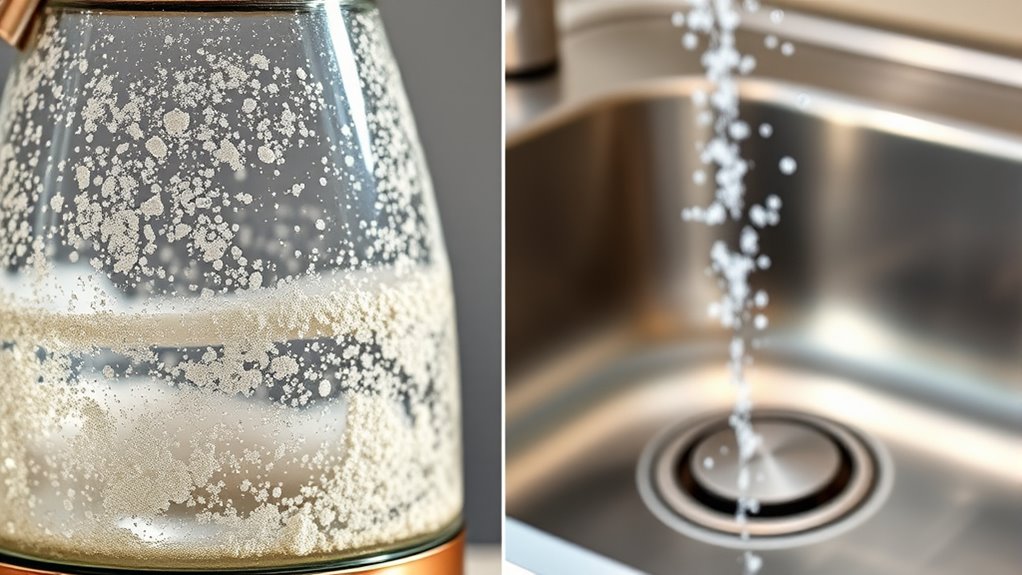
When it comes to cleaning your appliances and surfaces, understanding the difference between descalers and detergents is crucial. Both are essential tools in maintaining the cleanliness and efficiency of your household, but they serve distinct purposes. The key to choosing the right one depends largely on water hardness, which directly influences cleaning effectiveness. Water hardness refers to the mineral content—primarily calcium and magnesium—that can cause mineral buildup on appliances and surfaces. If your water is hard, minerals tend to accumulate, forming limescale and reducing the efficiency of your appliances like kettles, coffee makers, dishwashers, and washing machines.
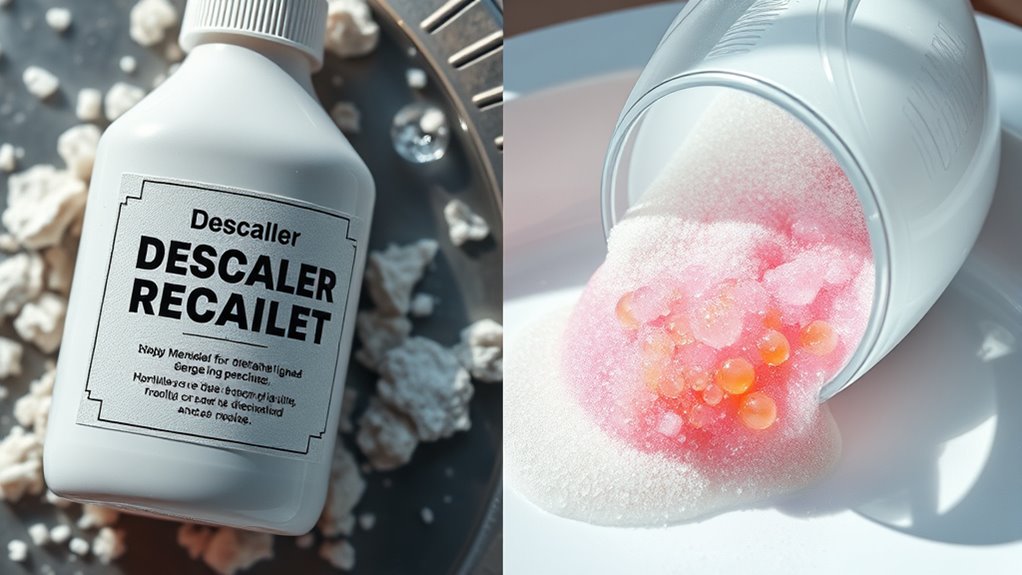
Detergents are formulated to remove dirt, grease, and organic residues from surfaces and fabrics. They contain surfactants that break down oils and grime, making it easier to rinse away dirt. Detergents work well in most water conditions but can be less effective in hard water because minerals interfere with their ability to clean thoroughly. In hard water, soap scum and mineral deposits can cling to surfaces, diminishing cleaning effectiveness. That’s where descalers come into play. Descalers are specialized cleaning agents designed to dissolve and remove mineral deposits caused by water hardness. They work by chemically reacting with calcium and magnesium compounds, breaking them down so they can be rinsed away easily.
Detergents remove dirt and grease but struggle with mineral buildup caused by hard water.
Using a detergent alone in areas with hard water often results in less effective cleaning and persistent mineral buildup. For example, your coffee machine might produce cloudy water or scale buildup that affects flavor and performance. Regularly applying a descaler prevents these issues by targeting the minerals directly. Conversely, in areas with soft water, detergents usually suffice for general cleaning tasks, as mineral deposits are minimal or absent. In such cases, descalers aren’t necessary unless there’s already significant scale buildup.
Understanding the water hardness in your home helps you determine whether you need a descaler, a detergent, or a combination of both. For routine cleaning, detergents are your go-to for removing dirt and grease. When mineral buildup starts affecting appliances or surfaces, employing a descaler will restore efficiency and prolong their lifespan. Incorporating both appropriately ensures proper cleaning effectiveness—detergents keep surfaces free of grime, while descalers prevent and remove mineral deposits caused by hard water. In essence, knowing when and how to use each product saves you time, money, and frustration, ensuring your appliances function smoothly and your surfaces stay spotless. Recognizing water hardness levels can help you make informed cleaning choices and avoid unnecessary repairs.
Frequently Asked Questions
Can Descalers Be Used as Substitutes for Detergents?
Descalers can’t replace detergents because they serve different purposes. While descalers focus on removing mineral buildup and improving cleaning efficiency, detergents are designed to break down grease, dirt, and stains. Their chemical composition varies considerably, making each essential for specific cleaning tasks. Using descalers as substitutes for detergents won’t effectively clean surfaces, so you should use them accordingly to guarantee the best results.
Are There Specific Brands Recommended for Descalers or Detergents?
You should look for trusted brand recommendations when choosing descalers or detergents. For descalers, brands like CLR or Lime-A-Way often receive positive product comparisons for effectiveness. When selecting detergents, consider brands like Tide or Persil, which are well-rated for cleaning power. Always compare product labels and reviews to find the right fit for your needs, ensuring you get reliable performance and value.
How Often Should Descalers and Detergents Be Applied?
You should apply descalers and detergents based on their usage guidelines and your equipment’s needs. Typically, use descalers every 1 to 3 months to prevent buildup, especially if you notice reduced performance. Detergents are usually used with each cleaning cycle. Keep an eye on application frequency recommendations on product labels, and adjust accordingly if you see signs of scale buildup or dirt accumulation. Regular maintenance keeps your appliances running smoothly.
Are Descalers Environmentally Friendly Compared to Detergents?
You might think descalers are less eco-friendly, but that’s not always true. Many descalers use eco-friendly ingredients and are biodegradable, making them environmentally safer than some detergents. While detergents often contain synthetic chemicals that can harm ecosystems, descalers typically break down more easily. To choose the greener option, check product labels for biodegradability comparisons and eco-friendly certifications, ensuring you minimize environmental impact.
Do Descalers and Detergents Have Any Health Risks?
Descalers and detergents can pose health risks if you’re exposed to their chemicals regularly. You might experience health safety concerns like skin irritation or respiratory issues from chemical exposure. To stay safe, always wear gloves and guarantee proper ventilation when using these products. Read labels carefully, follow instructions, and store them securely out of reach of children to minimize potential health risks.
Conclusion
So, now that you know descalers and detergents are like night and day, it’s time to stop mixing them up—unless you enjoy battling mineral buildup instead of clean dishes. Remember, one’s for fighting deposits, the other’s for fighting grime. Use them wisely, or you might end up with a shiny new paperweight instead of a sparkling kitchen. Because nothing says “smart consumer” like confusing your cleaning tools—happy cleaning, or should I say, happy experimenting!
Halloween Picks
halloween
As an affiliate, we earn on qualifying purchases.